A safety jacket should be purchased by cost per compliant wearing day, not by unit price. For construction, oil, mining, roadwork, and logistics PPE programs, the real cost driver is not the first invoice; it is the number of wash cycles, zipper operations, seam-stress events, and retroreflective performance checkpoints the garment can survive while still meeting project safety requirements.
Premium safety jackets normally use higher-denier shell fabric, rated reflective tape, reinforced seam construction, and tested closure systems. Economy jackets reduce the purchase price by lowering fabric weight, zipper grade, tape durability, seam reinforcement, or waterproof-breathable performance. The procurement question is simple: which jacket gives the lowest total ownership cost per worker over one deployment period?

1. Engineering Definition: Premium vs. Economy Safety Jackets for PPE Budget Optimization
For a B2B PPE buyer, "premium" does not mean a thicker-looking jacket. It means the product is built around measurable service life: fabric tensile strength, tear resistance, tape wash durability, zipper cycle rating, seam-sealed waterproofing, and colorfastness after laundering.
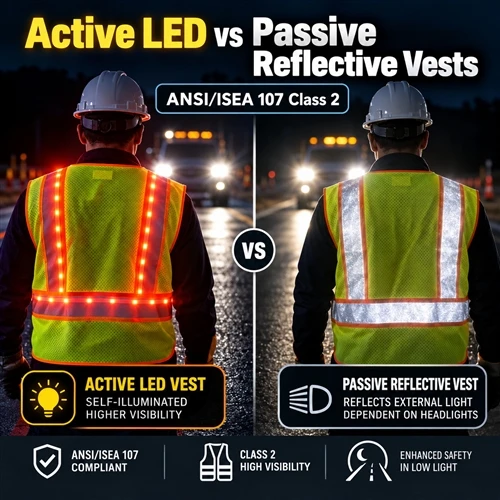
High-visibility garments are commonly evaluated against standards such as ANSI/ISEA 107 for high-visibility safety apparel and EN ISO 20471 for clothing designed to signal the wearer's presence under daylight and headlight illumination. ANSI/ISEA 107-2020 covers performance requirements for color, retroreflection, and material configuration, while ISO 20471 defines requirements for high-visibility clothing used to visually signal the wearer's presence.
|
Cost Item |
Economy Safety Jacket |
Premium Safety Jacket |
TCO Impact |
|
Outer shell |
150D–210D polyester or basic Oxford |
300D Oxford, polyester pongee, or laminated shell |
Higher tear resistance reduces early replacement |
|
Reflective tape |
Basic glass bead tape, limited wash cycles |
Industrial glass bead or micro-prismatic reflective tape |
Longer compliant visibility period |
|
Waterproofing |
PU coating, partial seam coverage |
WP 8,000–10,000 mm with seam-sealed waterproofing |
Fewer rain-related complaints and returns |
|
Breathability |
Low MVP or no rating |
MVP 3,000–5,000 g/㎡/24h or higher |
Lower heat stress in long shifts |
|
Closure |
Low-cost zipper, light slider |
Higher-grade resin zipper or branded equivalent |
Lower zipper failure rate |
|
Stitching |
Standard seam allowance |
Reinforced stress points and bar-tack zones |
Lower seam opening probability |
|
Procurement result |
Lower unit price |
Lower cost per compliant use |
Better PPE budget optimization |
For buyers sourcing through a China safety jacket manufacturer, supplier, or factory, the right comparison is not USD 8.50 vs USD 14.80 per jacket. The right comparison is USD per compliant shift.
2. Wash-Cycle Loss Model: How Laundering Converts into Lifecycle Cost
Every wash cycle applies mechanical abrasion, detergent exposure, thermal stress, hydrolysis risk, and reflective tape degradation. A jacket may still look wearable after 30 washes, but the safety question is whether the fluorescent background fabric and retroreflective material still meet the buyer's required visibility level.
2.1 Cost per Wash Cycle Formula
Use the following model for lifecycle cost safety jackets:
Cost per compliant wash cycle = landed unit cost ÷ number of compliant wash cycles
|
Jacket Type |
Landed Unit Cost |
Tested Compliant Wash Cycles |
Cost per Compliant Wash Cycle |
|
Economy jacket |
USD 8.50 |
10 cycles |
USD 0.85 |
|
Mid-range jacket |
USD 11.80 |
20 cycles |
USD 0.59 |
|
Premium jacket |
USD 14.80 |
35 cycles |
USD 0.42 |
A premium jacket can cost 74% more at purchase but cost 51% less per compliant wash cycle. That is the core logic behind premium workwear ROI.
2.2 Typical Degradation Points After Repeated Washing
|
Test Area |
Common Economy Failure Mode |
Premium Construction Control |
Procurement Risk |
|
Reflective tape |
Cracking, edge lifting, reduced retroreflection |
Certified tape with 25–50 wash-cycle target |
Loss of nighttime conspicuity |
|
Fluorescent shell |
Fading, surface pilling, reduced color intensity |
Higher colorfastness polyester dyeing |
Lower daytime visibility |
|
Waterproof coating |
PU coating breakdown |
Laminated shell or higher-grade coating |
Increased wearer complaints |
|
Seam-sealed areas |
Tape lifting after heat and detergent exposure |
Controlled seam tape temperature and pressure |
Water ingress |
|
Label and print |
Logo cracking or peeling |
Heat-transfer film matched to fabric type |
Brand-quality complaint |
For PPE distributors managing repeat tenders, the hidden cost is usually not washing itself. The hidden cost is replacing jackets before the planned issue cycle ends.
At this stage of a sourcing review, buyers can compare available shell fabrics, reflective tape options, waterproof ratings, and OEM logo methods under Safety Jackets before finalizing bulk specifications.
3. Zipper Failure and Seam Cracking: Probability-Based Cost, Not Isolated Defect Cost
A failed zipper normally removes the jacket from service even when the shell fabric and reflective tape are still usable. In field use, zipper failure is driven by slider deformation, tooth misalignment, fabric tension, low-temperature brittleness, mud contamination, and repeated one-hand operation with gloves.
3.1 Zipper Failure Cost Model
Expected zipper failure cost = batch quantity × failure probability × replacement cost per jacket
|
Batch Quantity |
Jacket Type |
Estimated Zipper Failure Rate During Service Period |
Replacement Cost per Jacket |
Expected Failure Cost |
|
5,000 pcs |
Economy |
6% |
USD 8.50 |
USD 2,550 |
|
5,000 pcs |
Mid-range |
3% |
USD 11.80 |
USD 1,770 |
|
5,000 pcs |
Premium |
1% |
USD 14.80 |
USD 740 |
A low-cost zipper may save USD 0.30–0.60 per jacket at production stage. In a 5,000-piece deployment, that saving can be erased by field replacement, complaint handling, urgent reorders, and project downtime.
3.2 Seam Opening and Stress-Point Failure
Safety jackets used in roadwork, ports, mining, fuel stations, utilities, and construction often fail at repeated stress zones:
|
Stress Zone |
Mechanical Load Source |
Economy Jacket Risk |
Premium Jacket Control |
|
Shoulder seam |
Tool belts, lifting, backpack straps |
Seam opening under load |
Reinforced seam allowance and stronger thread |
|
Pocket edge |
Radio, gloves, tools |
Pocket tearing |
Bar-tack reinforcement |
|
Front zipper base |
Sitting, bending, pulling |
Stitch breakage |
Reinforced zipper end and bottom tape |
|
Reflective tape edge |
Washing and flexing |
Tape edge lift |
Controlled stitch density or heat-application pressure |
|
Hood seam |
Rain exposure and pulling |
Leakage or seam cracking |
Seam-sealed waterproofing |
3.3 Defect Probability Should Be Converted into Procurement Cost
For PPE budget optimization, CPOs should not evaluate defects only by factory AQL. They should model field probability:
Field failure cost = replacement cost + freight cost + internal handling cost + lost compliant wearing days
Example:
|
Variable |
Economy Jacket |
Premium Jacket |
|
Unit price |
USD 8.50 |
USD 14.80 |
|
Expected field failure rate |
8% |
2% |
|
Batch quantity |
10,000 pcs |
10,000 pcs |
|
Replacement units |
800 pcs |
200 pcs |
|
Replacement product cost |
USD 6,800 |
USD 2,960 |
|
Emergency freight and handling |
USD 2,400 |
USD 600 |
|
Estimated total failure cost |
USD 9,200 |
USD 3,560 |
The premium jacket still has a higher purchase invoice, but its lower failure probability reduces unplanned cost during the deployment cycle.
4. Reflective Tape Selection: Micro-Prismatic vs. Glass Bead in Safety Jacket TCO
Reflective tape is one of the most visible cost differences between economy and premium safety jackets. It also has one of the highest compliance impacts.
|
Reflective Material Type |
Structure |
Typical Advantage |
Common Limitation |
Best Use Case |
|
Glass bead reflective tape |
Embedded microscopic glass beads |
Flexible, economical, suitable for garment sewing |
Lower performance after abrasion if low-grade tape is used |
General construction, warehouse, logistics |
|
Micro-prismatic reflective tape |
Precision prism structure |
High retroreflective brightness at specific angles |
Higher material cost and stiffness |
Roadwork, traffic control, night operations |
|
Segmented heat-transfer tape |
Segmented reflective pattern |
Better garment flexibility and breathability |
Requires controlled heat-press parameters |
Stretch jackets, rainwear, softshells |
|
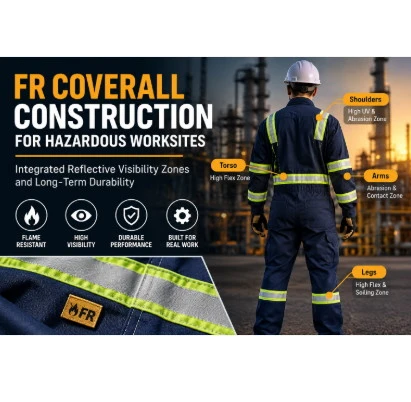
FR reflective tape |
Flame-resistant backing with reflective surface |
Used with flame-resistant aramid or FR cotton garments |
Higher unit cost |
Oil, gas, electrical, welding-related PPE |
Where safety jackets are used for night roadwork or traffic exposure, buyers should specify minimum reflective tape width, tape placement, wash-cycle requirement, and test report availability. A 5 cm tape width is common for many high-visibility jacket programs, but placement must still match the target standard and garment class.
5. Waterproof and Breathability Ratings: When Rain Protection Changes ROI
For outdoor projects, a safety jacket with poor waterproofing can fail even when the reflective tape remains bright. Water ingress reduces worker acceptance, increases garment change frequency, and may cause project teams to issue secondary rainwear.
|
Specification |
Economy Jacket |
Premium Jacket |
Field Impact |
|
Waterproof rating |
1,000–3,000 mm |
8,000–10,000 mm |
Better rain protection |
|
Breathability |
Not rated or low |
MVP 3,000–5,000 g/㎡/24h |
Lower moisture buildup |
|
Seam treatment |
Critical seams only or none |
Full seam-sealed waterproofing |
Reduced leakage |
|
Fabric hand feel |
Stiff PU-coated fabric |
Laminated or coated shell |
Better acceptance during long shifts |
|
Hood design |
Basic fixed hood |
Adjustable hood or packable hood |
Better fit control |
A jacket that workers avoid wearing has poor ROI even when its unit price is low. PPE compliance depends on field acceptance, not only purchase records.
6. TCO Mathematical Procurement Model for Safety Jackets
The total ownership cost model should include purchase price, expected service life, failure probability, replacement logistics, and compliance risk.
6.1 Core TCO Formula
TCO per jacket = landed unit cost + expected failure cost + maintenance cost + replacement logistics cost
Cost per compliant wearing day = TCO per jacket ÷ compliant wearing days
6.2 Sample Calculation for a 10,000-Piece PPE Program
|
Variable |
Economy Safety Jacket |
Premium Safety Jacket |
|
Landed unit cost |
USD 8.50 |
USD 14.80 |
|
Planned service period |
90 days |
180 days |
|
Compliant wash cycles |
10 |
35 |
|
Expected failure rate |
8% |
2% |
|
Replacement and handling cost per failed unit |
USD 11.50 |
USD 17.80 |
|
Expected failure cost per jacket |
USD 0.92 |
USD 0.36 |
|
TCO per jacket |
USD 9.42 |
USD 15.16 |
|
Cost per compliant wearing day |
USD 0.105 |
USD 0.084 |
The premium jacket has a higher TCO per unit, but a lower cost per compliant wearing day. For long-duration construction, mining, airport, highway, and energy projects, this is the number procurement teams should use in tender evaluation.
7. Practical Specification Checklist for OEM Safety Jacket Buyers
Before requesting bulk pricing from a China safety jacket factory, define these technical fields in the RFQ:
7.1 Fabric and Weather Protection Data
|
Specification Field |
Recommended RFQ Detail |
|
Shell fabric |
150D, 210D, 300D Oxford, pongee, softshell, or laminated polyester |
|
Waterproof rating |
WP 3,000 mm, 5,000 mm, or 10,000 mm |
|
Breathability |
MVP 3,000–5,000 g/㎡/24h when required |
|
Seam construction |
Stitched, taped, or seam-sealed waterproofing |
|
Lining |
Mesh, fleece, quilted padding, or detachable liner |
7.2 Visibility and Compliance Data
|
Specification Field |
Recommended RFQ Detail |
|
Standard target |
ANSI/ISEA 107 Type R Class 2 or Class 3; EN ISO 20471 Class 2 or Class 3 |
|
Reflective tape |
Glass bead, micro-prismatic, segmented, or FR reflective tape |
|
Tape width |
Commonly 5 cm, subject to garment design |
|
Tape wash cycles |
25 or 50 cycles depending on buyer requirement |
|
Background color |
Fluorescent yellow, orange-red, or red for EN ISO 20471 programs |
7.3 Manufacturing Control Data
|
Control Point |
Factory Check Method |
|
Zipper strength |
Pull test and repeated opening/closing inspection |
|
Seam strength |
Random seam-pull inspection |
|
Tape adhesion |
Wash test and edge-lift check |
|
Waterproofing |
Hydrostatic pressure test or internal water-pressure check |
|
Size consistency |
Pre-production size chart and bulk measurement report |
|
Packing |
1 pc/polybag, carton quantity by jacket thickness |
For OEM bulk orders, send the required standard, target class, shell fabric, reflective tape type, waterproof rating, size range, and logo method before price negotiation. This prevents false low quotations based on downgraded materials.
8. Procurement Decision Matrix: When Premium Jackets Produce Better ROI
|
Buyer Scenario |
Economy Jacket Fit |
Premium Jacket Fit |
Recommendation |
|
Short-term event, 7–15 days |
Acceptable |
Usually unnecessary |
Economy may be suitable |
|
One-season roadwork project |
Risky if washed often |
Strong fit |
Use premium or mid-range |
|
Mining or oil site |
Not recommended |
Strong fit |
Specify premium construction |
|
Rain-exposed construction |
Risky without seam sealing |
Strong fit |
Require WP rating and seam sealing |
|
High-turnover temporary labor |
Acceptable if low wash demand |
Depends on budget |
Model by wearing days |
|
Branded PPE distributor program |
Higher return risk |
Strong fit |
Use premium for brand protection |
|
Government or infrastructure tender |
Risky if compliance audits occur |
Strong fit |
Specify test reports and production QC |
Premium workwear ROI is strongest when the jacket is exposed to laundering, weather, night visibility requirements, repeated zipper use, and project-level compliance audits.
9. Final Sourcing Guidance for PPE Distributors and HSE Teams
Safety jacket procurement should be evaluated by cost per compliant wearing day, not by unit price. A low-cost jacket can be rational for short-term, low-wash, low-abrasion use. For infrastructure, mining, oil, logistics, roadwork, and utility projects, premium construction often reduces TCO through longer wash-cycle life, fewer zipper failures, stronger seams, better waterproofing, and lower replacement frequency.
For bulk OEM orders, buyers should request a specification sheet covering fabric denier, waterproof rating, MVP value, reflective tape type, wash-cycle target, zipper grade, seam construction, packing method, and inspection plan.
To compare bulk safety jacket options by compliance class, reflective tape structure, waterproof rating, and OEM logo method, review Safety Jackets and send the target standard, annual quantity, and project-use environment for quotation.
FAQ
Q: How should PPE buyers calculate the lifecycle cost of safety jackets?
A: Use cost per compliant wearing day: total ownership cost divided by compliant service days. Include landed price, wash-cycle durability, zipper failure probability, seam failure risk, replacement freight, and internal handling cost.
Q: How many wash cycles should OEM safety jackets be specified for?
A: For professional PPE distribution, 25 wash cycles is a common baseline, while 50 cycles is better for long-term industrial programs. The final requirement should match the project duration, laundering frequency, and target standard.
Q: What factory information should be checked before placing a bulk safety jacket order?
A: Check fabric specification, reflective tape test data, waterproof rating, seam construction, zipper type, size chart control, pre-production sample approval, carton packing, and bulk inspection process before confirming mass production.