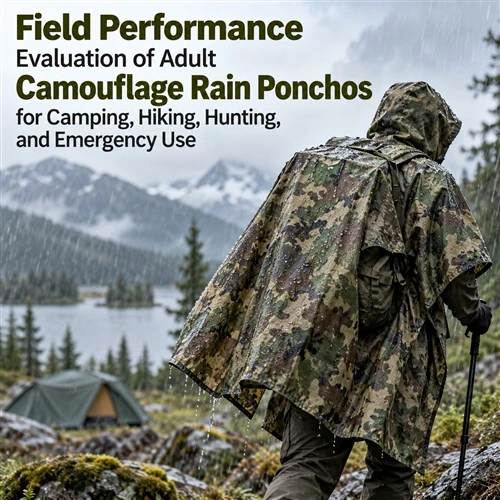
Technical Requirements and Field-Use Challenges of Adult Camouflage Rain Ponchos
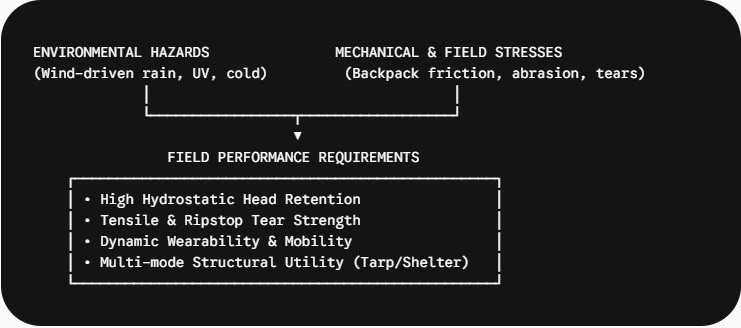
Field operations in camping, hiking, hunting, and emergency response require reliable personal weather protection under severe meteorological conditions. Personnel operating in remote or unpredictable outdoor environments encounter complex environmental hazards, including high-velocity wind-driven rain, sub-zero ambient temperatures, dense vegetation, and rough terrain. Under these conditions, standard personal protective equipment (PPE) or conventional single-layer rainwear frequently fails due to severe hydrostatic barrier degradation, stress-induced seam tearing, and mechanical puncturing.
The primary requirement for adult camouflage rain ponchos is maintaining high hydrostatic head protection while simultaneously offering mechanical durability, low areal weight, dynamic movement accommodation, and visual/photographic concealment. Achieving high water resistance often requires thick polymer coatings or solid film laminations; however, these additions increase garment mass, restrict flexibility, and exacerbate internal condensation via reduced moisture vapor transmission. Furthermore, multi-use demands in the field require that the poncho function not only as wearable rain protection but also as a tarp, ground sheet, or emergency lean-to shelter. This multi-use profile concentrates localized tensile forces on structural points such as corner grommets, neck hood junctions, and side snap fasteners.
To establish substrate durability without excessive weight, high-tenacity woven synthetic textiles serve as the core structural layer. Woven polyester (PET) and polyamide (PA/nylon) fabrics are widely used due to their elevated tensile strength, low moisture regain, and high dimensional stability. Polyester exhibits high UV degradation resistance and dimensional stability under wet conditions, though its lower flexural fatigue threshold relative to polyamide can accelerate coating delamination under cyclic folding. Polyamide offers higher abrasion resistance and tear strength per unit weight, but its higher moisture regain can cause fiber swelling and localized coating interface stress if the hydrophobic barrier is compromised.
|
Substrate Polymer |
Density (g/cm3) |
Tensile Strength (MPa) |
Moisture Regain (%) |
Primary Limitation in Ponchos |
|
Polyester (PET) |
1.38 |
160–200 |
0.4 |
Lower flexural fatigue resistance under repeated sharp folding |
|
Polyamide 6,6 (PA66) |
1.14 |
220–260 |
4.0–4.5 |
Moisture-induced plasticization; hydro-expansion stress at interface |
|
Polyethylene (PE Film) |
0.92–0.95 |
15–40 |
<0.01 |
Low tear strength, poor thermal stability, prone to pinhole formation |
|
Ethylene-Vinyl Acetate (EVA) |
0.93–0.95 |
15–30 |
<0.05 |
High flexural softness but low abrasion and puncturing threshold |
This technical review synthesizes published research on continuous polymer barrier coatings, membrane laminations, heat-sealed seam technologies, and structural design configurations for heavy-duty rain ponchos. The review scope covers polyurethane (PU), polyvinyl chloride (PVC), ethylene-vinyl acetate (EVA), polyethylene (PE), and polyether-polyurethane membrane technologies. Literature was selected based on peer-reviewed studies published in materials science, textile engineering, and protective clothing journals, alongside verified performance standards including ISO 811 (hydrostatic head), ISO 13937 (tear resistance), ISO 12947 (abrasion resistance), and ASTM D5034 (breaking strength).
Note: This article synthesizes published research and technical standard specifications; it does not present original experimental data.
Fabric, Coating, Lamination, and Seam-Protection Technologies for Waterproof Camouflage Ponchos
Translating raw synthetic yarns into functional waterproof camouflage poncho fabrics requires specific weaving, coating or laminating, and seam-sealing processes. The foundation of high-performance technical ponchos typically begins with a grid-reinforced ripstop weave structure. In a standard 210T or 420D ripstop fabric, coarse reinforcing yarns (e.g., 70D to 210D filament yarns) are inserted at regular intervals (typically 3 mm to 6 mm) in both warp and weft directions within a plain-weave matrix. This grid stops tear propagation by converting linear shear forces into multi-yarn tensile resistance at the ripstop intersection.
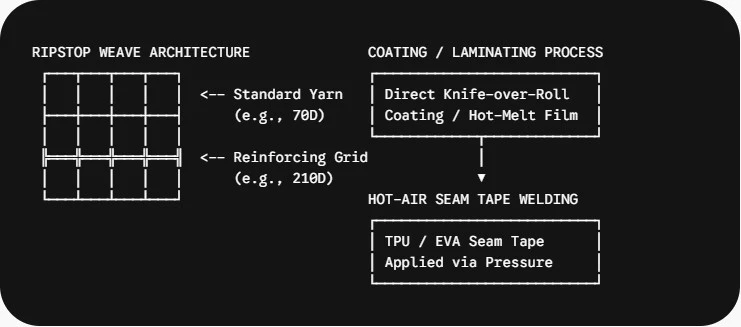
The deposition of the continuous waterproof barrier onto the textile substrate is performed through four primary industrial methods:
Direct Knife-over-Roll Coating: A liquid polymer formulation (solvent-borne PU or plastisol PVC) is spread over the moving fabric web under a metering blade. The coated fabric passes through a multi-zone thermal oven to evaporate solvents and crosslink the polymer network. Knife coating offers strong mechanical keying into the textile structure, but variable tension can cause coating weight variations.
Transfer / Reverse Roll Coating: The polymer coating is cast onto a release paper carrier, partially cured, and then nip-laminated to the textile substrate before final oven curing. This process produces highly uniform coating thickness and precise weight control, minimizing pinholes over rough woven textures.
Hot-Melt Extrusion Lamination: A molten thermoplastic polymer (such as TPU, PE, or PEVA) is extruded directly through a flat slot die into the nip between the fabric substrate and a chill roll. Extrusion lamination eliminates volatile organic compound (VOC) emissions, producing solvent-free monolithic layers with strong substrate bonding.
Adhesive Membrane Lamination: Pre-formed microporous or solid monolithic membranes (e.g., expanded PTFE or hydrophilic polyether-ester) are joined to the fabric substrate using reactive polyurethane (PUR) hot-melt adhesives applied in dot-matrix or gravure patterns. Patterned adhesive application preserves fabric drape and breathability compared to full-coverage adhesive films.
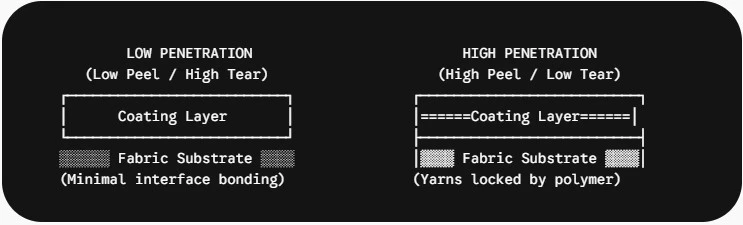
Process parameters directly dictate the structural performance of the resulting composite. Coating viscosity, line speed, curing temperature profiles, and nip pressures govern dry coat weight (g/m²), interface penetration depth, and interfacial bond strength. Excessive knife pressure or low polymer viscosity drives the fluid deep into the yarn bundle; while this increases mechanical interlock and peel strength, it locks the filament yarns in place, reducing fabric tear resistance and increasing flexural rigidity. Conversely, insufficient surface wetting leads to low peel strength, making the system prone to delamination under cyclic laundering or mechanical flex fatigue.
Fabricating a finished poncho requires cutting and joining coated fabric panels via high-speed lockstitch or chainstitch sewing machines. However, needle penetration punctures the continuous polymer layer, creating a line of micro-perforations (typically 0.8 mm to 1.2 mm in diameter) that readily leak under liquid pressure.
To restore complete hydrostatic barrier continuity, automated hot-air seam-sealing machinery applies a multi-layer thermoplastic seam tape over the stitch line. The machine directs a controlled jet of hot air (250°C to 450°C) into the nip of two pressure rollers, melting the lower adhesive layer of the seam-sealing tape (typically a low-melt TPU or EVA formulation) into the textile weave surrounding the stitch holes.
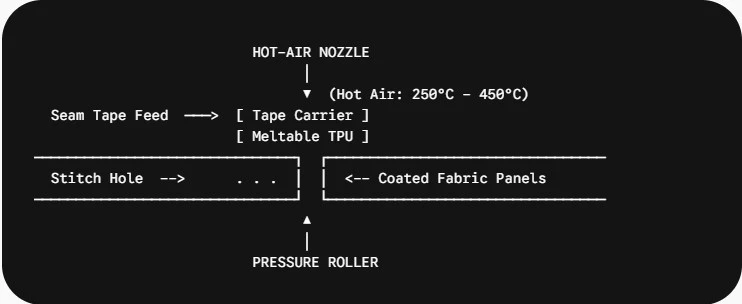
Key process parameters in thermal seam sealing include hot-air temperature, drive roller speed (m/min), air pressure (bar), and mechanical roller force (N). Insufficient heat input fails to lower the adhesive melt viscosity enough to seal around thread contours, resulting in micro-channel leaks. Overheating causes thermal degradation, polymer discoloration, and melt-through of thin base coatings, compromising structural bond integrity.
For commercial waterproof outerwear, detailed material selection guides compare different technical options, such as the PU-coated ripstop nylon rain poncho, which integrates fine-denier polyamide woven substrates with low-temperature flexible polyurethane coatings.
Waterproof Barrier Mechanisms, Material Systems, and Hydrostatic Performance of Rain Poncho Fabrics
The physical mechanism of water barrier retention in coated rainwear depends on surface chemistry and structural continuity. Liquid water resistance at a textile interface is governed by Young's equation and the Laplace pressure equation:
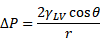
Where:
ΔP is the hydrostatic breakthrough pressure (Pa)
 is the liquid-vapor surface tension of water (0.0728 N/m at 20°C)
θ is the equilibrium water contact angle (degrees)
r is the effective pore radius of the fabric or membrane matrix (m)
To achieve complete waterproofness under pressure (ΔP>0), the surface must either be entirely non-porous (r→0, as in continuous polymer coatings) or maintain a water contact angle  across micropores smaller than the capillary breakthrough threshold. Modern waterproof fabrics use dual-action protection: a fluorocarbon-free durable water repellent (DWR) surface treatment combined with a continuous internal polymer barrier.
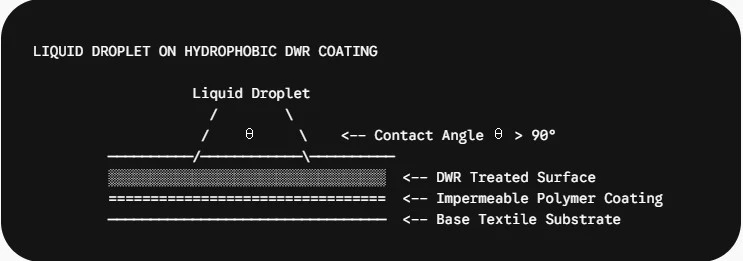
The major material systems utilized in rain poncho fabrication exhibit distinct chemical, physical, and hydrostatic characteristics:
Polyurethane (PU) Systems
Polyurethane coatings consist of alternating soft polyol segments (polyester or polyether) and hard diisocyanate segments. Polyether-based PUs offer high hydrolytic stability, preventing polymer degradation in warm, humid outdoor storage. Polyester-based PUs exhibit high tensile strength and abrasion resistance, but can undergo polymer chain scission under long-term exposure to moisture. PU coatings are applied at coat weights of 30 to 80 g/m², delivering hydrostatic resistance ranging from 3,000 mm H₂O to over 10,000 mm H₂O (per ISO 811 testing) while maintaining high low-temperature flexibility down to -30°C.
Polyvinyl Chloride (PVC) Plastisols
PVC coatings are formulated by dispersing suspension-grade PVC resin in liquid phthalate or non-phthalate plasticizers. When heated to 160–180°C, the mixture fuses into a dense, continuous film. PVC coatings yield exceptionally high hydrostatic head values (>15,000 mm H₂O) at low cost. However, they require high dry coating weights (150 to 300 g/m²), significantly increasing overall garment mass. PVC systems also suffer from progressive plasticizer migration and volatile loss under solar UV exposure, leading to coating stiffening, cracking, and loss of flexural durability over time.
Polyethylene (PE) and Ethylene-Vinyl Acetate (EVA) Films
Unbacked or lightweight composite PE and EVA materials are widely used in low-cost and emergency rainwear. EVA incorporates vinyl acetate monomer units into the polyethylene backbone, reducing polymer crystallinity and improving elasticity, clarity, and flex fatigue resistance. Non-porous EVA films (typically 0.10 mm to 0.15 mm thick) offer hydrostatic resistance between 1,500 mm H₂O and 4,000 mm H₂O. However, their low ultimate tensile strength and tear propagation resistance limit their service life under heavy physical exertion or wind loading compared to woven fabric composites.
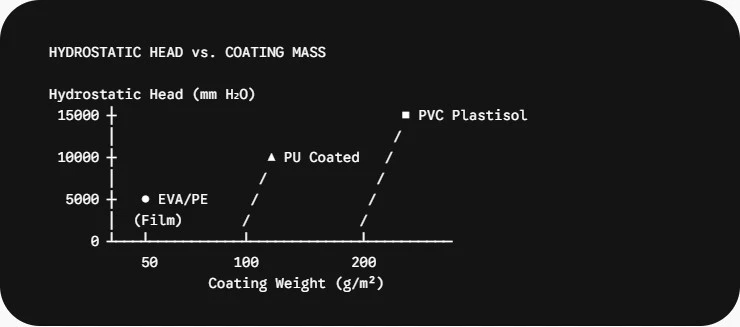
Performance evaluations comparing reusable polymer rainwear systems, such as the reusable EVA rain poncho for bulk outdoor programs, highlight the trade-offs between initial coating mass, mechanical flexibility, and long-term hydrostatic pressure retention. Similarly, studies examining ultra-lightweight film alternatives, including the PEVA rain poncho with heat-sealed seams, show that while non-woven or unbacked polymer films reduce overall product weight, their lower tear resistance limits utility in rugged, overgrown outdoor environments.
Hydrostatic pressure resistance measurements are sensitive to testing variables, including water temperature, pressure ramp rate (60 cm H₂O/min per ISO 811), and sample clamping stress. Standard test protocols report the pressure at which three drops of water penetrate the coating surface. Pinholes, micro-voids, or non-uniform coating deposition dramatically degrade performance, causing localized failure under low static heads.
Mechanical Durability, Tear Resistance, Flexing Fatigue, and Abrasion Stability under Outdoor Use
During field use, adult rain ponchos experience severe mechanical stresses, including surface abrasion from heavy backpack straps, tensile forces from gusting winds, and tearing caused by sharp branches. Evaluating durability requires standardized mechanical testing to characterize wear mechanisms and structural failure modes.
Tear Resistance and Fracture Mechanics
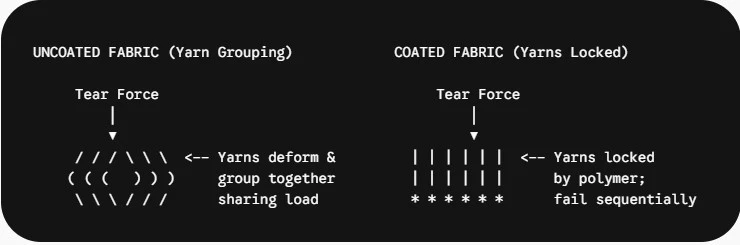
Tear propagation resistance is typically quantified using the trouser tear test (ISO 13937-1) or Elmendorf pendulum method (ISO 13937-2). When a notch or puncture is created in a coated fabric, applied tensile stress concentrates at the crack tip. In non-coated woven fabrics, individual yarns deform and group together at the tear front, sharing the applied load across a larger cross-sectional area.
However, applying a continuous polymer coating can lock the warp and weft yarns into position. If the coating film penetrates deeply into the weave, it restricts yarn mobility, preventing load-sharing alignment. Consequently, heavily coated dense fabrics can exhibit lower tear resistance than their uncoated base textiles, failing sequentially yarn-by-yarn at low peak forces. Optimizing tear resistance requires controlling coating penetration to preserve local yarn mobility within the ripstop matrix.
Flexing Fatigue and Low-Temperature Brittleness
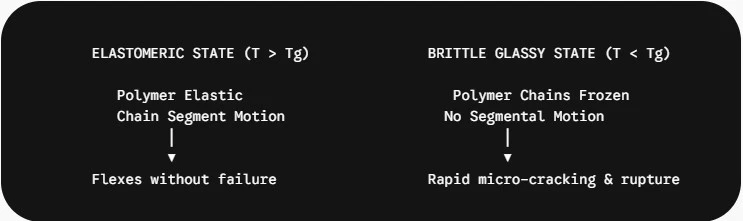
Repeated folding, packing, and movement cause cyclic flexural fatigue along fold lines. Flex fatigue is evaluated using the De Mattia flex tester (ISO 7854) or Bally flexometer over thousands of compression-extension cycles. Under cyclic flexure, mechanical hysteresis generates localized shear stresses at the interface between the rigid fabric yarns and the elastomeric polymer coating.
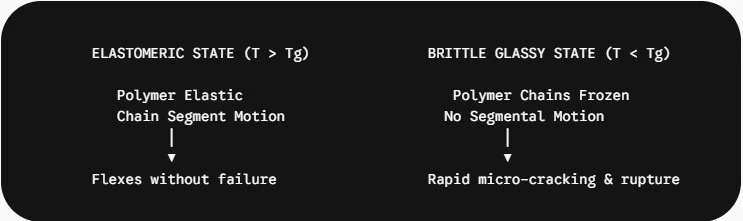
Over time, this cyclic stress causes interface micro-cracking, coating crazing, and eventual delamination, turning a continuous waterproof film into a porous matrix. Cold environments accelerate this failure mode; as temperatures drop below the glass transition temperature ( ) of the coating polymer (e.g.,
  to
to  for plasticized PVC,
  for polyether TPU), the coating transitions from a flexible elastomer to a brittle glass, leading to rapid cracking upon flexure.
Abrasion Resistance and Surface Degradation
Surface abrasion resistance is evaluated via Martindale abrasion testing (ISO 12947) or rotary platform Abraser tests (ASTM D3884). Frictional contact with coarse backpack webbing (typically 1000D textured nylon) subjects the top surface of the poncho to severe shear forces. Abrasion failure occurs through progressive surface thinning, micro-fibrillation of base yarns, and eventual adhesive bond rupture at the polymer-fabric interface.
|
Material / Coating Configuration |
Initial Hydrostatic Head (mmH2O) |
Post-Abrasion Head (5,000 Cycles, mmH2O) |
Trouser Tear Strength (Warp/Weft, N) |
Low-Temp Flex Limit (Tg, °C) |
|
70D Ripstop Nylon + PU Coating (40 g/m²) |
8,000 |
5,500 |
28 / 25 |
-40 |
|
210D Oxford Polyester + PVC Plastisol (180 g/m²) |
12,000 |
9,800 |
42 / 38 |
-15 |
|
Unbacked EVA Monolithic Film (0.12 mm) |
2,500 |
300 (Film Rupture) |
8 / 6 |
-25 |
|
70D Polyester + Hot-Melt TPU Lamination |
10,000 |
8,200 |
32 / 30 |
-35 |
Field Performance under Rain, Wind, UV Exposure, Folding, and Repeated Deployment
Field deployment subjects rain ponchos to multiple simultaneous environmental degradation pathways. Unlike controlled single-factor laboratory environments, real-world service conditions involve synergetic degradation driven by solar ultraviolet (UV) radiation, atmospheric oxygen, ambient moisture, dynamic wind-driven rain, and mechanical compression during storage.
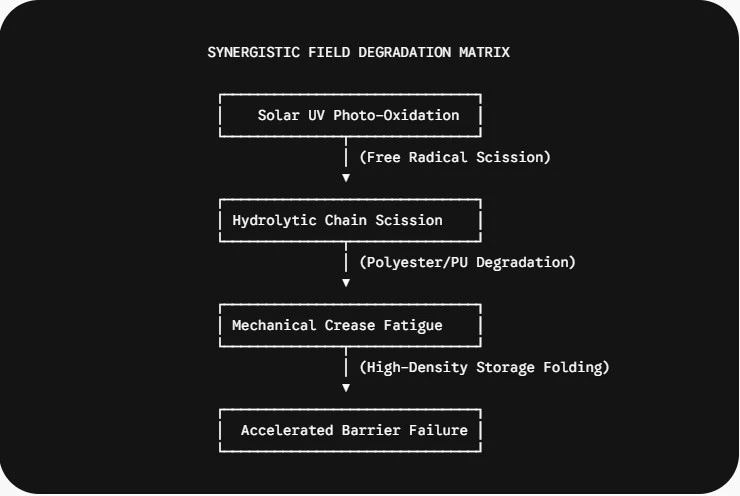
Solar UV radiation (UV-A at 315–400 nm and UV-B at 280–315 nm) initiates photo-oxidative degradation in synthetic polymer coatings and synthetic base fibers. Photon absorption generates reactive free radicals (R•, ROO•) along the polymer backbone, causing Norrish Type I and Type II photochemical reactions. This photochemical degradation leads to crosslinking or chain scission within the polymer network:
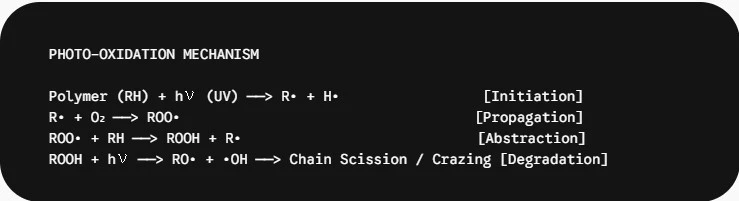
Macro-level consequences of photo-oxidation include surface yellowing, coating embrittlement, loss of tensile strength in base yarns, and severe cracking of the waterproof layer. Unstabilized polyurethane and PVC coatings can lose over 50% of their ultimate elongation after 300 hours of accelerated Xenon-arc weathering (ISO 4892-2). Mitigating UV degradation requires incorporating light stabilizers into the coating formulation:
Hindered Amine Light Stabilizers (HALS): Act as free-radical scavengers, continually trapping nitroxyl radicals to arrest auto-oxidation cycles without being consumed.
UV Absorbers (Benzotriazoles / Hydroxyphenyl-triazines): Absorb harmful high-energy UV radiation and dissipate it as harmless thermal energy before it can cleave polymer chains.
Field usability also depends heavily on packability and crease-fatigue resistance. Rain ponchos are typically tightly folded, compressed, and stored in compact carry pouches for extended periods. Tightly compressed folds create localized stress points where the polymer coating undergoes high compressive deformation on the inner radius and high tensile elongation on the outer radius.
When combined with trace moisture trapped during storage, plasticizer migration (in PVC) or hydrolytic degradation (in polyester-PU) occurs at these high-stress fold lines. Upon unfolding, these micro-damaged crease lines can exhibit up to a 70% drop in localized hydrostatic head resistance, leading to rapid water penetration along grid patterns.
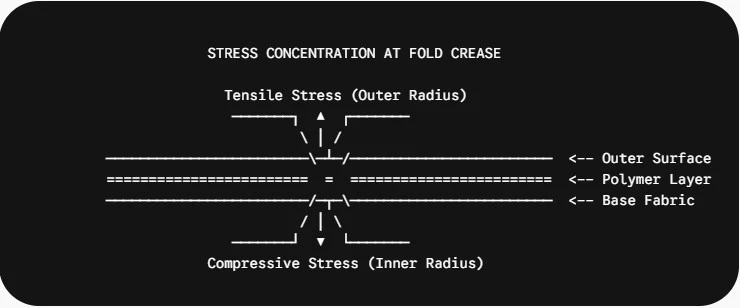
Wind-driven rain adds dynamic impact energy to static water pressure. Terminal velocities of heavy raindrops (2.5 mm to 5.0 mm in diameter) range from 7 to 9 m/s, generating dynamic impact pressures exceeding 10 to 30 kPa upon contact with the fabric. If the outer textile face lacks an effective hydrophobic DWR finish, the surface quickly wets out. Surface wet-out forms a continuous water film over the exterior, which blocks vapor transfer and accelerates water ingress through micro-defects or pinholes in the underlying coating.
Multifunctional Integration of Waterproofness, Mobility, Packability, and Structural Durability
Unlike fitted technical jackets, an adult camouflage rain poncho uses a loose-fitting, planar geometry designed to balance multiple functional requirements: high coverage area, ventilation, packability, mobility, and multi-mode structural utility.
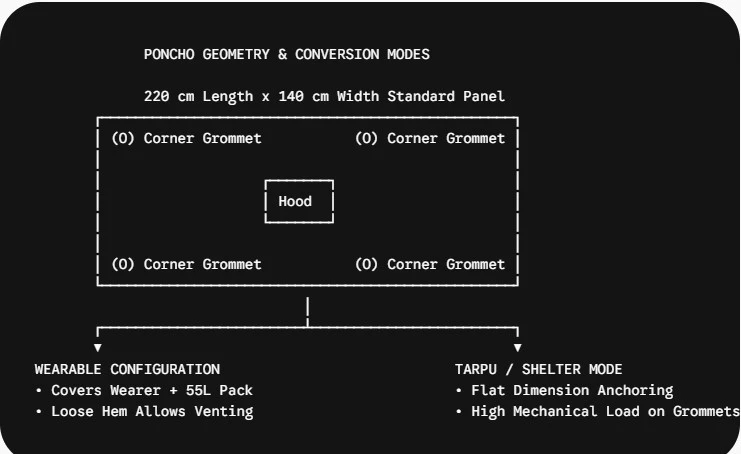
A standard technical poncho configuration uses dimensions of roughly 220 cm in total length (110 cm front, 110 cm back) and 140 cm in width. This rectangular geometry accommodates an adult wearer carrying a fully loaded 45L to 65L field backpack without pulling the rear hem upward. The open side structure allows passive air movement driven by body heat (the chimney effect), venting interior humidity and reducing internal condensation without relying entirely on breathable microporous membranes.
Engineering structural versatility into a poncho requires integrating hardware elements such as heavy-duty corner grommets, perimeter press-stud snaps, and adjustable drawstrings. These components allow the garment to convert into secondary structural modes:
Emergency Tarp / Lean-To Shelter: The poncho is pitched flat or angled using guy-lines passed through corner grommets.
Ground Sheet: Placed directly on rocky or wet terrain to create a moisture barrier beneath sleeping equipment.
Bivy / Field Stretcher: Mating perimeter snap fasteners along the edges forms an enclosed sleeping bag cover or emergency transport drag-sheet.
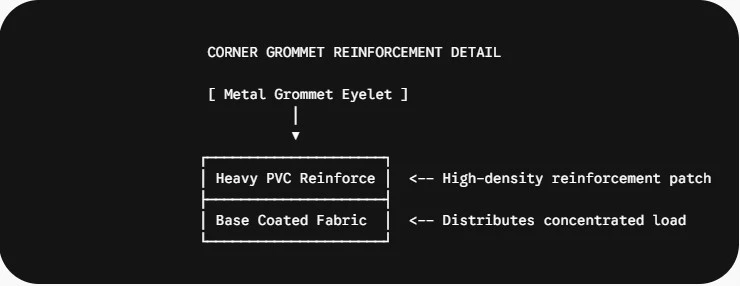
Converting a wearable garment into a structural shelter changes the load profile from low-stress draping to high localized tensile stress. Wind loads on a pitched poncho tarp exert concentrated point-loads on perimeter grommets that can exceed 300 to 500 N. Standard un-reinforced fabric pin-holes will pull through or tear under these loads.
Preventing grommet pull-out requires bond-reinforcement strategies, such as heat-welding or high-frequency stitching high-density polymer patches (e.g., 500D PVC or Hypalon synthetic rubber) directly to the corners before setting the brass or aluminum grommets. These reinforcement patches spread concentrated point loads over a broader area of the base ripstop fabric.
Trade-offs between garment coverage and mobility are analyzed in design reviews of specialized functional outerwear, such as the lightweight waterproof rain cape for hiking and cycling. Similarly, the engineering details of long-length garments are illustrated by the waterproof hooded long rain poncho for adults, where optimized panel shaping ensures extended lower-body coverage without tripping the wearer during steep ascents.
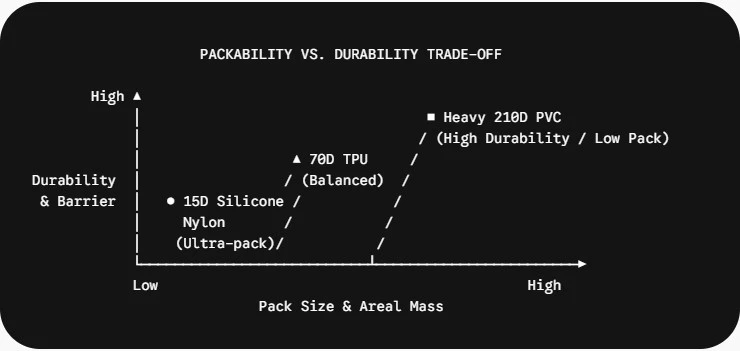
Achieving high performance requires balancing total mass, packed volume, and mechanical strength. While heavy-duty 210D polyester fabrics coated with 150 g/m² PVC offer excellent durability, their high overall weight (~800–1200 g) and large packed volume restrict their use in lightweight packing applications. Conversely, ultralight 15D nylon coated with silicone/PU weighs under 250 g and packs into a compact 0.5L pouch, but offers lower tear strength under high wind loads when deployed as a shelter. Middle-ground formulations using 70D ripstop nylon or polyester with a 40–60 g/m² TPU coating balance low weight (~400–550 g) with sufficient structural strength for multi-mode field deployment.
Environmental, Material-Safety, and End-of-Life Considerations for Camouflage Rain Poncho Systems
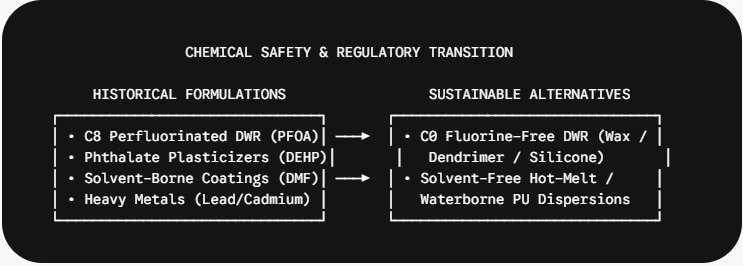
The environmental profile and chemical safety of technical outdoor rainwear face increasing regulatory scrutiny and market transformation. Key areas of concern involve solvent emissions during coating processes, plasticizer leaching from vinyl formulations, persistent fluorinated chemicals in DWR treatments, and end-of-life disposal challenges.
Phthalate Plasticizers and Solvent Emissions
Traditional flexible PVC coatings depend on low-molecular-weight phthalate plasticizers (such as DEHP, DBP, or BBP) to soften the rigid PVC matrix. Phthalates are not chemically bound to the polymer backbone and can migrate to the surface, presenting leaching risks and human exposure concerns. Regulatory frameworks like EU REACH (Annex XVII) and US CPSC tightly restrict total phthalate content to under 0.1% by weight. Modern compliant formulations substitute phthalates with non-restricted alternatives like diisononyl cyclohexane-1,2-dicarboxylate (DINCH) or bio-based citrate plasticizers. Additionally, processing transitions favor solvent-free hot-melt TPU extrusion or waterborne polyurethane dispersions (PUDs) to eliminate volatile organic compound (VOC) emissions like dimethylformamide (DMF) during industrial curing.
Elimination of Per- and Polyfluoroalkyl Substances (PFAS)
Historically, durable water repellent (DWR) surface treatments used long-chain fluorocarbon chemistries (C8 species containing perfluorooctanoic acid, PFOA) to provide low surface energy against both water ( ) and oils (
 ). Due to the environmental persistence and bioaccumulation of C8 and short-chain C6 fluorocarbons, global environmental regulations are mandating the adoption of fluorine-free (C0) DWR technologies.
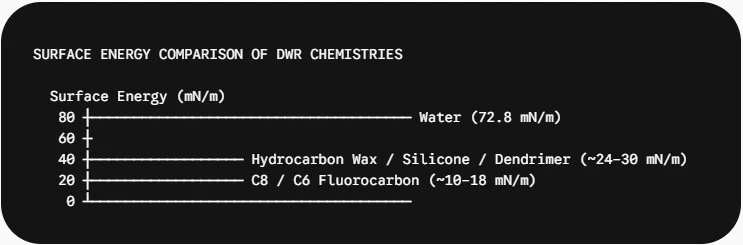
Current C0 DWR alternatives use three primary chemistries:
Hyperbranched Hydrophobic Polymers (Dendrimers): Comb-like molecular structures with long alkyl side-chains that align outward, creating a hydrophobic surface (  ).
).
Silicone-Free Alkyl-Wax Emulsions: Modified paraffin waxes combined with crosslinking resins that bind to surface hydroxyl or amino groups on synthetic fibers.
Reactive Polysiloxanes: Polydimethylsiloxane (PDMS) networks that crosslink on the fiber surface, providing high water repellency and soft hand feel.
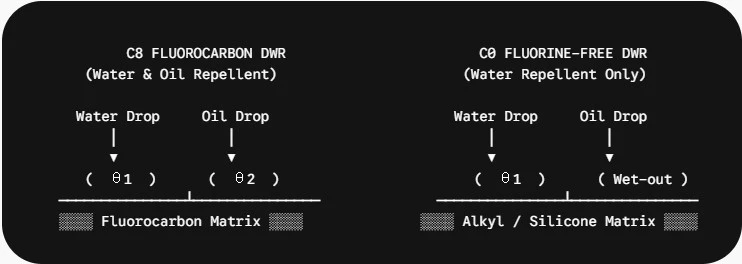
While C0 DWR finishes match fluorinated chemistries in initial water contact angle and drop shedding, they lack oil repellency. Consequently, exposure to body oils, insect repellents (DEET), or fuel vapors can contaminate C0 surfaces, reducing their water contact angle and requiring more frequent laundering to restore hydrophobic performance.
Material trade-offs across single-use and reusable product categories are evaluated in comparative reviews, such as the analysis of the disposable PE rain poncho for emergency and event use. While ultra-low-cost polyethylene ponchos provide emergency utility, their low durability often leads to rapid disposal, creating plastic waste challenges. Conversely, high-durability coated fabrics extend service life but introduce complex multi-material recycling barriers at end-of-life.
|
Material Category |
Primary Environmental Hazard |
Regulatory Compliance Benchmark |
Sustainable Industry Alternative |
Recycling / End-of-Life Pathway |
|
Phthalate-PVC |
Plasticizer leaching, dioxin generation during incineration |
REACH Annex XVII, US CPSC 0.1% limit |
DINCH plasticized PVC, Polyether TPU |
Mechanical shredding (downcycled industrial mats) |
|
C8 Fluorocarbon DWR |
Extreme bioaccumulation, PFOA persistence |
EU POPs Regulation, EPA PFAS Stewardship |
C0 Hyperbranched Alkyl-Dendrimers |
Thermal incineration with halogen scrubbers |
|
Solvent PU (DMF) |
High VOC emissions, toxic solvent exposure |
EU OEL for DMF, ZDHC Manufacturing Restricted Substances |
Waterborne PUDs, Extrusion Hot-Melt TPU |
Chemical depolymerization or energy recovery |
|
Unbacked PE Film |
Short service lifespan, high land-fill volume |
ISO 14021 recycled content tracking |
Recycled Post-Consumer PE (rPE) |
Direct polyolefin mechanical re-melting |
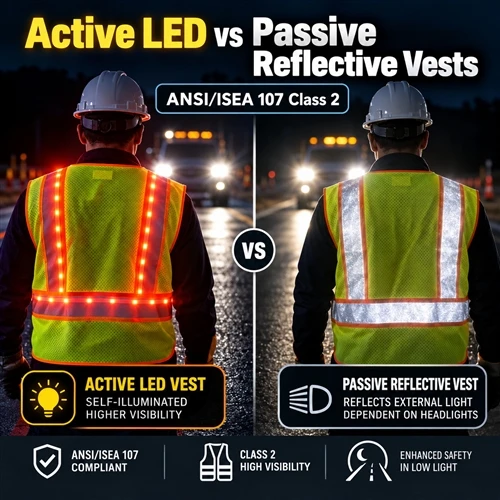
When evaluating wet-weather PPE applications, safety standards demand integrated high-visibility or reflective properties alongside waterproofing. Standards like EN ISO 20471 or ANSI/ISEA 107 mandate minimum retroreflective surface areas and chromaticity coordinates for daytime visibility. Detailed technical specifications for integrated protective apparel are showcased in studies on the waterproof reflective safety rain jacket.
Furthermore, full-face storm protection design principles are detailed in evaluations of heavy-duty rainy gear like the PVC-coated Oxford waterproof raincoat, where stiffened hood visors and double-flap storm plackets prevent water ingress under heavy, wind-driven precipitation.
Research Needs for Durable, Lightweight, Scalable, and Sustainable Camouflage Rain Ponchos
Despite advances in polymer coatings and synthetic textile substrates, several technical trade-offs remain unresolved. Existing rainwear formulations must often choose between mechanical durability, light weight, environmental sustainability, and low-cost scalability.
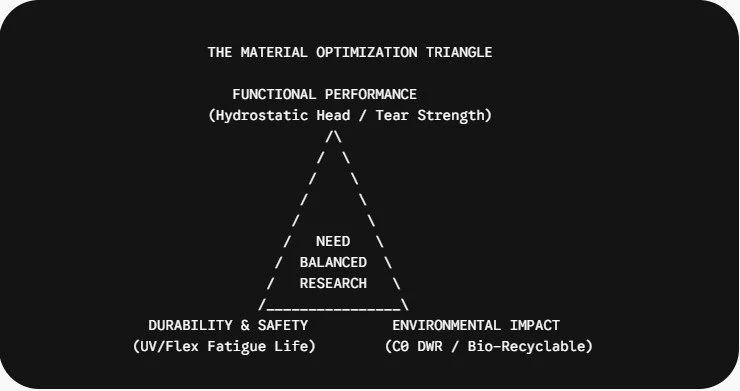
Addressing these limitations requires targeted research in several functional areas:
Self-Healing Hydrophobic and Barrier Coatings: Micro-scratches and surface abrasion disrupt continuous waterproof coatings, causing pinhole leaks. Research is exploring incorporating dynamic reversible bonds (such as Diels-Alder polymer networks or hydrogen-bonding supramolecular polyurethanes) into barrier formulations. These dynamic chemistries allow micro-cracks to heal autonomously upon mild thermal activation (e.g., solar heating or warm air tumble drying).
Durable Oil-Resistant C0 Water Repellents: Non-fluorinated (C0) DWR treatments currently lack oil repellency. Developing bio-based, bio-inspired hierarchical surfaces (such as dual-scale micro/nano-structured silica networks functionalized with short alkyl silanes) could provide omniphobic protection without using persistent perfluorinated chemistries.
Advanced Hot-Melt Seam-Sealing Adhesives: Standard TPU seam tapes can degrade via hydrolytic chain scission under long-term humid storage. Research is focused on moisture-curable, reactive polyurethane (R-PUR) hot-melt tapes that form permanent covalent crosslinks across seam junctions, improving hydrolytic resistance and bond strength over time.
Mono-Material Recyclable Laminates: Multi-material laminates (e.g., polyamide fabric bound to a polyurethane coating via acrylic adhesives) cannot be easily separated for end-of-life recycling. Developing mono-material structures-such as polyester textiles laminated with polyether-polyester elastomeric barrier films-would enable direct mechanical re-melting and closed-loop recycling without requiring solvent separation.
|
Current Technology |
Main Benefit |
Major Limitation |
Research Gap |
Future Direction |
|
Phthalate PVC Plastisol |
Very low cost, high hydrostatic barrier |
High weight, UV embrittlement, plasticizer leaching |
Non-migrating plasticizers and non-toxic softening systems |
Bio-based citrate plasticizers, bio-PUD coatings |
|
Solvent-Borne PU |
High elasticity, strong substrate adhesion |
High VOC emissions (DMF), hydrolytic degradation |
Solvent-free high-solids application techniques |
Waterborne polyether-PUDs, bio-polyol PUs |
|
C0 Alkyl-Dendrimer DWR |
Fluorine-free, high initial water contact angle |
Zero oil repellency; sensitive to DEET / oil contamination |
Omniphobic non-fluorinated hierarchical surface structures |
Nano-textured silica-alkyl hybrid hydrophobic surfaces |
|
Thermoplastic TPU Tape |
Sealed seam hydrostatic integrity |
Seam tape delamination under cyclic flex and aging |
Long-term hydrolytic interface degradation mechanisms |
Moisture-reactive crosslinking PUR seam tapes |
Engineering Conclusions and Outlook
Optimizing adult camouflage rain ponchos requires balancing substrate selection, polymer coating chemistries, seam sealing, and functional geometry. Woven ripstop synthetic fabrics (polyester or polyamide) provide the structural foundation needed to absorb mechanical tear forces, while continuous polyurethane, TPU, or EVA barrier layers deliver high hydrostatic head protection. Hot-air seam sealing using compatible thermoplastic tapes is essential to preserve barrier continuity across stitch lines created during garment assembly.
The development of technical rainwear is shifting toward sustainable material systems. Industry adoption of solvent-free extrusion coatings, non-phthalate plasticizers, and fluorine-free (C0) durable water repellents reflects this transition away from persistent fluorinated chemistries and volatile process solvents. However, replacing these established chemistries requires addressing performance trade-offs in oil repellency, flex fatigue life, and hydrolytic stability under severe field conditions.
Future advances in personal weather protection will depend on innovations in material science, including mono-material recyclable laminates, self-healing hydrophobic coatings, and advanced reactive seam adhesives. Bridging laboratory material development with scalable industrial manufacturing processes will enable the production of lightweight, highly durable, and environmentally responsible weather-protection systems for global outdoor, tactical, and emergency response applications.
Frequently Asked Questions (FAQ)
Q1: How does the ripstop structure in camouflage rain ponchos work?
A1: A ripstop fabric is constructed by interweaving high-denier reinforcing filament yarns (such as 210D or higher) into a plain-weave matrix at regular intervals (typically 3 mm to 6 mm). When a puncture or tear occurs, the concentrated shear force is redistributed across multiple reinforcing grid yarns upon reaching the intersection, effectively stopping tear propagation.
Q2: Does applying a functional barrier coating (such as PU or PVC) reduce the fabric's overall tear strength?
A2: Yes. Excessive polymer penetration into the textile weave locks the warp and weft yarns in place, preventing them from shifting or grouping together to share the applied load. As a result, the fabric fails sequentially yarn-by-yarn under stress, lowering its total tear resistance. High-quality rainwear requires precise control over coating penetration to maintain strong surface adhesion while preserving yarn mobility.
Q3: Why is hot-air seam sealing necessary along stitched seams?
A3: During garment assembly, sewing needles create dense micro-perforations (typically 0.8 mm to 1.2 mm in diameter) through the continuous waterproof layer, allowing water to easily penetrate under pressure. Automated seam-sealing machinery directs hot air (250°C–450°C) to melt a thermoplastic TPU or EVA adhesive tape over the stitch line, pressing it into the surrounding weave to seal micro-gaps and fully restore hydrostatic protection.
Q4: What are the main pros and cons of PU, PVC, and EVA poncho materials?
A4:
Polyurethane (PU) Coatings: Lightweight, highly flexible at sub-zero temperatures (down to -30°C), and abrasion-resistant while maintaining strong hydrostatic performance, making them ideal for heavy-duty outdoor use.
Polyvinyl Chloride (PVC) Plastisols: Deliver exceptional hydrostatic resistance at a low material cost, but add significant garment mass and suffer from progressive plasticizer migration, leading to stiffening and cracking over long-term UV exposure.
EVA / PEVA Monolithic Films: Extremely lightweight, soft, and non-toxic for reusable or short-term rainwear, but exhibit lower tear strength and puncture resistance under harsh field conditions.
Q5: Why do rain ponchos tend to leak along fold lines after extended storage?
A5: Storing a tightly folded or compressed poncho generates high compressive stress along inner fold radii and tensile stress along outer edges. Combined with trapped residual moisture or temperature fluctuations, this localized stress induces hydrolytic degradation or flexural micro-cracking in the polymer layer. Upon unfolding, these damaged crease lines can suffer up to a 70% loss in localized hydrostatic resistance, resulting in rapid leakage.
Q6: How do fluorine-free (C0) DWR treatments differ from traditional C8/C6 fluorocarbon finishes?
A6:
C8/C6 Fluorocarbon DWR: Repels both water and oil/stains, but contains persistent bioaccumulative chemicals (such as PFOA) that present severe environmental risks.
Fluorine-Free (C0) DWR: Utilizes hyperbranched dendrimers, paraffin waxes, or siloxanes to achieve high initial water contact angles (>100°), but lacks oil repellency. Exposure to body oils, fuel vapors, or insect repellents (DEET) can degrade surface repellency, requiring periodic laundering to restore performance.
Q7: How can corner grommets be prevented from tearing out when the poncho is deployed as a shelter or tarp?
A7: Pitching a poncho flat or angled as a shelter exerts concentrated wind loads of up to 300–500 N on perimeter grommets. To prevent grommet pull-out, professional designs weld or stitch high-density reinforcement patches (such as 500D PVC or Hypalon synthetic rubber) under the eyelets, distributing point stresses over a larger area of the base ripstop fabric.
Technical Procurement & Material Specification Inquiry
For technical inquiries regarding bulk procurement, custom coating specifications, certified EN ISO/ANSI compliance testing, or OEM/ODM manufacturing of high-performance rainwear systems, contact our engineering sales department:
Email: wendy@topmatched.com
Phone/Whatsapp: +8613774692420
Technical Consultation: Custom ripstop denier selection, TPU/PVC coat weight optimization, C0 DWR finishing, and custom camouflage pattern development.