Mining PPE procurement requires a full-system review of visibility, impact protection, fabric strength, dust control, helmet compliance, sizing, logo marking and bulk shipment consistency. For underground and surface mining projects, a single item cannot define worker protection; the buyer must match safety jackets, reflective workwear, helmets, gloves, boots and accessories to the real hazard profile of the site.
For OEM mining safety clothing and head protection programs, the procurement team should define standards, material structure, reflective placement, impact performance, wear resistance and replacement cycle before confirming samples. The following guide focuses on engineering checks that help PPE distributors, mining contractors and private label buyers reduce sample revisions and control bulk production risk.

Reflective Material Selection for Low-Light Underground Coal Mine Zones
Underground mining environments create visibility problems that are different from roadwork or warehouse PPE. Workers may operate under cap lamps, vehicle headlights, narrow beam angles, wet tunnel walls, dust suspension and machinery shadow zones. For mining safety clothing, the reflective material should be selected according to directional light return, garment position and expected contamination risk.
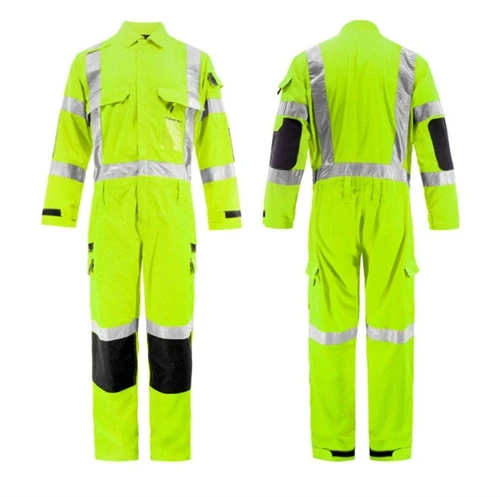
High visibility workwear used in mining should not rely only on fluorescent fabric color. Fluorescent yellow, orange or red fabric improves daytime or high-illumination contrast, but underground visibility depends heavily on retroreflective tape response under directed light. Reflective tape placement on the chest, back, shoulders, sleeves and lower legs should support recognition of body shape and movement direction.
|
Reflective Option |
Physical Structure |
Mining Procurement Value |
Risk If Misused |
|
Glass bead reflective tape |
Microscopic glass beads embedded in a reflective layer |
Flexible for sewing on jackets, vests and coveralls |
Lower angular return than prism tape under some beam positions |
|
Micro-prismatic reflective tape |
Precision prism cells returning light toward source |
Stronger directional reflection for vehicle and cap lamp visibility |
Stiffer hand feel may affect garment flexibility |
|
Segmented reflective tape |
Broken reflective blocks on stretch or heat-transfer base |
Better movement comfort on sleeves and pants |
Incorrect heat press may cause peeling |
|
Flame-retardant reflective tape |
Reflective layer on FR backing |
Suitable when FR garment route is required |
Must match garment flame resistance requirement |
|
Perforated reflective tape |
Reflective tape with ventilation holes |
Better breathability in warm underground zones |
Reduced reflective surface area if over-perforated |
|
Reflective piping |
Narrow reflective cord or trim |
Useful for pocket edges, seams and accessories |
Not enough as the main visibility element |
Cap Lamp and Vehicle Headlight Angles Below 30° in Underground Work Areas
In coal mines and other underground sites, light often reaches the worker from a narrow beam source rather than a broad daylight field. Cap lamps, vehicle headlights and fixed tunnel lights create different incident angles. If reflective tape is placed only on the front chest, a worker turning sideways may lose visible surface area.
A buyer should request front, back and side visibility mapping during sample approval. For underground high visibility garments, reflective tape on shoulder lines and lower leg zones can help machine operators recognize worker posture when the body is partially blocked by equipment.
Dust Contamination and Wet Surface Loss on Reflective Workwear
Dust, mud and coal residue can reduce visible response on both fluorescent fabric and reflective tape. For mining PPE procurement, buyers should define whether the garment will be used in dry dust, wet mud, rain, oil exposure or mixed underground conditions. Reflective material must be inspected after rubbing, bending and light surface contamination, not only under clean sample-room conditions.
Recommended buyer checks:
Reflective tape width: commonly 50 mm for high visibility workwear programs
Tape placement: chest, back, shoulder, sleeve and leg zones by garment design
Tape flexibility: confirm after sewing or heat transfer application
Dust wipe test: check whether reflective surface can be cleaned without damage
Wash route: confirm domestic wash, industrial wash or limited-use requirement
Compliance target: EN ISO 20471, ANSI/ISEA 107 or buyer-specific mining PPE requirement
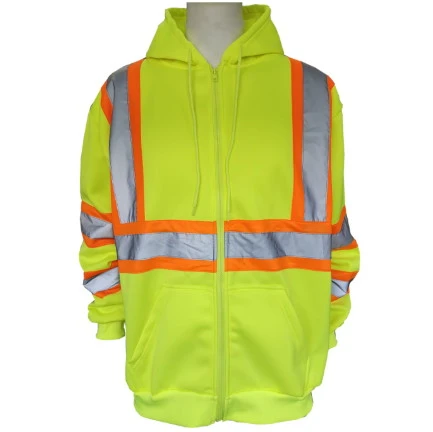
For mine operators requiring outerwear with stronger visibility and weather protection, Safety Jackets can be specified with high visibility fabric, reflective tape, waterproof coating, seam sealing, custom logo printing and project-based size grading.
Need Mining PPE Samples Before Bulk Procurement?
Send your target standard, reflective tape layout, garment fabric, size range, logo position and order quantity. We can help check sampling details, material options and OEM production route before bulk order confirmation.
Tensile Strength and Dust-Mite Resistant Fiber Structure Data for Mining Protective Clothing
Mining safety clothing must resist pulling, abrasion, seam stress, dust contact and repeated movement. The garment fabric should not be selected only by GSM. Buyers should review fiber composition, weave structure, tear strength, seam strength, anti-static route, dust release performance and washing behavior before confirming OEM production.
For underground and surface mining workwear, common fabrics include polyester-cotton twill, 300D Oxford with PU coating, birdseye polyester mesh, softshell, flame-resistant cotton, modacrylic blends and aramid-based fabrics. Each material has a different balance of durability, breathability, washing shrinkage and protection route.
|
Fabric Structure |
Typical Use in Mining PPE |
Procurement Checkpoint |
Production Risk |
|
Polyester-cotton twill |
Coveralls, work pants, work shirts |
Tear strength, shrinkage, seam strength |
Fabric may shrink or fade after repeated washing |
|
300D Oxford PU coated |
Safety jackets, rainwear, outer shell |
Coating quality, water resistance, abrasion |
Coating may crack if low-grade resin is used |
|
Birdseye polyester mesh |
High visibility vests and summer PPE |
GSM, breathability, tape sewing stability |
Weak mesh may deform under tape stitching |
|
Softshell fabric |
Cold-weather work jackets |
Stretch recovery, wind resistance, bonding |
Lamination may delaminate after poor washing |
|
FR cotton |
Flame-resistant workwear |
ATPV value, FR wash durability |
FR treatment may weaken after wrong laundering |
|
Aramid blend |
High-risk heat or arc exposure |
Fiber content, flame resistance, tensile strength |
Higher cost and strict sourcing control required |
Warp and Weft Tear Resistance for Mining Safety Clothing
Mining garments are exposed to repeated pulling when workers climb ladders, carry tools, enter machinery cabins or brush against rough surfaces. A buyer should confirm tear strength in both warp and weft directions because fabric may behave differently across the garment body, sleeves and trouser panels.
For OEM mining safety clothing, the specification should include:
Fabric composition, such as polyester/cotton or FR cotton blend
Fabric weight in GSM
Tear strength test requirement by project
Seam strength test requirement at high-stress zones
Shrinkage tolerance after washing
Color fastness to rubbing and washing
Reflective tape sewing or heat-transfer compatibility
Pocket load requirement for tools and radios
Dust-Mite Resistant and Dust-Release Surface Requirements
The phrase "dust-mite resistant" should be used carefully in industrial PPE. For mining procurement, buyers usually need dust control, low linting, easy cleaning and fabric surfaces that do not trap excessive particulate matter. A smooth woven surface may release dust better than long-pile or brushed materials. However, comfort and breathability must still be considered for long shifts.
A practical mining workwear fabric should reduce dust retention while allowing enough air movement for physical labor. For underground work, fabric selection should also consider sweat buildup, skin comfort, and whether the garment will be layered under a safety jacket or worn as a standalone coverall.
Sewing Tolerance, Bartack Reinforcement and Pocket Load Control
A garment may pass fabric inspection but fail in field use if sewing tolerance is weak. For mining protective clothing, bartack reinforcement should be considered at pocket corners, tool loops, crotch seams, shoulder seams and zipper ends. Large cargo pockets should be tested for tool weight, not only visual appearance.
|
Garment Zone |
Typical Stress Source |
QC Check |
|
Shoulder seam |
Jacket pulling and backpack strap pressure |
Seam strength and tape alignment |
|
Chest pocket |
Radio, pen, badge or small tools |
Pocket load and bartack strength |
|
Cargo pocket |
Gloves, tools, utility items |
Pocket opening and bottom seam strength |
|
Crotch seam |
Squatting and climbing |
Seam stretch and stitch density |
|
Knee area |
Kneeling, crawling, abrasion |
Reinforced panel or fabric wear test |
|
Zipper front |
Repeated opening and contamination |
Zipper puller, teeth and seam edge |
For private label mining PPE orders, the buyer should approve a full-size set, not only one sample size. Large sizes may require adjusted tape length, pocket position and reflective spacing, while small sizes may require reduced panel width to keep the garment balanced.
Safety Helmet Impact Endurance and Lateral Deformation Compliance Requirements
Head protection is a key part of mining PPE procurement because falling objects, machinery contact, tunnel wall impact and confined-space movement create repeated head injury risks. A mining safety helmet must be reviewed for shell material, suspension system, chin strap, side impact route, lateral deformation requirement, accessory compatibility and batch marking.
Industrial safety helmets are commonly produced from ABS, HDPE or PC materials. For mining and construction-related procurement, buyers often review EN 397, ANSI/ISEA Z89.1 or regional project standards. Helmet selection should be based on actual work conditions, not only appearance or color.
|
Helmet Component |
Common Material or Structure |
Buyer Confirmation Point |
Field Risk |
|
Outer shell |
ABS, HDPE or PC |
Impact strength, heat resistance, shell thickness |
Cracking under impact or cold conditions |
|
Suspension |
4-point or 6-point textile/plastic system |
Shock absorption, fit stability |
Impact force may transfer to head |
|
Chin strap |
2-point or 4-point system |
Breakaway or retention requirement |
Helmet may fall during movement |
|
Side protection |
LD lateral deformation option |
Side pressure resistance |
Weak side shell in confined spaces |
|
Ventilation |
Vented or non-vented shell |
Heat control vs electrical risk route |
Wrong shell type for site hazard |
|
Accessory slots |
Lamp, earmuff, visor, face shield |
Fit and balance control |
Accessory loosening during work |
|
Marking |
Molded or printed label |
Standard, batch, date and size |
Traceability failure in audits |
EN 397 Shock Absorption, Penetration and LD Side Pressure Checks
For European-style industrial helmet procurement, EN 397 commonly covers shock absorption and penetration resistance, with optional requirements such as lateral deformation, electrical properties, molten metal splash and low-temperature performance depending on the product route. Mining buyers should confirm which clauses are required by the project or local authority.
The helmet should be checked as a system. A strong shell alone does not guarantee acceptable performance if the suspension system is weak, poorly fitted or incorrectly assembled. The harness must maintain space between shell and head to absorb impact energy.
ANSI/ISEA Z89.1 Type I and Type II Procurement Routing
For buyers serving the US market, ANSI/ISEA Z89.1 classification should be reviewed based on impact direction and electrical requirement. Type I helmets are designed for top impact protection, while Type II helmets address top and lateral impact routes. Electrical classification also affects whether vented or non-vented designs are suitable.
Mining PPE buyers should confirm:
Type I or Type II route
Class C, G or E electrical classification if required
Vented or non-vented shell
Suspension adjustment system
Chin strap compatibility
Headlamp and earmuff accessory slot compatibility
Marking and batch traceability
Helmet Accessory Compatibility for Underground Mining Use
Underground mining helmets often need accessories such as cap lamps, earmuffs, face shields, visors, neck shades or reflective stickers. The buyer should confirm accessory balance and attachment strength before bulk purchase. A helmet that fits well alone may shift forward or backward after adding a lamp or hearing protection.
For mining PPE programs involving head protection, Helmet products should be reviewed together with garment visibility, lighting conditions and site-specific PPE requirements. Helmet color, logo marking, reflective stickers, suspension type and accessory slots can be adjusted for project-based procurement.
Mining PPE Procurement Checklist for Bulk OEM Orders
A head-to-toe mining PPE program should be built around the hazard profile of the site. The buyer should not purchase helmets, jackets, coveralls and reflective accessories as isolated products. Each item must support the same project standard, worker movement pattern, climate condition and replacement schedule.
|
PPE Item |
Procurement Check |
OEM Customization Option |
|
Safety helmet |
Impact route, suspension, chin strap, accessory slots |
Color, logo, reflective sticker, packaging |
|
Safety jacket |
Fabric, waterproofing, reflective tape, seam sealing |
Logo print, tape layout, size range |
|
Coverall |
Fabric strength, dust control, pocket load, tape position |
Color, pocket design, label, carton packing |
|
High visibility vest |
Mesh GSM, reflective tape, closure, size |
Print logo, zipper, pocket, binding color |
|
Gloves |
Abrasion, grip, cut route, dexterity |
Logo mark, cuff color, packaging |
|
Safety boots |
Toe cap, outsole, slip resistance, puncture route |
Label, carton mark, size ratio |
|
Reflective accessories |
Visibility route, attachment strength, chemical review |
Shape, logo, hangtag, retail pack |
For bulk supply, the pre-production approval file should include technical specification, artwork file, size chart, material card, color standard, packing method, test route and approved sample photos. AQL inspection should then verify whether the final shipment follows the approved baseline.
FAQ
Q: What should buyers confirm before starting mining PPE procurement?
A: Buyers should confirm the work environment, required standards, helmet impact route, garment fabric, reflective tape layout, size range, logo method, washing requirement, packaging and order quantity. These details affect sample accuracy, production cost, compliance route and bulk shipment consistency.
Q: Which reflective material is better for underground high visibility clothing?
A: For underground high visibility clothing, buyers should review cap lamp angle, vehicle headlight angle, dust exposure and garment movement. Glass bead tape offers flexibility for sewing, while micro-prismatic tape can provide stronger directional reflection. Final selection should be tested on the actual garment design.
Q: What helmet standards should mining PPE buyers check?
A: Mining PPE buyers should confirm regional requirements such as EN 397 or ANSI/ISEA Z89.1, depending on the target market. The procurement route should review impact protection, lateral deformation if required, electrical class, suspension quality, chin strap compatibility and accessory mounting.
Start Your Mining PPE Procurement Project
Send your required standards, helmet route, garment fabric, reflective tape layout, logo artwork, size range and estimated order quantity. We can support sample development, material matching, OEM marking, packing planning and bulk supply coordination for mining PPE programs.