- Executive Overview: Material Specifications and Chemical Safety Frameworks
- Material Selection and Component Structure: Base Fabrics, Lamination Membranes, and Hardware Specifications
- Manufacturing Technology and Seam Integrity: High-Frequency Welding vs. Sealed Stitching Protocols
- Functional Fluid Barrier Mechanisms and Odor Migration Control
- Material Options Comparison: TPU Backing vs. Alternative Lamination/Coating Systems
- Global Chemical Compliance Thresholds: REACH SVHC Candidate List, CPSIA Lead (100 ppm), and Phthalates Criteria
- Laboratory Testing Methods and Quality Assurance: Hydrostatic Pressure, Tensile Strength, and Extractable Heavy Metals
- Technical Sourcing Protocol: Selecting Material Specifications and OEM Development Criteria
- Frequently Asked Questions (FAQ): Chemical Testing & Compliance Verification
Executive Overview: Material Specifications and Chemical Safety Frameworks
Infant-grade waterproof wet bags engineered for diaper containment and soft goods storage require non-porous fluid isolation verified by hydrostatic pressure ratings exceeding 5,000 mm H2O. Primary construction relies on 100% polyester woven substrates (150D to 75D) thermally laminated on the interior surface with a 0.015 mm–0.025 mm thermoplastic polyurethane (TPU) membrane. Full regulatory access to the European Union, United States, and United Kingdom markets dictates strict compliance with EU REACH Regulation (EC No 1907/2006) Substances of Very High Concern (SVHC) limits below 0.1% (w/w) and US CPSIA (15 U.S.C. § 2051) total substrate lead limits below 100 ppm alongside mandatory phthalate restrictions (<1,000 ppm) across all accessible polymer layers and metal hardware.
Material Selection and Component Structure: Base Fabrics, Lamination Membranes, and Hardware Specifications
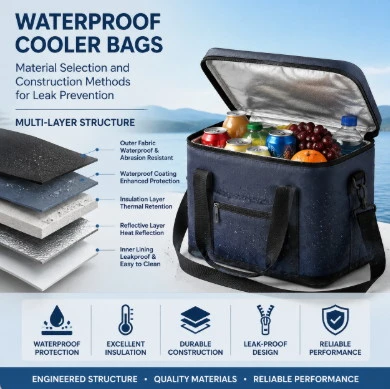
Manufacturing infant-grade wet bags requires structural stability, flexural durability, and chemical inertness. Component specification relies on verified physical thresholds for each raw material layer.
1. Base Substrate Fabric
- Material Composition: 100% Woven Polyester (150D/288F or 75D/144F Interlock / Plain Weave). Polyester is selected over polyamide (nylon) due to lower moisture absorption rates (<0.4% vs. 4.0%), preventing dimensional distortion under damp operational states.
- Fabric Density & Weight: 110 GSM to 160 GSM. Density must provide sufficient tensile strength to support minimum 5.0 kg static load requirements without seam slippage.
2. Waterproof Barrier Membrane
- Film Type: Polyether-based Thermoplastic Polyurethane (TPU). Polyether TPU is specified over polyester TPU due to superior resistance to hydrolytic degradation, fungal growth, and repeated thermal laundering cycles.
- Membrane Thickness: 0.018 mm to 0.022 mm. Thicknesses below 0.015 mm increase the risk of pinhole defects during thermal lamination, whereas thicknesses above 0.030 mm stiffen the hand-feel and induce stress-cracking along folded edges.
3. Closures and Hardware
- Zipper Assembly: #3 or #5 Spiral Nylon Coil Zipper with non-painted or electroplated lead-free zinc alloy sliders. Tape width: 28 mm 100% polyester.
- Snap Hardware: Polyoxymethylene (POM) resin snap buttons for handle attachments, engineered to withstand a unlatching force of 15 N to 25 N without material fracture or dislodgement from the webbing strap.
- Manufacturing Technology and Seam Integrity: High-Frequency Welding vs. Sealed Stitching Protocols
The operational lifespan of a wet bag depends on the joining technology used at panel intersections and hardware attachment points.
Seam Integrity Protocol: Needle penetration during traditional sewing punctures the inner TPU membrane, creating 0.8 mm to 1.2 mm perforation channels. Without secondary sealing, fluid transport occurs via capillary action through thread fibers under a pressure of 0.05 bar.
1. Stitched and Seam-Taped Construction
Conducted via lockstitch machines utilizing 100% spun polyester thread (Tex 30 to Tex 40). Stitch density is set precisely to 3.5 to 4.0 stitches per centimeter (9–10 stitches per inch). Lower stitch counts compromise seam tensile strength; higher counts induce excessive substrate perforation, reducing tear resistance. Following stitching, a 15 mm to 20 mm wide 3-ply hot melt TPU sealing tape is applied over the stitch line via hot-air welding equipment at 180°C to 220°C under 0.3 MPa roller pressure.
2. High-Frequency (HF) Ultrasonic Welding
Direct thermal bonding of overlapping TPU layers using high-frequency electromagnetic energy (27.12 MHz). HF welding fuses the internal TPU membranes directly, creating a monolithic seal with zero needle penetrations. This yields a seam hydrostatic pressure resistance equal to 100% of the base laminated fabric (>5,000 mm H2O). However, HF welding requires precise tool geometry and limits external design features compared to sewn constructions.
Functional Fluid Barrier Mechanisms and Odor Migration Control
Preventing fluid leakage and volatile organic compound (VOC) transmission from soiled items requires specific material density and closure engineering.
Liquid containment relies on the solid continuous molecular structure of the polyether TPU film. Unlike porous water-repellent coatings (e.g., C6 DWR or polyurethane sprays), continuous TPU films lack micro-voids, preventing water molecules under hydrostatic stress from passing through the substrate. Liquid retention under mechanical compression (such as squeezing inside a diaper bag) requires the TPU lamination layer to maintain film continuity under elongation strain up to 150%.
Odor containment involves controlling the Moisture Vapor Transmission Rate (MVTR). Ammonia compounds and organic volatiles generated by soiled diapers migrate through moisture vapor transport channels. A balanced polyether TPU specification targets an MVTR between 300 g/m²/24h and 800 g/m²/24h (ASTM E96 Procedure B). Lower MVTR (<100 g/m²/24h) minimizes odor transmission but traps moisture completely, accelerating internal mold formation if items remain stored over 24 hours.
Material Options Comparison: TPU Backing vs. Alternative Lamination/Coating Systems
The table below provides a quantitative engineering comparison of secondary barrier layers utilized in soft goods packaging:
| Engineering Parameter | Polyether TPU Lamination | Flexible PVC Coating | PEVA Sheet Lamination | Solvent PU Spray Coating |
|---|---|---|---|---|
| Hydrostatic Head Rating | > 5,000 mm H2O | > 8,000 mm H2O | > 3,000 mm H2O | 1,000 – 2,000 mm H2O |
| Phthalate-Free Assurance | Inherently 100% Phthalate-Free | Requires non-ortho phthalates; High risk | Inherently 100% Phthalate-Free | Inherently 100% Phthalate-Free |
| Flex-Crack Resistance (-10°C) | > 50,000 Cycles | Cracks < 5,000 Cycles | 10,000 – 15,000 Cycles | > 30,000 Cycles |
| Lamination Delamination Resistance | > 15 N / 2.5 cm | > 12 N / 2.5 cm | > 8 N / 2.5 cm | Not Applicable (Coating) |
| Laundering Resistance (60°C Wash) | Passes > 50 Cycles | Degrades; Plasticizer Loss | Passes < 15 Cycles | Passes < 20 Cycles |
| Material Density (GSM Impact) | Low (+20 to 30 GSM) | High (+60 to 100 GSM) | Medium (+35 to 50 GSM) | Ultra-Low (+10 to 15 GSM) |
| Recyclability & EOL Impact | Recyclable Thermoplastic | Non-recyclable / Dioxin emitter | Recyclable PE Blend | Non-recyclable Polyurethane |
| Relative Material Cost | Medium-High | Low | Medium-Low | Low |
Global Chemical Compliance Thresholds: REACH SVHC Candidate List, CPSIA Lead (100 ppm), and Phthalates Criteria
Sourcing infant-grade items requires meeting strict chemical safety limits across major legal frameworks.
- US CPSIA Total Lead (Substrates): ≤ 100 ppm (0.01% w/w)
- US CPSIA Phthalates (8 Restricted Types): ≤ 1,000 ppm (0.1% w/w) combined/individual
- EU REACH Annex XVII (Item 51 & 52 Phthalates): ≤ 1,000 ppm (0.1% w/w) of plasticized materials
- EU REACH SVHC Threshold: ≤ 1,000 ppm (0.1% w/w) per article mass
1. US CPSIA (Consumer Product Safety Improvement Act) Requirements
Under 16 CFR Part 1307, wet bags intended for infant care are classified as childcare articles. Mandatory testing requires:
- Total Lead in Substrates (CPSC-CH-E1002-08.3): All accessible component parts-including polyester fabric, TPU film, zipper teeth, metal pulls, and plastic snaps-must contain ≤ 100 ppm total lead content.
- Restricted Phthalates (CPSC-CH-C1001-09.4): The concentration of eight specific phthalates (DEHP, DBP, BBP, DINP, DIBP, DPENP, DHEXP, DCHP) must not exceed 0.1% (1,000 ppm) individually in any accessible plasticized component.
2. EU REACH Regulation (EC No 1907/2006) Requirements
- REACH Annex XVII Entry 51 & 52: Prohibits DEHP, DBP, BBP, DIBP, DINP, DIDP, and DNOP in concentrations greater than 0.1% by weight of the plasticized material in toys and childcare articles.
- SVHC Candidate List Monitoring: Manufacturers must continuously audit against the ECHA Candidate List of Substances of Very High Concern. Presence of any SVHC (such as dimethylformamide [DMFa] used in low-grade PU processing) above 0.1% w/w triggers mandatory Article 33 communication protocols down the supply chain.
- AZO Colorants (Annex XVII Entry 43): Restricted aromatic amines derived from AZO dyes must not exceed 30 ppm (30 mg/kg) in textile components coming into direct contact with skin.
Laboratory Testing Methods and Quality Assurance: Hydrostatic Pressure, Tensile Strength, and Extractable Heavy Metals
Compliance and physical durability must be validated by CPSC-accepted and ISO 17025 accredited third-party laboratories (e.g., SGS, Intertek, TÜV Rheinland) prior to PO release.
1. Physical & Mechanical Testing Protocols
- Hydrostatic Pressure Test (ISO 811 / AATCC 127): Measures resistance to water penetration under constant hydrostatic pressure increase (60 cm H2O/min). Specification requirement: Initial status > 50,000 Pa (> 5,000 mm H2O); Post-50 home laundering cycles at 40°C > 30,000 Pa (> 3,000 mm H2O).
- Seam Breaking Strength (ASTM D1683 / ISO 13935-2): Grab test method evaluating force required to rupture stitched/bonded seams. Specification requirement: Seam breaking force > 180 N.
- Zipper Reciprocating Durability (BS 3084 / ASTM D2054): Cyclic opening and closing under lateral tension. Specification requirement: 5,000 cycles minimum without teeth displacement, tape separation, or slider torque loss.
2. Chemical Testing Protocols
- Substrate Lead Screening: Inductively Coupled Plasma Optical Emission Spectrometry (ICP-OES) or Atomic Absorption Spectrometry (AAS) following acid digestion. Detection limit required: < 10 ppm.
- Phthalate Content Analysis: Solvent extraction followed by Gas Chromatography-Mass Spectrometry (GC-MS) analysis. Quantifies restricted plasticizer compounds down to a reporting limit of 50 ppm.
- Soluble Heavy Metal Migration (EN 71-3 / ASTM F963): Acid extraction quantifying 19 elements (including Antimony, Arsenic, Barium, Cadmium, Chromium, Lead, Mercury, Selenium). Components must not exceed strict infant migration limits (e.g., Lead < 13.5 mg/kg, Cadmium < 17 mg/kg).
Technical Sourcing Protocol: Selecting Material Specifications and OEM Development Criteria
Procurement teams should execute this 4-step protocol during supplier selection and product specification onboarding:
Step 1: Technical Spec Sheet (TSS) Establishment
Define exact material parameters in the bill of materials (BOM) prior to quotation. Specify "100% Polyester 150D plain weave + 0.020 mm polyether TPU membrane, 140 GSM, stitch pitch 4 stitches/cm, taped seams, CPSIA/REACH compliant." Avoid generic terms like "waterproof cloth."
Step 2: Pre-Production Sample Chemical Screening
Commission XRF (X-ray Fluorescence) screening on pre-production samples across all component colors and metal hardware to obtain fast preliminary lead and heavy metal screening data prior to full wet chemical lab digestion.
Step 3: Verification of Accreditation and Testing Validity
Audit testing documentation submitted by OEM factories. Ensure test reports meet three criteria:
- Issued by an ISO/IEC 17025 accredited laboratory with CPSIA scope listing on the CPSC portal.
- Testing date within 12 months of production runs.
- Substrate details on the test report match the exact style numbers, color variants, and material compositions listed on the purchase order.
Step 4: Certificate Issue Protocols
For US market imports, ensure the factory generates a valid Children's Product Certificate (CPC) based on passing third-party test reports. For EU imports, mandate a signed REACH Declaration of Conformity (DoC) listing compliance with Annex XVII and SVHC status.
Frequently Asked Questions (FAQ): Chemical Testing & Compliance Verification
A: No. A Safety Data Sheet (SDS) only provides raw material hazard classifications. Border control agencies (US Customs, EU Market Surveillance Authorities) require complete finished-goods testing reports from accredited third-party laboratories verifying total lead, phthalates, and SVHC content below regulated parts-per-million limits.
A: Yes. Testing labs can perform consolidated chemical extractions. By testing total lead (CPSIA/REACH), phthalates (CPSIA/REACH Annex XVII), AZO dyes (REACH), and heavy metals (EN 71-3/CPSIA) simultaneously from the same component samples, sourcing teams can reduce overall compliance testing expenditures by 30% to 40%.
A: Thermal laundering above 60°C with harsh detergent chemicals induces hydrolysis in polyester-based TPU films, resulting in delamination and micro-cracking within 10 to 15 wash cycles. Polyether-based TPU maintains bond strength (> 15 N / 2.5 cm) and structural barrier integrity through 50+ wash cycles without releasing free monomers or plasticizers.
Require verified, laboratory-tested infant wet bag manufacturing with complete CPSIA CPC and REACH compliance documentation?