What is the difference between Class 1, Class 2 and Class 3 safety vests?
In the work, it is important to be highly visible to avoid unfortunate accidents. One of the ways OSHA protects workers from potentially hazardous materials is to require workers to wear vests that are recognized and approved by the American National Standards Institute (ANSI). These vests are designed to protect the safety and comfort of workers and consumers.
Class 1 safety vests are suitable for workers in low impact areas where traffic does not exceed 25 mph and personnel are far from the area. Parking attendants, delivery vehicle drivers, sidewalks or roadside maintenance workers are examples of jobs that qualify for a Class 1 safety vest. These vests must have at least 155 square inches of reflective tape. The size of the reflective strip can be 6.46 linear feet for 2 inch tape or 9.39 linear feet for 1 3/8 inch tape. Reflective stripes should be in the middle of the 360o stripe and above each shoulder. The vest should be either safe yellow or safe orange.
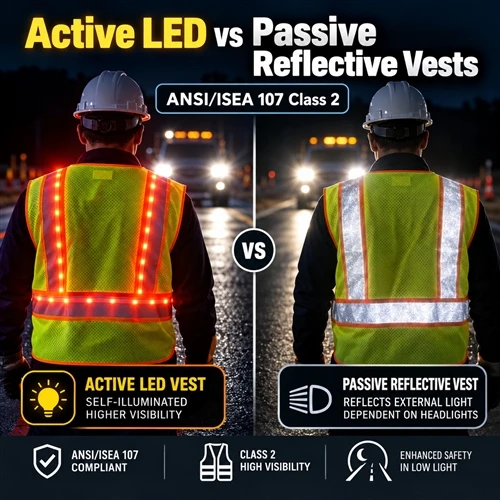
Workers engaged in heavy traffic must wear a Class 2 vest. Workers who need work in areas where visibility is poor due to the weather will also require the use of a more reflective Class 2 safety vest. Class 2 vests must have at least 201 square inches of reflective tape and a diameter of 2 inches. The size of the reflective tape can be 8.373 linear feet for 2 inch tape or 12.2 linear feet for 1 3/3 inch tape. Examples of work that requires a Class 2 vest include airport baggage handlers and ground crews, forestry workers, high-capacity parking or toll booth personnel, and law enforcement personnel. Reflective stripes will be on the shoulders and surrounded by one or two 360o horizontal stripes.
The most visible job for workers is to keep people in close contact with busy traffic. High-risk jobs include accident site investigators, emergency responders, railroad workers, utility workers, and measurement and marking personnel. These workers often approach traffic that is more than 50 miles per hour, so it is important for them to be as visible as possible. Class 3 safety vests and garments must have at least a 310 square inch reflective tape with a linear foot of 12.92 feet and a thickness of 2 inches. Compared to Class 1 and Class 2 safety vests, Class 3 clothing has greater coverage of arms and legs.
It is important to ensure that you wear the correct safety vest at work. Avoiding unnecessary accidents and ensuring worker safety are the goals of ANSI and OSHA. Be sure to wear a safety vest because the driver can see it, which can make a difference between an accident-free work area or a work area that is prone to accidents.