
OEM safety vests for construction fleets must be specified by fabric GSM, reflective tape layout, print adhesion, pocket load, size grading and final inspection method. A custom hi vis vests manufacturer should verify logo printing, utility pocket structure and bulk packing before production, especially for contractor uniforms, road crews and multi-site construction programs.
For B2B buyers, the main sourcing risk is not only price. The higher risk is receiving safety vests with weak logo adhesion, misaligned reflective tape, undersized pockets, low GSM mesh, poor zipper function or inconsistent size grading across repeated orders.
Corporate Identity Customization: Screen Printing vs Heat Transfer on Fluorescent Fabric
Logo customization on fluorescent polyester fabric must be tested before mass production. High visibility fabric is often made from 80gsm, 100gsm, 120gsm or 130gsm polyester mesh, birdseye polyester, tricot polyester or warp-knitted fabric. Each surface reacts differently to ink, heat, pressure and wash cycles.
For OEM safety vests, the most common branding methods are screen printing, heat transfer printing, woven patches and PVC/rubber labels. Screen printing is cost-efficient for large-area logos and single-color fleet markings. Heat transfer works well for sharp artwork, multi-color logos and small-batch branding, but temperature and pressure must be controlled to avoid fabric shrinkage, glue marks or reflective tape damage.
| Logo Method | Suitable Fabric | Typical Logo Size | Wash / Abrasion Risk | Bulk Order Note |
|---|---|---|---|---|
| Screen Printing | Polyester mesh, tricot, birdseye | 5–35 cm width | Medium if ink is not matched to fabric | Best for large fleet logos and lower unit cost |
| Heat Transfer Printing | Polyester mesh, Oxford, tricot | 3–30 cm width | Edge lifting if pressure or film grade is poor | Good for multi-color logos and small MOQ |
| Reflective Heat Transfer Logo | Polyester or coated panels | 3–20 cm width | Requires correct bonding temperature | Useful for night-visibility branding |
| Woven Patch | Solid fabric panels, pocket flaps | 3–10 cm width | Low if stitching is reinforced | Suitable for premium uniform programs |
| PVC / Rubber Patch | Tactical vests, utility vests | 3–8 cm width | Low, but adds weight | Useful for security, survey and event teams |
Print Adhesion Checks for 80–130gsm Polyester Vest Fabric
ASTM D3359 cross-cut adhesion reference: used for checking ink bonding on printed panels.
ISO 6330 washing reference: used when buyers require wash-cycle verification before bulk orders.
Heat transfer temperature range: often 130–160°C, depending on film, fabric and adhesive layer.
Pressure control: must be verified to prevent ghost marks on fluorescent mesh.
Color tolerance: Pantone target should be approved against fluorescent yellow or orange fabric, not white paper.
Reflective tape clearance: logo position should avoid 5cm reflective tape unless overprint testing is approved.
For buyers comparing different vest structures and safety use cases, related models can be reviewed under Safety Vest before finalizing bulk workwear customization.
Request a logo adhesion and placement review before bulk production. Send artwork, vest color, reflective tape layout and expected wash requirement for an OEM print method recommendation.
Load-Bearing Structure Design: Radio Pockets, ID Windows and Tablet Pockets
Construction fleet vests often carry more than a logo. Site supervisors, survey teams, traffic crews and security workers may need radio pockets, ID windows, pen slots, badge holders, flashlight loops, tablet pockets, D-rings and mic tabs. These parts create load points that must be engineered into the garment, not added as decoration.
A basic Class 2 vest may use 100% polyester mesh with 5cm reflective tape and hook-and-loop closure. A tactical or survey vest requires stronger pocket panels, reinforced bar-tack stitching, zipper function testing and adjustable side bands. The pocket layout should be confirmed by field equipment size, not by a generic catalog photo.
| Functional Part | Typical Load / Use | Recommended Construction | QC Method |
| Radio Pocket | 200–500 g device | Reinforced pocket base, bar-tack corners | Pull test and pocket sag check |
| ID Window | PVC clear pocket | Edge binding or stitched frame | PVC clarity and stitching check |
| Tablet Pocket | 7–10 inch tablet | Reinforced back panel and wider pocket opening | Load test with dummy tablet |
| Pen Slot | 1–3 pens | Narrow stitched channels | Stitch alignment check |
| D-Ring | Tool lanyard / badge | Webbing loop with bar-tack | 5–10 kg pull reference |
| Mic Tab | Shoulder radio mic | Reinforced webbing tab | Repeated clip test |
| Zipper Front | Daily opening / closing | Smooth slider and reinforced bottom stop | 100-cycle zipper operation check |
| Adjustable Side Band | Fit control | Elastic or webbing with buckle / Velcro | Tension and symmetry check |
Engineering Layout Rules for Class 2 and Utility Vests
5cm reflective tape: should remain flat and visible after pocket installation.
Class 2 visible area: must not be blocked by large front pockets or dark fabric panels.
Pocket bottom stress: should be reinforced with bar-tack stitching at both corners.
ID window film: should be checked for low-temperature cracking and yellowing risk.
Radio pocket angle: should allow one-hand access without pulling the vest neckline.
Back logo panel: should avoid covering required reflective tape unless the certified layout allows it.
Side adjustment: should be tested over T-shirts, hoodies and work jackets.
For heavy-duty utility vests, buyers should provide the actual radio model, ID card size, tablet size and expected tool load before sampling. This allows the custom hi vis vests manufacturer to define pocket depth, stitching allowance, reinforcement fabric and binding width before cutting.
Reflective Tape, Class Layout and Visibility Control
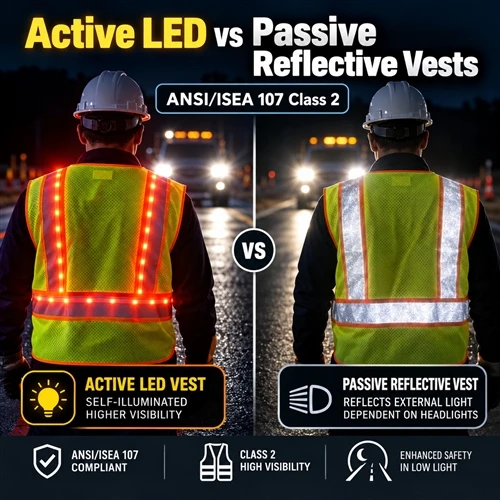
A construction safety vest is usually judged by its visible fabric area and reflective material area. ANSI/ISEA 107 and EN ISO 20471 use different classification rules, but both require careful control of fluorescent background fabric, reflective tape placement and garment size. A small vest size can fail compliance if the visible material area is reduced below the target class.
Reflective tape can be glass-bead type, micro-prismatic type or segmented heat transfer type. Each material has different hand feel, wash behavior, bending resistance and retroreflective performance.
| Reflective Material Type | Typical Use | Key Advantage | Procurement Risk |
| Glass-Bead Reflective Tape | Standard safety vests | Flexible, common, cost-effective | Retroreflection can reduce after washing or abrasion |
| Micro-Prismatic Reflective Tape | Traffic and high-risk PPE | High brightness at specific angles | Stiffer hand feel, higher cost |
| Segmented Reflective Tape | Stretch or breathable garments | Better flexibility and air movement | Requires heat bonding control |
| Checker Reflective Tape | Traffic, police-style, survey vests | Strong visual identity | Must be checked against local uniform rules |
| Reflective Piping | Edge visibility | Lightweight trim option | Not a replacement for certified reflective area |
Visibility Control Points for OEM Safety Vests
Tape width: 5cm reflective tape is common for Class 2 vest layouts.
Tape placement tolerance: left-right deviation should be controlled before sewing approval.
Retroreflection check: buyers can request coefficient data in cd/lx/m² for certified programs.
Background color: fluorescent yellow-green and orange-red should match the target standard.
Small size risk: S and M sizes need separate area calculation for Class 2 claims.
Label wording: ANSI/ISEA 107 or EN ISO 20471 claims should match test documents.
Wash cycle target: 25 or 50 wash cycles should be confirmed before tape selection.
Standard B2B OEM Timeline and Delivery Verification Flow
Bulk workwear customization requires a controlled approval sequence. The highest-cost delays usually come from late logo changes, missing size charts, unapproved reflective tape layout, color mismatch or unclear packing requirements. A structured OEM flow reduces sample revisions and prevents production disputes.
| Production Stage | Typical Time | Buyer Input Needed | Factory Output |
| Requirement Review | 1–2 days | Target market, vest type, standard, quantity | Initial specification sheet |
| Material Selection | 2–4 days | Fabric GSM, color, reflective tape type | Fabric and tape proposal |
| Artwork Confirmation | 1–3 days | AI/PDF logo, Pantone color, print size | Logo placement mockup |
| Sample Development | 5–7 days | Size chart, pocket layout, packing request | Physical sample or pre-production sample |
| Sample Testing | 2–5 days | Fit feedback, wash target, load target | Revised sample notes |
| Bulk Production | 15–35 days | Deposit and final approval | Cutting, printing, sewing, packing |
| Final Inspection | 1–3 days | AQL level and carton requirements | Inspection report and shipment release |
Delivery Verification for 500–50,000 pcs Safety Vest Orders
AQL inspection: use agreed major/minor defect limits before shipment.
Carton packing: common format can be 1pc/polybag and 100pcs/carton for basic vests.
Reflective tape audit: check width, placement, surface marks and sewing alignment.
Logo inspection: verify color, size, position and adhesion against approved sample.
Size set check: confirm S–4XL or custom size range with garment measurement tolerance.
Pocket load test: required for tactical vests, survey vests and supervisor vests.
Barcode and carton marks: must match buyer warehouse receiving rules.
For China OEM sourcing, buyers should use one approved pre-production sample as the technical control item. That sample should define fabric GSM, vest color, tape type, logo method, pocket layout, closure type, size tolerance and packing method.
OEM Specification Checklist for Construction Fleet Vests
| Specification Area | Required Decision | Why It Matters |
| Vest Type | Basic, breakaway, survey, tactical, executive | Determines structure, pocket load and price |
| Standard Target | ANSI/ISEA 107 or EN ISO 20471 | Controls fabric area, reflective area and label |
| Fabric | 80/100/120gsm mesh, birdseye, tricot, Oxford | Controls comfort, strength and cost |
| Reflective Tape | 5cm glass-bead, micro-prismatic, segmented | Controls visibility and wash life |
| Closure | Velcro, zipper, snap, breakaway | Controls fit, durability and worksite use |
| Pockets | Radio, ID, tablet, pen, cargo | Controls cutting and reinforcement |
| Logo Method | Screen print, heat transfer, patch, embroidery | Controls adhesion and visual finish |
| Size Range | S–4XL or custom size set | Controls compliance and fit |
| Packing | 1pc/polybag, retail bag, carton packing | Controls warehouse and resale handling |
Final Procurement Notes
An OEM safety vest program should be purchased as a controlled PPE product, not a low-spec promotional garment. For construction fleets, the vest must match the worker's task, climate, equipment load, visibility requirement and branding rule. The right specification prevents rework, field complaints and shipment rejection.
A reliable custom hi vis vests manufacturer should provide sample development, reflective tape layout review, pocket engineering, logo method testing, size grading and final inspection support before bulk shipment.
Send your construction fleet vest specification for review. Include target standard, vest style, pocket layout, logo artwork, size range, fabric GSM and estimated quantity to receive an OEM production plan.
FAQ
Q: What MOQ Is Typical For OEM Safety Vests With Custom Logos?
A: MOQ depends on fabric, logo method and vest structure. Basic printed safety vests may start lower, while custom color, tactical pockets, woven patches or certified Class 2 layouts usually require higher quantities because fabric, tape, labels and production setup must be controlled.
Q: Can Screen-Printed Logos Survive Washing On Fluorescent Safety Vest Fabric?
A: Yes, if the ink system is matched to polyester fabric and tested before production. Buyers should approve a print sample and define wash requirements, such as ISO 6330 reference cycles or internal wash testing, before confirming bulk workwear customization.
Q: What Should Buyers Verify Before Approving A Custom Hi Vis Vest Sample?
A: Buyers should check fabric GSM, reflective tape type, tape placement, garment measurements, pocket load, logo adhesion, closure function and packing. If ANSI/ISEA 107 or EN ISO 20471 claims are required, the sample must match the test report and label wording.