
Cold weather workwear cannot be selected only by fabric color or jacket thickness. For road construction crews, logistics teams, municipal maintenance workers, outdoor security staff and night shift workers, a cold weather hi vis jacket must combine visibility, weather protection, movement comfort and repeatable bulk supply. Workwear buyers need to check the shell fabric, waterproof rating, breathability, reflective tape layout, seam sealing, hood structure, cuffs, hem, size range and OEM requirements before confirming production.
A standard hi vis reflective jacket may look simple from the outside, but the real purchase value depends on technical details. A jacket used for wet, windy and low-light work conditions should be checked as a full PPE workwear product, not as a generic winter jacket. This guide explains what workwear buyers should confirm before ordering cold weather hi vis jackets for wholesale, OEM and private label programs.
What Makes a Hi Vis Jacket Suitable for Cold Weather Work?
Cold weather hi vis jackets are designed for outdoor workers who need visibility and weather resistance in one garment. The jacket should use a high visibility shell color, reflective tape on key visibility zones, wind-resistant construction, waterproof or water-resistant fabric and enough space for layering. For wet jobsites, seam sealing, hood adjustment and front placket design also affect actual field performance.
Buyers should not judge the product only by the words "hi vis" or "reflective." A proper waterproof hi vis jacket should be reviewed by structure: shell fabric, coating, waterproof rating, breathability value, reflective tape width, tape placement, zipper, hood, cuffs and hem. These details decide whether the garment can support workers in road maintenance, logistics delivery, traffic control and outdoor industrial use.
Cold weather workwear also needs wearing comfort. Workers may wear thermal layers, fleece jackets or base layers underneath. If the outer jacket is too tight, stiff or poorly ventilated, it can reduce movement and cause moisture buildup inside the garment. This is why workwear buyers should confirm both weather protection and fit before approving bulk orders.
Fabric Shell: Polyester, Oxford or Coated Workwear Fabric?
The shell fabric is the first technical point to check. Many hi vis reflective jackets use polyester shell fabric because it is lightweight, stable and suitable for coating. For tougher outdoor jobsites, Oxford fabric may be selected for better abrasion resistance. For waterproof performance, PU-coated or other coated fabrics are often used, but the final hand feel, durability and breathability depend on the fabric construction and coating quality.
A cold weather hi vis jacket does not need to be heavy to perform well. The buyer should match the fabric to the work environment. Logistics and delivery teams may prefer lighter polyester shell jackets. Road crews and outdoor maintenance teams may need more durable coated fabrics. If the jacket is designed for rainy and windy conditions, waterproof coating and seam sealing should be confirmed together.
|
Fabric Type |
Suitable Use |
Buyer Checkpoint |
|
Polyester shell |
Lightweight workwear jackets |
Weight, coating, color fastness and hand feel |
|
300D Oxford |
Road work and outdoor jobsites |
Abrasion resistance and waterproof coating |
|
PU-coated fabric |
Rain and wind protection |
Hydrostatic pressure and seam sealing |
|
Softshell fabric |
Mobility and mild weather |
Stretch, breathability and water resistance |
|
Padded fabric |
Cold weather workwear |
Insulation weight and washing stability |
Waterproof Rating: What Does 8000mm Mean for Workwear Buyers?
Waterproof rating is usually measured in millimeters of water column. A higher number generally indicates better resistance to water pressure. For many outdoor workwear programs, an 8000mm waterproof rating can support wet-weather use better than entry-level water-resistant fabrics. However, buyers should not read the fabric value in isolation.
A jacket with 8000mm fabric may still fail in actual use if the seams are not sealed, the zipper area is exposed, or the pocket design allows water entry. For cold weather hi vis jackets, the waterproof rating, seam tape, zipper placket and hood structure must be checked together. The product page for our cold weather hi vis jacket lists an 8000mm waterproof performance value and seam-sealed construction for outdoor workwear use.
|
Waterproof Level |
Typical Use |
Buyer Note |
|
3,000mm |
Light rain and short exposure |
Entry-level workwear |
|
5,000mm |
General outdoor use |
Common for basic work jackets |
|
8,000mm |
Longer wet-weather exposure |
Suitable for many outdoor workwear programs |
|
10,000mm+ |
Heavy rain or long exposure |
Higher-cost specification for demanding use |
Breathability: Why 5000g/m²/24h Matters in Cold Weather Jackets
Breathability is not only a summer workwear issue. In cold weather, workers still produce moisture when loading goods, repairing roads, walking long distances, directing traffic or handling outdoor maintenance. If the jacket blocks moisture inside, the wearer may feel damp and cold during rest periods.
A breathable hi vis jacket helps move internal moisture away from the body. A value such as 5000g/m²/24h is commonly used for moderate work activity, but buyers should match the value to the job type. Low-activity roles may not need the same breathability as road crews or delivery teams. The correct specification depends on work intensity, climate, garment layering and time spent outdoors.
|
Work Intensity |
Breathability Need |
Example Jobs |
|
Low activity |
Basic breathability |
Security, traffic observation, gate control |
|
Medium activity |
5000g/m²/24h range |
Logistics, delivery, warehouse loading |
|
High activity |
Higher MVP preferred |
Road crews, repair teams, outdoor maintenance |
Reflective Tape Layout: Body, Sleeves and Visibility Zones
Reflective tape is one of the most important parts of a hi vis work jacket. Buyers should check more than whether the jacket has reflective tape. The tape width, tape type, placement, continuity and visibility zones all affect the final product value.
Reflective tape on the body and sleeves gives better recognition than tape placed only on one area. Sleeve tape can help make arm movement visible in low-light conditions, while body tape helps drivers and machinery operators identify the wearer's position. For traffic control, road construction, logistics yards and night shift work, this layout can support better visual recognition than a jacket with limited reflective coverage.
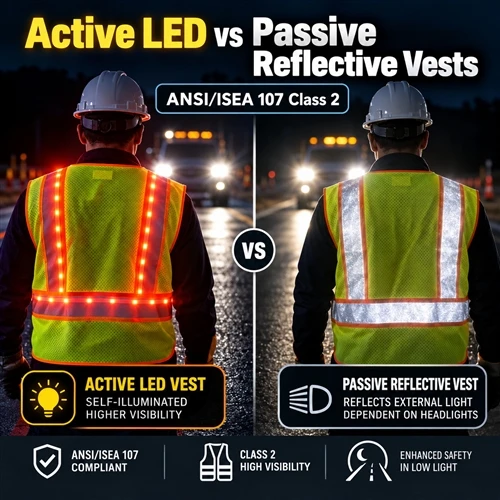
Buyers who need lighter visibility garments can compare this jacket with standard reflective safety vests for traffic control, warehouse and roadside work. Safety vests are easier to wear over existing clothing, while a reflective jacket provides weather protection and visibility in one garment.
Seam Sealing, Zippers and Hood Design
Waterproof fabric alone is not enough. Seam-sealed construction is a key checkpoint for cold weather hi vis jackets used in rain or wet outdoor environments. Shoulder seams, sleeve seams, hood seams and placket areas should be checked for seam tape coverage, bonding quality and leakage risk.
Front zipper design also matters. A zipper placket helps reduce water and wind entry through the front opening. The zipper should run smoothly and should not catch the fabric during repeated use. If the jacket is used by road crews or logistics workers, zipper durability is part of the workwear performance, not only a trim detail.
Hood design should be checked for adjustment, coverage and field of view. An adjustable hood can help protect the worker from rain and wind, but it should not block side vision or interfere with helmets when helmet use is required. Rib cuffs and rib hems help reduce cold air entry and improve fit during movement.
|
Component |
What Buyers Should Check |
|
Seam tape |
Adhesion, coverage and no peeling |
|
Front zipper |
Smooth operation and placket protection |
|
Hood |
Adjustment, fit and field of view |
|
Cuffs |
Rib or adjustable closure quality |
|
Hem |
Wind control and fit |
|
Pockets |
Rain entry risk and closure type |
Insulation and Layering: Padded Jacket or Shell Jacket?
Not every cold weather hi vis jacket is padded. Some jackets are shell jackets designed for rain and wind protection, while the worker wears fleece or thermal layers underneath. Other jackets are padded for fixed low-temperature environments. Buyers should identify which construction fits the target market before requesting samples.
A shell hi vis jacket is suitable when the buyer wants flexible layering and waterproof protection. A padded hi vis jacket is more suitable for colder conditions where workers need built-in insulation. A softshell hi vis jacket can provide movement comfort and light weather resistance. A 3-in-1 jacket may fit multi-season workwear programs but has higher cost and more production checkpoints.
|
Jacket Type |
Best For |
Buyer Checkpoint |
|
Shell hi vis jacket |
Rain and wind protection with layering |
WP/MVP value and seam sealing |
|
Padded hi vis jacket |
Lower temperature work |
Insulation weight, quilting and washing |
|
Softshell hi vis jacket |
Mobility and mild weather |
Stretch, water resistance and breathability |
|
3-in-1 jacket |
Multi-season programs |
Inner and outer layer compatibility |
Standards and Compliance: EN ISO 20471, ANSI/ISEA 107 and Market Requirements
For high visibility garments, buyers often refer to EN ISO 20471 in Europe and ANSI/ISEA 107 in the United States. These standards are not based on one detail alone. Garment class and compliance depend on background material area, reflective tape area, tape layout, garment size and final testing.
Workwear buyers should confirm the target market before sampling. A jacket made with high visibility fabric and reflective tape is not automatically certified for every market. If the project requires EN ISO 20471 or ANSI/ISEA 107, the supplier should review pattern layout, tape position, color, material documentation and finished garment testing requirements before bulk production.
For U.S. workwear programs, buyers may also review ANSI safety vest requirements when comparing reflective garment classes and market expectations. Although a vest and a jacket are different garments, this comparison helps buyers understand why tape area, background color and garment class must be checked before claiming compliance.
OEM Customization: Logo, Color, Size Range and Packaging
For wholesale workwear programs, customization is often part of the purchase specification. Buyers may need company logos, private labels, special size ranges, color blocking, reflective tape changes, hangtags, care labels, size stickers or carton marks. These details should be confirmed before the pre-production sample.
Common logo methods include heat transfer printing, screen printing, embroidery, woven labels and rubber patches. For waterproof jackets, the logo method must be selected carefully because some applications may affect fabric surface, seam areas or washing durability. Buyers should confirm the logo position, logo size, color standard and wash test requirement before approval
For buyers sourcing safety workwear from China, the most efficient RFQ should include target standard, fabric requirement, waterproof rating, breathability value, reflective tape layout, size chart, logo artwork, packing method and target order quantity.
|
OEM Item |
Buyer Should Confirm |
|
Logo method |
Heat transfer, embroidery, screen printing or woven label |
|
Shell color |
Hi vis yellow, orange or contrast fabric |
|
Reflective tape |
Width, type, placement and washing durability |
|
Size range |
S–5XL, EU/US fit and tolerance |
|
Labeling |
Size label, care label and compliance label |
|
Packaging |
Polybag, hangtag, size sticker and carton mark |
|
Testing |
Fabric, reflective tape and finished garment test request |
Bulk Order Quality Control Checklist
Quality control for cold weather hi vis jackets should be built around the actual risks of the product: fabric defects, coating inconsistency, seam leakage, tape misalignment, zipper failure, size deviation and logo errors. For PPE importers and workwear distributors, these points affect customer complaints, reorders and tender delivery.
|
QC Item |
What to Inspect |
|
Fabric |
Color, coating, defects, GSM and hand feel |
|
Waterproof performance |
Hydrostatic pressure and seam leakage risk |
|
Breathability |
MVP value if required by the buyer |
|
Reflective tape |
Width, position, adhesion and brightness |
|
Seam sealing |
Tape bonding, peeling and leakage risk |
|
Zipper |
Smooth operation and placket coverage |
|
Hood |
Adjustment, attachment and fit |
|
Cuffs and hem |
Rib quality or adjustment function |
|
Size tolerance |
Chest, sleeve, length and shoulder measurement |
|
Logo |
Position, color, adhesion and wash resistance |
|
Packing |
Size sticker, polybag, carton mark and quantity |
Best Applications for Cold Weather Hi Vis Jackets
Cold weather hi vis jackets are suitable for outdoor work programs where workers need both visibility and weather protection. The jacket specification should be selected according to work risk, climate, movement level and required standard.
|
Application |
Jacket Requirement |
|
Road construction |
Reflective tape on body and sleeves, durable shell |
|
Traffic control |
High visibility color and correct tape layout |
|
Logistics delivery |
Waterproof and breathable fabric |
|
Municipal maintenance |
Windproof, seam-sealed and adjustable hood |
|
Warehouse loading |
Mobility, warmth and reliable size range |
|
Outdoor security |
Night visibility and weather protection |
|
Utility repair |
Waterproof seams and reliable closure |
|
Cold weather uniform program |
Custom logo, size range and repeatable supply |
Final Buying Checklist for Workwear Buyers
Before ordering cold weather hi vis jackets, buyers should prepare a written specification instead of relying on a product photo. The specification should define the target market, garment function, fabric data, reflective layout, size range, logo method, packaging and inspection standard.
- What is the target market standard?
- Is the jacket a shell, padded jacket, softshell or 3-in-1 jacket?
- What waterproof rating and breathability value are required?
- Is reflective tape placed on the body and sleeves?
- Are the main seams sealed for wet-weather work?
- What logo method is required for the uniform program?
- What size range and tolerance should be used?
- What inspection criteria should be applied before shipment?
If your project requires a waterproof and breathable outer layer with reflective tape on the body and sleeves, review our hi vis reflective jacket specification and send your required standard, size chart and logo artwork for quotation.
FAQ
Q: Is An 8000mm Waterproof Rating Enough For Cold Weather Hi Vis Jackets?
A: An 8000mm waterproof rating is suitable for many outdoor workwear programs and moderate wet-weather exposure. Buyers should still check seam sealing, zipper placket, pocket design and exposure time. Fabric waterproof data alone does not confirm full jacket performance.
Q: Why Does Breathability Matter In Cold Weather Workwear?
A: Workers generate moisture during movement, even in cold weather. If the jacket has poor breathability, moisture can stay inside and reduce comfort during rest periods. A 5000g/m²/24h value can support moderate activity, while heavy work may need higher MVP.
Q: Can Cold Weather Hi Vis Jackets Be Made To EN ISO 20471 Or ANSI/ISEA 107?
A: Yes, but final compliance depends on background color area, reflective tape area, tape layout, size range and third-party testing. Buyers should confirm the target standard before sampling so the garment pattern and tape placement can be reviewed correctly.
Q: What Should Buyers Confirm Before Ordering Custom Hi Vis Work Jackets?
A: Buyers should confirm shell fabric, waterproof rating, breathability, reflective tape type, seam sealing, hood design, cuff structure, size chart, logo method, packaging and test requirements. A pre-production sample should be approved before bulk production.
Request A Wholesale Quote For Cold Weather Hi Vis Jackets
Xiamen Topmatched supplies hi vis reflective jackets, waterproof workwear jackets and customized safety workwear for PPE importers, industrial uniform buyers, traffic safety distributors and workwear brands. Send your target standard, fabric data, reflective tape layout, size chart, logo artwork, packing method and order quantity to prepare a clear quotation.
Contact Xiamen Topmatched for hi vis reflective jacket wholesale supply