Single-sided and double-sided reflective embroidery threads differ mainly in reflective-face coverage, carrier construction, orientation sensitivity, and machine-processing behavior. For OEM textile programs, the correct choice should be based on stitch geometry, exposed thread direction, embroidery speed, wash conditions, and finished-product acceptance criteria rather than brightness claims alone.
A single-sided construction can be sufficient when the reflective face remains consistently exposed after stitching. Double-sided reflective thread provides more tolerance where the material twists, rotates, or is visible from both directions, but the added layer structure may alter thickness, stiffness, winding behavior, and machine feeding.

Reflective Layer Architecture, Polyester Carrier Geometry and Face-Orientation Control
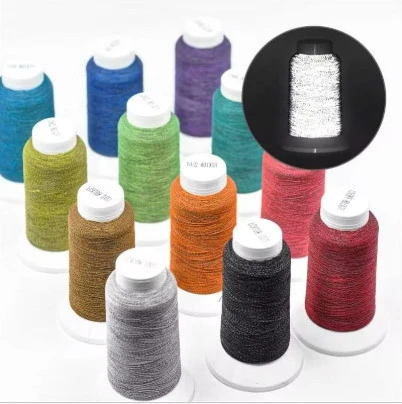
Reflective embroidery thread is generally produced from a narrow polyester or PET carrier combined with a glass-bead reflective surface. Available product ranges include single-sided and double-sided constructions, widths such as 0.25 mm, 0.5 mm, and 1.0 mm, and grey, silver, rainbow, or customized color options.
Single-Sided Construction: One Controlled Reflective Face
A single-sided reflective thread has one primary reflective surface and one non-reflective or less reflective reverse side. Its performance depends heavily on face orientation during winding, feeding, stitching, and final use.
Typical advantages include:
lower material thickness;
reduced stiffness in narrow-width formats;
easier bending around small embroidery curves;
lower material cost for large-volume decorative programs;
suitable performance where one face remains outward.
The main engineering risk is orientation loss. If the strip twists inside the tension system or rotates during dense stitching, the non-reflective side may become visible. The finished logo can then show uneven brightness even when the raw material passed inspection.
Double-Sided Construction: Reflective Coverage on Both Faces
Double-sided reflective thread applies reflective material to both sides of the carrier. This reduces dependence on face orientation and is useful where the thread may rotate during embroidery, weaving, braiding, or narrow textile production.
Double-sided products are offered for embroidery, knitting, weaving, ribbons, fabrics, footwear, toys, and related textile applications. Some listed configurations use polyester or T/C carriers with customized widths, colors, and brightness levels.
The additional reflective layer can introduce different process behavior:
greater total thickness;
higher bending resistance;
increased friction through guides;
different winding tension requirements;
more heat generation at high machine speed;
greater risk of edge wear if slitting is poorly controlled.
Double-sided construction should therefore not be treated as automatically superior. It solves orientation inconsistency but may require more careful machine adjustment.
Structural Comparison for OEM Selection
|
Engineering Factor |
Single-Sided Thread |
Double-Sided Thread |
|
Reflective faces |
One primary face |
Two reflective faces |
|
Orientation sensitivity |
High |
Lower |
|
Typical flexibility |
Usually higher |
May be stiffer |
|
Thickness |
Generally lower |
Generally higher |
|
Machine friction |
Often lower |
Can be higher |
|
Visual consistency after twisting |
Variable |
More stable |
|
Cost structure |
Usually lower |
Usually higher |
|
Small lettering suitability |
Often easier |
Requires trial |
|
Braiding and weaving suitability |
Orientation control needed |
Better for exposed rotation |
|
QC emphasis |
Face direction |
Layer bonding and thickness |
The final selection should be linked to the actual stitch design. A wide open stitch may preserve face orientation, while dense satin embroidery, sharp corners, or repeated direction changes can cause rotation.
Polyester Carrier Geometry
The carrier controls tensile strength, bending behavior, and feeding stability. Narrow reflective threads are commonly supplied in widths from approximately 0.2 or 0.25 mm upward, while wider formats may extend to 0.5, 1.0, 2.0 mm, or more depending on the application.
The buyer's specification should define:
|
Dimensional Item |
Required Procurement Record |
|
Nominal width |
Target value and tolerance |
|
Total thickness |
Measured finished construction |
|
Carrier material |
Polyester, PET, or approved blend |
|
Reflective faces |
Single-sided or double-sided |
|
Roll length |
Net usable length per roll |
|
Core dimensions |
Internal diameter and roll width |
|
Joint quantity |
Maximum permitted per roll |
|
Winding direction |
Reflective face orientation |
|
Edge condition |
No burrs, feathering, or delamination |
|
Color reference |
Approved physical sample or Pantone |
Width variation has a direct effect on needle passage, stitch density, logo outline, and breakage rate. A 0.25 mm thread used for detailed embroidery cannot be controlled with the same tolerance logic as a 1.0 mm strip intended for wider decorative stitching.
Face-Orientation Control During Winding
For single-sided thread, winding direction should be recorded and repeated during production. The factory should identify which surface faces outward on the roll and how the material enters the embroidery-machine tension path.
A practical orientation-control record can include:
roll winding direction;
reflective face marking;
cone loading direction;
guide sequence;
pre-tension setting;
needle direction;
approved stitch sample;
final reflective-face exposure.
Without this record, two operators can load the same material differently and produce visibly different results.
Reflective Surface Technology
Glass-bead reflective material returns light toward its source under defined entrance and observation conditions. The visible effect depends on bead coverage, binder quality, carrier flatness, surface contamination, light angle, camera exposure, and the direction in which the thread is presented.
Raw-material photographs are not sufficient for final approval. The thread should be assessed in the actual stitch pattern because embroidery changes the surface angle and exposed area.
Buyers can review the reflective embroidery thread specifications before confirming reflective-face construction, width, color, roll length, and machine-processing requirements.
Comparative Retroreflection, Machine-Feeding Stability and Wash-Abrasion Test Protocols
Material approval should separate optical performance from process performance. A thread can be bright under a handheld light source and still fail in production because of twisting, friction, breakage, delamination, or poor stitch definition.
Comparative Retroreflection Test Setup
A comparative test should use fixed conditions for both thread types.
|
Test Variable |
Required Control |
|
Light source |
Same lamp or calibrated instrument |
|
Distance |
Fixed source-to-sample distance |
|
Entrance angle |
Recorded and repeated |
|
Observation angle |
Recorded and repeated |
|
Sample orientation |
Same stitch direction |
|
Background fabric |
Same color and construction |
|
Stitch density |
Same stitches per unit area |
|
Camera settings |
Locked exposure if photography is used |
|
Sample area |
Equal embroidered surface area |
|
Conditioning |
Same temperature and humidity |
Single-sided material should be tested in at least three states:
reflective face outward;
reverse face outward;
randomly twisted stitch structure.
Double-sided material should be tested under the same conditions to quantify whether it provides more stable response after rotation.
Instrumental Testing vs Visual Comparison
A controlled dark-room comparison is useful for internal batch control, but it does not replace instrumental measurement when a buyer requires a declared coefficient of retroreflection.
Any published value should identify:
tested construction;
color;
width;
entrance angle;
observation angle;
test method;
original or conditioned sample state.
A general brightness statement should not be applied to every color or construction without supporting test data.
ISO 20471 Scope Limitation
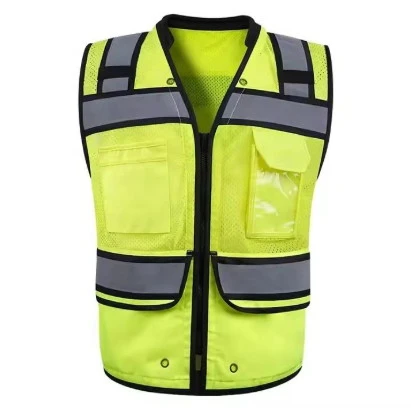
ISO 20471 specifies requirements for complete high-visibility clothing intended to signal the wearer's presence in daylight and under vehicle-headlight illumination. A reflective embroidery thread is only one component and does not make the finished garment ISO 20471 compliant by itself.
Where embroidery is added to certified high-visibility clothing, the garment designer should verify that:
required visible background material area is not reduced;
required retroreflective material placement is not interrupted;
decorative stitching does not damage certified tape;
the final garment still meets the applicable design and performance requirements.
Reflective embroidery is better treated as supplementary visibility or branding unless the final garment is tested and certified as a complete product.
Machine-Feeding Stability Test
The same embroidery design should be produced with single-sided and double-sided thread under controlled machine settings.
The trial record should include:
|
Process Parameter |
Recorded Value |
|
Machine model |
Exact equipment reference |
|
Needle size |
Selected needle specification |
|
Machine speed |
Stitches per minute |
|
Upper tension |
Setting or measured value |
|
Bobbin tension |
Setting or measured value |
|
Stitch type |
Satin, running, fill, or outline |
|
Stitch density |
Defined design value |
|
Base fabric |
Material and weight |
|
Stabilizer |
Type and layer count |
|
Thread breaks |
Breaks per defined stitch count |
|
Needle changes |
Quantity during test |
|
Feed interruptions |
Recorded stoppages |
|
Surface damage |
Visual grading after stitching |
The most useful production metric is not simply whether the machine completes one sample. Buyers should compare breakage frequency over a defined stitch count or continuous production duration.
Typical Failure Modes
Single-Sided Thread
reverse face exposed after twisting;
alternating bright and dark stitch sections;
orientation shift at corners;
roll loaded in the wrong direction;
uneven reflection across dense fill areas.
Double-Sided Thread
increased friction through guides;
needle heating at high speed;
edge abrasion;
layer separation;
increased stiffness in small lettering;
puckering on lightweight fabric.
High-Speed Embroidery Trial
A stepped-speed test can identify the stable operating range.
For example:
begin at a low machine speed;
run the same design at moderate speed;
increase speed in controlled increments;
record breakage and visible damage;
stop when the agreed defect limit is exceeded.
The approved production speed should be based on the most demanding part of the design, not the easiest straight section.
Small Lettering and Sharp Corners
Small characters, narrow satin columns, and acute direction changes create higher localized stress. A thread that performs well in a large logo may fail in a 4–6 mm letter height.
The pre-production sample should therefore include:
smallest planned lettering;
tightest corner radius;
densest fill section;
longest continuous stitch path;
highest layer overlap.
Wash Testing
Wash durability should be evaluated on the finished embroidered panel or garment. Loose-thread testing does not reproduce stitch compression, fabric movement, detergent exposure, or rubbing against other garments.
A wash protocol should define:
|
Test Factor |
Required Specification |
|
Standard or internal method |
Named procedure |
|
Water temperature |
Exact temperature |
|
Detergent |
Type and dosage |
|
Cycle count |
Agreed number |
|
Drying method |
Line, tumble, or other |
|
Sample construction |
Final fabric and stitch |
|
Evaluation timing |
After each defined interval |
|
Optical check |
Fixed test geometry |
|
Physical check |
Breakage, peeling, fraying |
|
Color check |
Grey-scale or instrumental method |
ISO 105-C06 may be used for defined domestic and commercial laundering color-fastness procedures, while ISO 105-X12:2016 specifies dry and wet rubbing evaluation for textile color transfer.
Rubbing and Small-Area Evaluation
Because embroidered reflective areas can be narrow, ISO 105-X16:2016 may be relevant when the test area is too small for the apparatus used under ISO 105-X12. The standard addresses rubbing resistance on smaller textile areas.
For reflective thread, post-rub assessment should include both color transfer and reflective-surface damage:
glass-bead loss;
binder wear;
exposed carrier;
edge fraying;
brightness reduction;
surface contamination.
Abrasion Test Design
The test should reproduce the intended end use.
|
End Product |
Main Abrasion Source |
|
Workwear logo |
Industrial laundering and garment contact |
|
Backpack embroidery |
Repeated rubbing and flexing |
|
Footwear detail |
Dirt, bending, and surface contact |
|
Glove marking |
Hand movement and external abrasion |
|
Cap logo |
Handling and spot cleaning |
|
Woven label |
Continuous fabric-to-fabric contact |
A single wash result cannot represent all these conditions.
Heat Exposure and Needle Temperature
At high embroidery speeds, friction can increase needle temperature. Reflective surface layers and bonding systems may react differently from conventional polyester embroidery thread.
The factory trial should check for:
melted edges;
surface gloss change;
glass-bead loss;
carrier distortion;
adhesive transfer to the needle;
repeated breaks at the same design point.
Where heat exposure is part of downstream processing, such as pressing or lamination, the material should also be tested at the intended temperature, pressure, and dwell time.
Acceptance Matrix
|
Test Item |
Single-Sided Acceptance Focus |
Double-Sided Acceptance Focus |
|
Reflection |
Correct face exposure |
Both-face consistency |
|
Feeding |
Twist control |
Friction and stiffness |
|
Breakage |
Orientation and edge damage |
Layer thickness and heat |
|
Wash |
Surface retention |
Bonding on both faces |
|
Abrasion |
Reflective-face wear |
Edge and dual-layer wear |
|
Small lettering |
Face stability |
Bending performance |
|
Bulk consistency |
Winding direction |
Total thickness |
OEM Production Tolerances, Batch Inspection Criteria and Supplier Qualification Requirements
The manufacturing risk for reflective embroidery thread is concentrated in lamination, slitting, winding, joining, and roll identification. Small deviations at any of these stages can produce machine stoppages or inconsistent nighttime appearance.
Raw-Material Approval
The approved bill of materials should identify:
polyester or PET carrier;
reflective-layer supplier;
glass-bead or surface technology;
binder or adhesive system;
color code;
single- or double-sided construction;
nominal width;
nominal thickness;
roll length;
core specification.
Supplier substitutions should require written approval when they affect stiffness, reflection, color, adhesion, or processability.
Lamination Control
For single-sided thread, lamination must maintain one continuous reflective face without contamination or uncoated sections.
For double-sided thread, both surfaces must remain aligned. Uneven layer thickness can cause curl, twist, or unstable winding.
Key production records include:
|
Control Point |
Factory Record |
|
Lamination temperature |
Set point and actual range |
|
Pressure |
Machine setting |
|
Line speed |
Recorded production speed |
|
Material lot |
Carrier and reflective-layer batch |
|
Adhesive lot |
Traceable lot number |
|
Surface inspection |
Start-up and interval result |
|
Peel check |
Internal acceptance result |
|
Operator |
Named production operator |
Slitting Tolerances
Slitting quality affects both embroidery performance and reflective appearance.
The inspection should check:
average width;
minimum and maximum width;
edge straightness;
edge feathering;
bead loss at the cut edge;
surface scratches;
curl direction;
burrs or protrusions.
A buyer should agree a dimensional tolerance after machine validation. The narrowest constructions require tighter controls because a small absolute deviation represents a larger percentage of total width.
Winding Control
Single-sided thread requires face-direction identification. Double-sided thread requires control of roll tension and flatness.
A winding inspection should record:
net roll length;
roll weight;
core size;
winding direction;
telescoping;
loose loops;
crushed edges;
twists;
joint count;
label accuracy.
Joint Requirements
Joints can interrupt automated embroidery if they are too thick or stiff. The purchase specification should define:
maximum joints per roll;
joint method;
maximum joint thickness;
minimum joint strength;
required marking;
whether joints must be removed for premium orders.
A smooth joint claim should be validated through the intended machine guide and needle path.
Batch Inspection Plan
|
Inspection Stage |
Inspection Item |
Typical Action |
|
Incoming |
Carrier and reflective material |
Compare with approved lot |
|
Lamination |
Surface coverage and bonding |
Hold defective roll |
|
Slitting |
Width and edge condition |
Adjust blade setup |
|
Winding |
Tension and roll formation |
Rewind if unstable |
|
Final material |
Reflection comparison |
Check against golden sample |
|
Machine trial |
Breakage and feeding |
Approve production setting |
|
Packing |
Label and quantity |
Correct before carton sealing |
|
Pre-shipment |
Random rolls and documents |
Release or rework |
Defect Classification
Critical Defects
wrong single- or double-sided construction;
incorrect raw material;
false certification claim;
sharp or unsafe protruding edge;
unapproved chemical formulation.
Major Defects
reflective layer delamination;
width outside agreed tolerance;
repeated machine breakage;
incorrect roll length;
severe twist or curl;
wrong color;
excessive joints;
non-reflective sections;
incorrect winding orientation.
Minor Defects
slight roll-shape variation;
minor label-position difference;
small cosmetic mark outside the usable length;
acceptable shade variation within the golden-sample limit.
Golden-Sample System
At least three golden samples should be retained:
raw thread roll;
embroidered panel;
washed or conditioned panel where durability is specified.
Each sample should identify:
date;
product code;
construction;
width;
color;
batch;
machine setting;
stitch design;
buyer approval status.
A raw-roll sample alone cannot control the finished embroidery result.
Supplier Qualification
An OEM reflective embroidery thread manufacturer should be assessed for more than product availability.
The audit should verify:
|
Audit Area |
Evidence |
|
Material traceability |
Supplier and lot records |
|
Lamination control |
Process settings and inspection logs |
|
Slitting capability |
Machine condition and width records |
|
Winding capacity |
Roll output and tension control |
|
Optical inspection |
Controlled comparison station |
|
Machine trial |
Embroidery equipment or partner capability |
|
Laboratory access |
Internal or third-party testing |
|
Nonconformance control |
Rework and corrective-action records |
|
Change control |
Buyer notification procedure |
|
Capacity planning |
Monthly output by width and construction |
Capacity Planning
Single-sided and double-sided threads may not share identical production rates. Double-sided lamination can require additional processing, curing, inspection, and material handling.
A production schedule should separate:
raw-material booking;
color confirmation;
lamination;
curing;
slitting;
winding;
machine trial;
final inspection;
labeling;
export packing.
Custom color, special core size, and buyer-specific labels may extend the schedule beyond standard stock orders.
Chemical and ESG Documentation
Chemical declarations should be linked to the exact material lot. Depending on the destination market and buyer policy, the supplier may be asked for:
REACH documentation;
RoHS documentation;
OEKO-TEX® documentation where applicable;
restricted-substance declarations;
recycled-content evidence where claimed;
packaging material data;
waste and solvent controls;
energy-use records for major programs.
These documents do not replace optical or machine-performance testing.
Production Release Criteria
Bulk production should not begin until the following are approved:
construction: single- or double-sided;
width and thickness;
color;
roll length;
core size;
winding direction;
stitch design;
target fabric;
machine setting;
reflective appearance;
wash requirement;
packaging artwork.
A supplier should not infer these details from a sample photograph.
Procurement Acceptance Criteria for OEM Reflective Thread Programs
Single-sided reflective embroidery thread is generally suitable when the reflective face can be controlled through winding and stitch design. Double-sided construction is preferable when the thread rotates, is visible from both directions, or is used in weaving and braiding structures where face orientation cannot be maintained.
The purchasing decision should be based on the following sequence:
confirm the finished-product application;
define exposed-face requirements;
select width and construction;
run a machine trial;
test reflection in the finished stitch;
complete wash and abrasion validation;
approve the golden sample;
release the production specification.
The lower-cost option is not necessarily the lower-risk option. Single-sided thread may reduce material cost but create higher orientation-control requirements. Double-sided thread may improve reflective consistency but require slower machine speed or a different needle and tension setup.
FAQ
Is double-sided reflective embroidery thread always brighter than single-sided thread?
No. Brightness depends on the reflective layer, color, glass-bead coverage, test geometry, and exposed surface area. Double-sided construction mainly reduces orientation sensitivity. The two products must be compared under the same stitch design and test conditions.
Which construction is more suitable for small embroidered lettering?
Single-sided thread may bend more easily in narrow satin columns, but the reflective face must remain exposed. Double-sided thread can reduce dark sections caused by twisting, although its greater thickness may require lower speed, revised tension, and a larger minimum letter size.
What information is required before requesting an OEM production sample?
Provide the required width, color, single- or double-sided construction, machine type, needle size, fabric, stitch file, logo dimensions, wash method, roll length, core dimensions, packing format, and estimated order quantity.
Prepare Your Reflective Thread Comparison Request
Provide the target thread width, required reflective faces, embroidery-machine model, stitch design, base fabric, wash conditions, roll specification, and projected order volume. Submit these details through the RFQ form below so the factory team can prepare matched samples and a production-control proposal.