



Custom Polyester Reflective Embroidery Thread for Logos, Workwear and Textile Accessories
Product Overview & Customization Capabilities
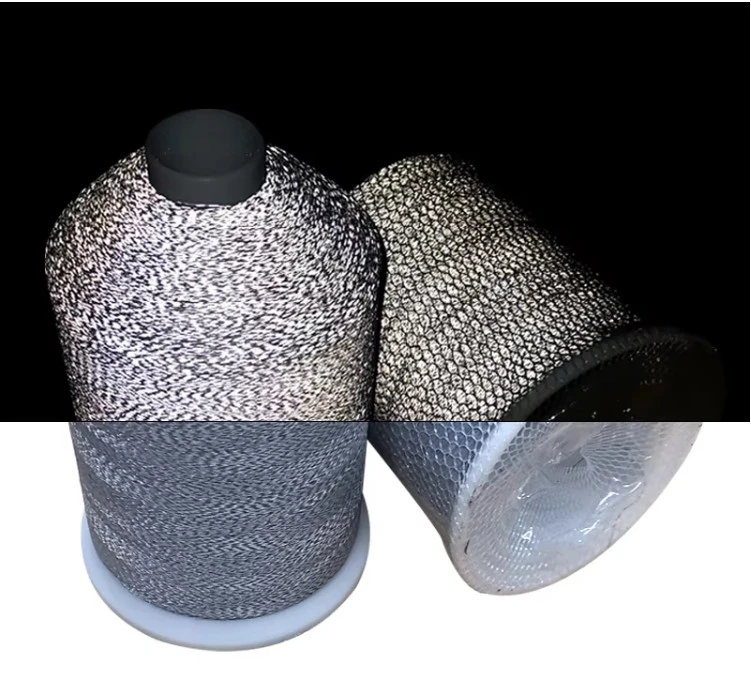
Reflective Thread for Embroidery is a 150D polyester-based decorative thread containing a glass-bead reflective layer for machine embroidery, sewing, narrow textile decoration, and visibility accents. The standard construction measures approximately 0.25 mm in width and is supplied in rolls of about 1,000 meters. Standard colors include silver and grey, while additional colors can be reviewed against the buyer's Pantone reference.
When illuminated by vehicle headlights, flashlights, or another directed light source, the glass-bead surface returns light toward the source. The material does not generate light independently and should not be described as luminous, phosphorescent, or battery powered.
The thread can be integrated into embroidered logos, graphic outlines, lettering, decorative seams, labels, footwear details, gloves, bags, and sportswear. Smooth joining points help reduce interruptions during processing, although final machine compatibility depends on needle size, stitch density, tension, embroidery speed, and the backing fabric.
OEM production can cover color reference, roll length, winding format, core size, individual labeling, carton marks, and export packing. Free samples may be selected from existing stock, while customized samples normally require additional development and can be prepared in approximately seven days after the specification is confirmed.
Before ordering, buyers should provide the embroidery-machine type, needle specification, target stitch pattern, base fabric, finished-product application, expected care method, and required reflective performance.
Material & Technical Specifications
|
Specification |
Standard or Available Configuration |
|
Product Name |
Reflective Thread for Embroidery |
|
Thread Type |
Machine-compatible reflective embroidery thread |
|
Main Material |
100% polyester with glass beads |
|
Yarn Count |
150D |
|
Standard Width |
Approximately 0.25 mm |
|
Standard Roll Length |
Approximately 1,000 meters |
|
Standard Colors |
Silver and grey |
|
Custom Colors |
Pantone-based review available |
|
Reflective Technology |
Glass-bead retroreflective surface |
|
Reflective Brightness |
Above 400 cd/lx/m² reference value |
|
Color Fastness |
Up to Grade 4 reference |
|
Surface Format |
Glass beads laminated to polyester film or backing |
|
Reflective Sides |
One-sided or double-sided construction by specification |
|
Main Processing |
Machine embroidery and sewing |
|
Key Properties |
Tensile resistance, wear resistance, heat-process stability |
|
Typical Uses |
Sportswear, bags, shoes, gloves, labels, accessories |
|
Joint Construction |
Smooth joins for reduced machine interruption |
|
Sample Policy |
Free existing samples; customized samples chargeable |
|
Existing Sample Time |
Approximately one working day |
|
Custom Sample Time |
Approximately seven days |
|
OEM/ODM |
Accepted |
|
Origin |
China |
|
Packing |
Roll or cone packing with customized labels |
|
Testing |
Project-specific reflective and textile tests available |
The listed brightness value should be confirmed against the exact color, reflective construction, test method, entrance angle, and observation angle selected for the order. A material-level result does not automatically certify the finished embroidered garment.
The former EN 471 reference should not be used as a current certification claim. ISO 20471 applies to complete high-visibility clothing and specifies requirements for garments intended to signal the wearer's presence; reflective embroidery thread alone does not make a finished product ISO 20471 compliant.

Quality Control & Certifications
Polyester Carrier and Glass-Bead Surface Inspection
Incoming material is checked for carrier thickness, surface cleanliness, edge condition, glass-bead coverage, scratches, contamination, creasing, and visible delamination. Each production lot should be compared with an approved reference sample before slitting and winding.
Width and Yarn-Count Verification
The standard configuration is approximately 0.25 mm wide with a 150D reference yarn count. Width should be measured after machine setup, blade adjustment, and at scheduled intervals because narrow deviations may affect needle passage, stitch density, and embroidery appearance.
Winding and Roll-Length Control
Inspectors check roll length, winding tension, cone alignment, telescoping, loose edges, twisting, and damaged sections. Over-tight winding can crease the reflective structure, while unstable winding may create feeding interruptions during automated embroidery.
Joint and Machine-Feeding Inspection
Smooth joints are reviewed for thickness variation, stiffness, protruding edges, and separation. Machine trials should confirm that joints pass through the selected guide, tension system, and needle path without repeated stoppage or thread breakage.
Reflective Performance Comparison
Production samples are examined under controlled illumination using a fixed light source, distance, observation angle, and sample orientation. Visual photography can support comparison, but edited nighttime photographs should not replace instrument testing or an approved golden sample.
Embroidery Trial on the Target Fabric
The factory trial should use the buyer's intended fabric or a technically similar substrate. Inspection points include:
thread breakage frequency;
needle heating;
stitch formation;
surface abrasion;
edge fraying;
reflective-face orientation;
puckering around dense embroidery;
appearance after backing removal;
logo visibility under directed light.
Dense satin stitches, small lettering, and sharp corners can place more stress on reflective thread than open decorative patterns. Stitch design should therefore be tested before bulk release.
Color-Fastness Testing
Where color-fastness documentation is required, the buyer should specify the test method rather than requesting only a grade. ISO 105-X12 evaluates textile color resistance to dry and wet rubbing, while ISO 105-C06 addresses resistance to domestic or commercial laundering procedures.
Washing and Abrasion Validation
Wash durability depends on detergent, water temperature, cycle time, drying method, embroidery density, backing fabric, and mechanical abrasion. Testing should be performed on the finished embroidered panel or garment because loose-thread results may not represent actual service conditions.
Chemical Compliance Documentation
REACH, RoHS, OEKO-TEX® or buyer-specific restricted-substance documentation can be reviewed according to the selected raw-material lot. Such documentation relates to chemical requirements and does not establish reflective brightness, embroidery-machine compatibility, or garment certification.
Pre-Shipment Inspection
Final inspection can include:
yarn count and width;
roll length and weight;
reflective surface continuity;
color consistency;
winding condition;
joint quality;
roll labels;
quantity per carton;
carton marks;
random machine-feeding checks;
comparison with the approved production sample.
Typical Application Scenarios
Embroidered Logos on Sportswear
Reflective thread can be used for brand names, chest logos, sleeve graphics, and outline embroidery on running tops, cycling apparel, jackets, and sports accessories. The stitch density should be adjusted to limit surface damage and thread breakage.
Workwear Identification and Decorative Marking
The thread can add reflective lettering, department names, emblems, or decorative details to uniforms and workwear. It should be treated as a supplementary visibility element rather than a substitute for certified reflective tape required by a high-visibility garment standard.
Bags and Backpack Details
Suitable applications include embroidered logos, zipper-area accents, pocket outlines, pull-tab stitching, and decorative graphics on backpacks, travel bags, school bags, and outdoor equipment.
Footwear and Glove Decoration
Reflective embroidery can be placed on shoe uppers, tongue labels, glove backs, wrist areas, and small accessory panels. Needle selection and substrate thickness should be tested because coated or multilayer materials may increase thread abrasion.
Caps, Hats, and Fashion Accessories
The material supports logos and graphic details on baseball caps, beanies, bucket hats, patches, scarves, and promotional textile accessories requiring a reflective response under flash or headlight illumination.
Woven Labels and Narrow Textile Components
Reflective thread may be incorporated into decorative labels, tapes, badges, and narrow woven components. Loom compatibility, thread orientation, tension, and reflective-face exposure should be confirmed before production.

FAQ
Can reflective embroidery thread make a garment ISO 20471 compliant?
No. ISO 20471 evaluates the complete high-visibility garment, including visible material area, background fabric, retroreflective performance, placement, and garment design. Reflective embroidery can provide supplementary visibility, but the finished garment requires separate testing before any ISO 20471 compliance claim is made.
What information is required to develop a custom-color reflective embroidery thread?
Provide the Pantone reference, required reflective face, target roll length, embroidery-machine type, base fabric, logo artwork, and annual quantity. A custom sample should be approved under both normal lighting and directed illumination because daytime color and nighttime reflective appearance may differ.
How can thread breakage be controlled during dense machine embroidery?
Use a suitable needle, moderate machine speed, balanced upper and bobbin tension, and a stitch pattern without excessive overlap. Testing on the actual fabric is required because coated materials, sharp corners, small lettering, and dense satin stitches can increase abrasion and heat.
Prepare Your Reflective Embroidery Thread Requirements
Provide the required color, thread width, roll length, embroidery-machine type, target fabric, stitch design, finished-product application, and estimated order volume. Submit these details through the RFQ form below so our factory team can review sample selection, machine compatibility, and bulk production pricing.
Hot Tags: reflective thread for embroidery, China, manufacturers, suppliers, factory, buy


