Flame resistant fabrics are specialized textile materials engineered to reduce flame spread, limit heat transfer, and maintain protective performance during thermal exposure. Common FR fabric categories include chemically treated cotton, inherent aramid fibers, modacrylic blends, and flame resistant viscose. Each material system provides different performance characteristics based on fiber structure, manufacturing method, durability requirements, and workplace conditions.
For PPE manufacturers, procurement teams, and product development engineers, selecting the correct flame resistant fabric requires evaluating more than flame resistance certification alone. Fiber composition, fabric weight, mechanical strength, laundering conditions, thermal exposure level, and expected service life all influence whether a material is suitable for a specific protective clothing application.
Explore Flame Resistant Workwear Solutions
What Types of Flame Resistant Fabrics Are Used in Protective Clothing?
Flame resistant fabrics used in protective clothing are generally classified into two main groups: treated FR fabrics and inherent FR fabrics. The difference is determined by how the flame resistant performance is created within the textile structure.
Treated FR fabrics are produced by applying flame retardant chemical systems to conventional fibers. The treatment changes the combustion behavior of the textile by promoting char formation, reducing flammable gas release, and slowing flame propagation.
Inherent FR fabrics achieve flame resistance through their fiber or polymer structure. The protective characteristics are built into the molecular composition of the fiber, allowing the material to maintain flame resistance throughout its service life.
| Fabric Category | Main Material Structure | Flame Resistance Mechanism | Typical Application |
|---|---|---|---|
| FR Cotton | Cellulose fiber with chemical flame resistant treatment | FR chemicals promote dehydration and protective char formation | Industrial workwear and welding garments |
| Aramid | Aromatic polyamide polymer fiber | Thermally stable molecular structure resists degradation | High heat and electrical protection |
| Modacrylic Blend | Modified acrylic copolymer blended with other fibers | Inherent flame resistance within polymer structure | Daily protective clothing applications |
| FR Viscose | Regenerated cellulose fiber with FR modification | Modified cellulose structure reduces flammability | Comfort-focused protective apparel |
How Engineers Classify FR Fabrics Before Material Selection
- Fiber origin: Natural fibers such as cotton and regenerated cellulose versus synthetic polymer fibers such as aramid and modacrylic.
- Protection mechanism: Chemical treatment, inherent polymer resistance, or fiber blending technology.
- Performance requirement: Thermal protection, abrasion resistance, comfort, moisture management, or mechanical durability.
- Application environment: Oil and gas, welding, electrical maintenance, manufacturing, or general industrial use.
A common material selection mistake is choosing FR fabric only according to initial flame test results. Engineers also evaluate washing durability, mechanical stress, environmental exposure, and expected garment replacement cycles before approving a fabric system.
FR Cotton Fabric: Comfort-Focused Protection With Chemical Treatment
FR cotton fabric is one of the most widely used flame resistant textile systems for industrial protective clothing. It combines the comfort, breathability, and moisture absorption characteristics of cotton with a chemical finishing process that modifies the combustion behavior of cellulose fibers.
Cotton is mainly composed of cellulose, a natural polymer containing hydroxyl groups that can support combustion when exposed to sufficient heat and oxygen. During flame resistant treatment, phosphorus-based or phosphorus/nitrogen-based chemicals react with cellulose to promote dehydration and carbonized char formation.
The resulting char layer acts as a thermal barrier, reducing heat transfer and limiting continued combustion. However, because the protection mechanism depends partly on chemical treatment, lifecycle performance must be evaluated after repeated washing and industrial use.
| Parameter | Typical FR Cotton Range | Engineering Meaning |
|---|---|---|
| Fabric Weight | 180-350 gsm | Higher weight generally improves durability and thermal resistance but may reduce breathability |
| Limiting Oxygen Index (LOI) | Approximately 26-32% | Indicates the oxygen concentration required to sustain combustion |
| Washing Evaluation | 25-100 wash cycles depending on specification | Measures retention of flame resistant performance during service life |
| Fabric Construction | Twill, plain weave, blended structures | Affects abrasion resistance, comfort, and garment durability |
Suitable Applications of FR Cotton Fabric
FR cotton is commonly selected for applications where wearer comfort and cost control are important while maintaining certified flame protection.
- Industrial maintenance workwear.
- Welding and metal processing environments.
- Manufacturing facilities with moderate thermal exposure.
- Daily protective uniforms requiring frequent wearing periods.
Limitations and Material Selection Considerations
FR cotton is not suitable for every thermal hazard. Compared with inherent FR fibers, treated cotton depends more heavily on maintaining chemical treatment performance throughout the garment lifecycle.
- Lower thermal stability compared with aramid fibers.
- Requires controlled laundering procedures to maintain FR performance.
- May have reduced protection under extreme heat exposure conditions.
- Mechanical performance depends strongly on fabric construction and weight.
How Engineers Select FR Cotton Fabric
Engineers typically select FR cotton when the application requires a balance between protection, comfort, and cost efficiency. The evaluation process includes:
- Required protection standard such as EN ISO 11612 or ASTM D6413.
- Expected washing frequency and maintenance conditions.
- Workplace temperature and thermal exposure level.
- Required garment lifespan and replacement cycle.
For companies developing protective garments, FR cotton specifications should include fiber composition, fabric weight, test performance, and application requirements before production approval.
FR Cotton Failure Analysis
Cause: Loss of flame retardant treatment effectiveness due to repeated washing, chemical contamination, or incorrect maintenance.
Impact: Reduced char formation, increased flame propagation, and lower thermal protection performance.
Prevention: Validate FR performance after required laundering cycles and specify suitable care instructions.
Aramid Fabric: High Thermal Stability for Extreme Heat Applications
Aramid fabric is an inherently flame resistant textile manufactured from aromatic polyamide polymers. Unlike treated cotton, aramid fibers do not require additional flame retardant chemicals to achieve thermal protection because the flame resistance originates from the molecular structure of the polymer itself.
The aromatic ring structure within aramid polymers provides strong chemical bonding and high thermal stability. When exposed to elevated temperatures, aramid fibers resist melting and maintain structural integrity longer than many conventional textile fibers.
Two major aramid categories are commonly used in protective clothing: meta-aramid and para-aramid. Meta-aramid is primarily selected for heat and flame resistance, while para-aramid is valued for high tensile strength and reinforcement performance.
| Aramid Type | Main Characteristics | Engineering Application |
|---|---|---|
| Meta-Aramid | High thermal stability and flame resistance | Fire protection garments, industrial heat protection |
| Para-Aramid | High tensile strength and dimensional stability | Reinforcement layers and high-performance protective systems |
| Aramid Blend Fabric | Combination with other fibers to improve comfort or flexibility | Industrial PPE requiring balanced performance |
Performance Evaluation of Aramid Fabric
Aramid fabrics are evaluated through thermal, mechanical, and durability testing depending on the intended protective application.
- Thermal resistance evaluation: Measures how the fabric maintains structure during controlled heat exposure.
- Tensile strength testing: ASTM D5034 or ISO 13934-1 evaluates resistance against pulling forces during garment use.
- Abrasion resistance testing: ISO 12947 evaluates resistance against repeated mechanical wear.
- Heat aging evaluation: Measures strength retention after exposure to elevated temperatures.
| Performance Factor | Typical Evaluation | Buyer Importance |
|---|---|---|
| Thermal Stability | Resistance to structural degradation under heat exposure | Determines suitability for high-temperature environments |
| Tensile Strength | High strength-to-weight performance | Improves garment durability during industrial use |
| Dimensional Stability | Low shrinkage under thermal stress | Maintains garment fit and protection coverage |
Suitable Applications of Aramid Fabric
Aramid fabric is selected for applications where thermal exposure and mechanical protection requirements exceed the capability of conventional FR textiles.
- Oil and gas industry protective clothing.
- Electrical arc protection garments.
- Firefighting protective equipment.
- High-temperature manufacturing environments.
- Industrial applications requiring long service life under heat exposure.
Limitations and Material Selection Considerations
Although aramid provides high thermal performance, it is not always the optimal choice for every protective clothing application.
- Higher raw material cost compared with FR cotton and some blended fabrics.
- Lower moisture absorption compared with cotton-based materials.
- May require blending to improve comfort and flexibility.
- Performance depends on fabric construction, thickness, and garment design.
How Engineers Select Aramid Fabric
Engineers normally select aramid when protection requirements exceed standard industrial workwear conditions. The selection process considers:
- Thermal hazard level and expected exposure temperature.
- Required protection standard, such as EN ISO 11612 or ASTM F1959 for arc-rated applications.
- Required ATPV rating for electrical hazard protection.
- Expected garment service life under industrial conditions.
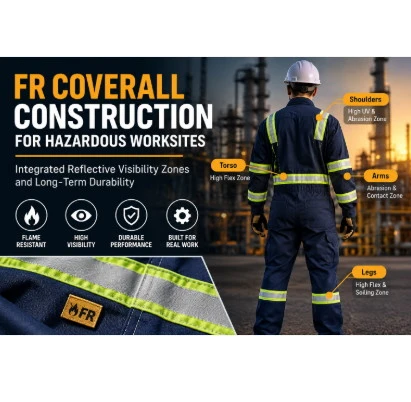
For high-risk protective clothing programs, buyers often evaluate certified products such as FR coveralls based on workplace hazards, protection standards, and expected operating conditions.
Aramid Failure Analysis
Cause: Excessive heat exposure beyond the designed protection range, mechanical damage, or incorrect material selection.
Impact: Fiber degradation, reduced mechanical strength, and reduced protective performance.
Prevention: Select appropriate aramid grades according to thermal risk assessment and verify fabric performance through laboratory testing.
Modacrylic Blend Fabric: Balancing Comfort and Flame Protection
Modacrylic blend fabric is an inherently flame resistant textile system widely used in protective clothing where comfort, flexibility, and daily wear performance are important. The flame resistant characteristics come from the modified acrylic polymer structure rather than a surface treatment.
Modacrylic fibers contain halogen-based elements within the polymer structure, which reduce flammability and help limit flame propagation. The fiber is commonly blended with cotton, rayon, aramid, or other materials to achieve a balance between protection, softness, strength, and cost.
| Blend Structure | Performance Characteristics | Typical Application |
|---|---|---|
| Modacrylic/Cotton | Improved comfort and moisture absorption | Daily industrial protective uniforms |
| Modacrylic/Rayon | Soft hand feel and improved textile comfort | Lightweight protective garments |
| Modacrylic/Aramid | Improved thermal and mechanical performance | Higher-performance industrial PPE |
Suitable Applications of Modacrylic Blend Fabric
- Industrial uniforms requiring regular daily wear.
- Electrical maintenance clothing with moderate thermal risk.
- Cleanroom and controlled industrial environments.
- Protective apparel requiring improved wearer comfort.
Limitations and Material Selection Considerations
- Lower mechanical strength compared with high-performance aramid fabrics.
- Not designed for the most extreme heat exposure conditions.
- Performance depends strongly on blend ratio and fabric construction.
- May require additional reinforcement in high-abrasion areas.
How Engineers Select Modacrylic Blend Fabric
Engineers usually choose modacrylic blends when workers require continuous garment use and comfort is an important factor. Selection considerations include:
- Required flame protection level.
- Workplace temperature and exposure frequency.
- Required moisture management performance.
- Expected washing cycles and garment replacement schedule.
Failure analysis:
Cause → Incorrect blend selection or insufficient durability for the working environment.
Impact → Faster wear, reduced garment lifespan, or unsuitable protection level.
Prevention → Match fabric construction with actual workplace requirements.
FR Viscose and Other Cellulosic Flame Resistant Fabrics
FR viscose is a regenerated cellulose fiber engineered to provide flame resistant performance while maintaining the moisture absorption and comfort characteristics of traditional cellulosic textiles. Unlike conventional viscose, flame resistant viscose incorporates flame retardant components during fiber production or through specialized modification processes to reduce ignition and flame propagation.
Cellulosic flame resistant fabrics are often selected when wearer comfort, softness, and moisture management are important considerations. Compared with aramid fibers, these materials generally provide improved comfort but lower thermal resistance and mechanical durability under severe industrial conditions.
| Material Type | Fiber Structure | Main Performance Characteristics |
|---|---|---|
| FR Viscose | Regenerated cellulose with flame resistant modification | Soft texture, moisture absorption, lightweight protection |
| FR Rayon Blend | Modified cellulose fiber blended with other FR fibers | Improved comfort and textile flexibility |
| Cellulosic FR Blend | Combination of FR viscose, cotton, or synthetic fibers | Balanced comfort, protection, and durability |
Performance Evaluation of FR Viscose Fabrics
Engineers evaluate FR viscose fabrics according to the required protection level and working environment. Testing normally focuses on flame behavior, mechanical durability, and dimensional stability.
- Vertical flame testing: ASTM D6413 or ISO 15025 evaluates afterflame time, char length, and flame spread behavior after ignition.
- Tensile strength testing: ISO 13934-1 measures fabric resistance against pulling forces during garment use.
- Abrasion resistance testing: ISO 12947 evaluates durability under repeated friction conditions.
- Dimensional stability testing: ISO 5077 measures shrinkage after washing and drying cycles.
Suitable Applications of FR Viscose Fabric
FR viscose is commonly selected for protective clothing applications where workers require long wearing periods and improved comfort.
- Lightweight industrial protective garments.
- Interior industrial uniforms requiring moisture management.
- Protective clothing systems where softness and flexibility are important.
- Blended FR fabrics combining comfort and thermal protection.
Limitations and Material Selection Considerations
FR viscose is not designed for every high-risk thermal application. Engineers must consider workplace conditions before selecting cellulosic FR materials.
- Lower abrasion resistance compared with aramid fabrics.
- Lower thermal stability under extreme heat exposure.
- May require blending with stronger fibers for demanding applications.
- Mechanical performance depends heavily on fabric construction and weight.
How Engineers Select FR Viscose
Engineers generally select FR viscose when comfort and daily wearability are important selection factors. The evaluation process includes:
- Required flame protection classification.
- Expected duration of garment wear.
- Climate and workplace temperature conditions.
- Required moisture absorption and wearer comfort level.
- Mechanical stress during normal operation.
Failure analysis:
Cause → Material selected for an environment exceeding its thermal or mechanical capability.
Impact → Faster fabric degradation, reduced garment durability, and insufficient protection.
Prevention → Combine material testing with workplace risk assessment before production approval.
How Buyers Select Flame Resistant Fabric Based on Workplace Risk
Selecting flame resistant fabric requires evaluating the complete relationship between workplace hazards, protection requirements, fabric performance, and garment lifecycle expectations. Professional buyers should not select materials only according to initial flame resistance test results because different industries create different combinations of heat, abrasion, chemical exposure, and washing requirements.
| Workplace Application | Recommended Fabric Options | Main Selection Factors | Materials to Avoid |
|---|---|---|---|
| Oil and Gas Industry | Aramid blends, FR cotton, certified FR systems | Flash fire protection, thermal stability, service life | General textiles without verified FR performance |
| Welding Operations | FR cotton, aramid blends | Spark resistance, abrasion resistance, heat exposure | Lightweight fabrics without thermal protection testing |
| Electrical Maintenance | Arc-rated aramid or engineered FR blends | ATPV rating, arc flash protection, thermal performance | Non-rated fabrics without electrical protection data |
| General Manufacturing | FR cotton, modacrylic blends | Comfort, durability, washing frequency, cost balance | Materials selected only by lowest purchase price |
Key Factors Engineers Evaluate Before Selecting FR Fabric
- Protection standard requirements: Engineers evaluate standards such as EN ISO 11612, ISO 15025, ASTM D6413, NFPA 2112, and ASTM F1959 according to workplace hazards.
- Thermal exposure level: Heat source type, exposure duration, and required protection level determine suitable material systems.
- Mechanical environment: Abrasion, tearing, movement frequency, and industrial conditions influence fabric construction selection.
- Laundry requirements: Industrial washing temperature, detergent type, and expected wash cycles affect lifecycle performance.
- Lifecycle cost: Buyers should compare initial material cost with replacement frequency, maintenance requirements, and service life.
Common FR Fabric Selection Mistakes
One common mistake is selecting a fabric only because it passes a laboratory flame test. A protective fabric must also maintain physical integrity during actual use.
For example, a lightweight FR fabric may provide sufficient flame resistance for short-duration exposure but may not withstand heavy abrasion in industrial environments. Similarly, a high-performance aramid fabric may exceed protection requirements while increasing unnecessary material cost for lower-risk applications.
For companies developing industrial protective clothing programs, selecting suitable flame resistant workwear requires evaluating fabric structure, workplace hazards, garment design, and production requirements together.
Topmatched supports material evaluation, product development, customization, and bulk production for industrial PPE applications. Buyers can review fabric options, discuss application requirements, and develop protective garments according to specific workplace conditions.
For broader industrial protection solutions, buyers can explore safety workwear designed for different professional environments and compliance requirements.
Frequently Asked Questions
How should buyers compare different flame resistant fabrics before selecting protective clothing?
Buyers should compare fiber structure, flame testing results, mechanical durability, washing performance, and workplace requirements. FR cotton may suit general industrial use, while aramid provides higher thermal stability. The final selection should consider protection level, service life, maintenance conditions, and total lifecycle cost.
Which flame resistant fabric is suitable for long-term industrial protective clothing programs?
The suitable fabric depends on exposure conditions and usage frequency. FR cotton and modacrylic blends are commonly selected for daily industrial wear, while aramid systems are used for higher thermal risks. Buyers should evaluate abrasion resistance, laundering requirements, and applicable PPE standards before approving materials.
What technical information should suppliers provide when sourcing flame resistant fabrics?
Suppliers should provide fiber composition, fabric weight, test reports, certification information, washing durability data, and recommended applications. These documents help buyers verify whether materials meet requirements for standards such as EN ISO 11612, ASTM D6413, or NFPA 2112.
Material Evaluation and OEM Protective Clothing Development
Topmatched provides material evaluation, product development support, customization services, and bulk production capability for flame resistant protective clothing. Our team works with buyers to review fabric structures, application requirements, testing expectations, and manufacturing specifications.
Companies developing PPE programs can submit material requirements, request technical evaluation, and review suitable fabric options for customized protective garments.
Through engineering-based material selection and production support, buyers can develop protective clothing solutions matched with workplace hazards, compliance requirements, and long-term usage expectations.