
ATPV is an arc flash protection value measured in cal/cm². It indicates the incident thermal energy level at which an arc-rated fabric system gives a 50% probability of reaching the onset of a second-degree burn, under ASTM F1959/F1959M arc testing.
For PPE procurement, the arc rating of the garment must be equal to or higher than the calculated incident energy from the site's arc flash study. A garment rated 8 cal/cm² is not a substitute for a 25 cal/cm² task label, even if both are flame-resistant. OSHA guidance also states that employers must select PPE based on calculated incident energy for arc flash hazards.
ATPV Meaning in cal/cm²: What the Number Actually Controls
ATPV stands for Arc Thermal Performance Value. It is not a fabric weight, not a flame spread rating, and not a general "fireproof" claim. It is a measured thermal protection value under an electric arc exposure test.
In procurement terms, ATPV answers one direct question:
How much arc flash incident energy can this fabric or garment system absorb before the wearer faces a 50% probability of second-degree burn onset?
ASTM F1959/F1959M is used to determine the arc rating of clothing materials or layered material systems. If the material breaks open before reaching the burn threshold, the reported value may be EBT rather than ATPV; both are arc ratings, but the failure mode is different.
ATPV vs. EBT Under ASTM F1959/F1959M
| Term | Unit | What It Indicates | Procurement Meaning |
|---|---|---|---|
| ATPV | cal/cm² | Thermal energy level linked to burn onset threshold | Fabric blocks arc heat up to the tested rating |
| EBT | cal/cm² | Energy breakopen threshold | Fabric opens before the burn threshold is reached |
| Arc Rating | cal/cm² | The lower reported result between ATPV and EBT | Use this value for PPE selection |
| Incident Energy | cal/cm² | Calculated site hazard at working distance | PPE arc rating must meet or exceed this value |
A common purchasing error is treating FR clothing and arc-rated clothing as interchangeable. FR fabric self-extinguishes after flame exposure; arc-rated fabric has been tested for thermal energy protection under electric arc exposure. Arc flash PPE specifications should request the arc rating in cal/cm², not only "FR cotton" or "flame-resistant finish."
Legacy HRC 1–4 and Current PPE Category Mapping
Many buyers still use "HRC" in RFQs, but current NFPA 70E language is commonly written as Arc Flash PPE Category. Category-based procurement remains useful when the site uses PPE category tables rather than an incident energy analysis. Industry summaries of NFPA 70E describe four PPE categories with minimum arc ratings of 4, 8, 25, and 40 cal/cm².
Arc Flash PPE Category 1–4: Minimum Arc Rating and Typical Garment Systems
| Legacy Term | Current Buyer Language | Minimum Arc Rating | Common Garment System | Typical Material Direction |
|---|---|---|---|---|
| HRC 1 | PPE Category 1 | 4 cal/cm² | Arc-rated shirt and pants or coverall | Lightweight FR cotton blend, modacrylic blend |
| HRC 2 | PPE Category 2 | 8 cal/cm² | Arc-rated shirt and pants, coverall, or jacket system | FR cotton, FR polyester/cotton, inherent FR blend |
| HRC 3 | PPE Category 3 | 25 cal/cm² | Arc flash suit system with hood and gloves | Multi-layer FR system, heavier woven or layered knit |
| HRC 4 | PPE Category 4 | 40 cal/cm² | Arc flash suit jacket, bib, hood, gloves | Multi-layer FR aramid blend or high-cal system |
For sourcing teams, the risk is under-specification. A buyer may write "HRC 2 FR jacket" while the site hazard label requires 12 cal/cm². In that case, an 8 cal/cm² Category 2 garment does not provide enough arc rating. Site incident energy always takes priority when the hazard analysis gives a numeric value.
Typical Fabric Weight and Material Logic for FR Clothing Procurement
| Target Arc Rating | Common Fabric Weight Range | Material Combination | Procurement Notes |
|---|---|---|---|
| 4 cal/cm² | 150–200 gsm | Lightweight FR cotton or FR modacrylic blend | Lower heat burden; suitable for low-energy tasks |
| 8 cal/cm² | 200–300 gsm | FR cotton, FR polyester/cotton, inherent FR blend | Common shirt, trouser, coverall, and jacket base |
| 12–20 cal/cm² | 300–450 gsm or layered | FR woven shell plus FR lining or heavier FR fabric | Check breathability, shrinkage, and wash shrinkage |
| 25 cal/cm² | Multi-layer system | FR jacket + bib or arc suit layering | Requires garment-level system testing |
| 40 cal/cm² | Heavy multi-layer system | Arc flash suit fabric package | Heat stress and mobility must be assessed |
B2B sourcing note: fabric weight alone cannot prove ATPV. A 300 gsm FR cotton fabric and a 300 gsm inherent FR aramid blend may produce different arc ratings, shrinkage behavior, tear strength, and wash life. Require test reports, fabric composition, garment construction details, and care label conditions.
Procurement Model Based on a Site Arc Flash Hazard Assessment
A valid arc flash PPE purchase should start from the electrical safety study, not from catalog photos. The procurement team should request the following data from the HSE or electrical engineering team before sending an RFQ to a China FR clothing manufacturer or supplier.
Arc Flash PPE RFQ Data Required Before Factory Quotation
| Required Data | Example Value | Why It Matters |
|---|---|---|
| Calculated incident energy | 8.6 cal/cm² at 18 inches | Sets minimum garment arc rating |
| Working distance | 18 in / 455 mm | Affects incident energy calculation |
| PPE selection method | Incident energy analysis or PPE category table | Avoids mixing two methods incorrectly |
| Garment type | Shirt, pants, coverall, jacket, arc suit | Controls pattern and layering |
| Required standard | ASTM F1506, ASTM F1959, NFPA 70E reference, IEC 61482 if EU market | Defines test route and documentation |
| Wash requirement | 50 industrial washes or home laundering | Changes fabric and trim choice |
| Reflective trim | FR reflective tape, 50 mm width | Non-FR tape can become the weak point |
| Closure system | FR zipper, concealed snap, hook-and-loop | Metal exposure and melting risk |
| Thread | FR aramid thread | Standard polyester thread can fail under heat |
| Branding | FR embroidery or FR heat transfer label | Logo method must not reduce protection |
For arc flash PPE tenders, send the incident energy value, target arc rating, garment type, wash requirement, and reflective trim specification.
Request OEM FR Clothing Quote to receive a factory-side material and construction review before bulk sampling.
ATPV Procurement Risk: The Garment Is a System, Not Only a Fabric
Arc flash PPE fails when one component is under-specified. Buyers often focus on shell fabric and ignore trim, thread, label, closure, pocket, and reflective tape. In an arc-rated garment, the weakest component may determine field performance.
FR Clothing Components That Should Match the Arc Flash Use Case
| Component | Minimum Procurement Check | Risk if Ignored |
|---|---|---|
| Shell fabric | Arc rating in cal/cm²; ASTM F1959/F1959M report | Fabric may not meet site hazard level |
| Reflective tape | FR reflective tape, tested for heat exposure | Tape may melt, drip, or detach |
| Sewing thread | Aramid or FR thread | Seam failure under thermal exposure |
| Zipper | FR zipper tape or protected closure | Melting, heat transfer, or exposed hardware |
| Labels | FR-compatible label material | Label melting or smoke generation |
| Logo | FR embroidery or approved FR transfer | Branding layer may affect flame behavior |
| Pockets | Covered flaps, limited metal exposure | Sparks or molten particles may collect |
| Layering | Tested system rating | Untested layers may not equal expected ATPV |
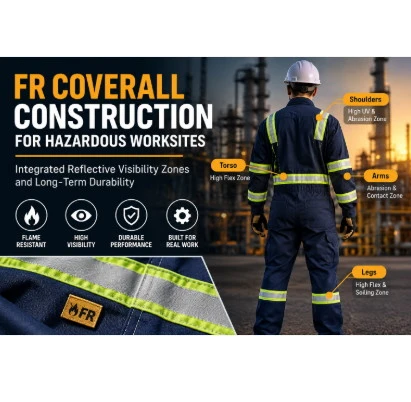
For high-visibility FR clothing, reflective tape selection is especially important. Standard reflective heat transfer film or standard polyester-backed reflective tape should not be used on arc flash PPE unless the buyer has confirmed FR compatibility and test documentation.
China Manufacturer Sourcing Checklist for ATPV-Rated FR Clothing
A China FR clothing factory can support cost-controlled OEM production, but the buyer must specify the compliance route clearly. "FR jacket" is not enough for arc flash procurement. A usable RFQ should include the target ATPV rating, fabric composition, garment style, trim requirement, washing requirement, and destination market.
Factory Capability Checklist for FR Clothing Procurement
| Capability Item | What the Buyer Should Ask For |
|---|---|
| Fabric traceability | Mill name, composition, GSM, lot number |
| Arc rating report | ASTM F1959/F1959M test report for fabric or system |
| Garment standard | ASTM F1506, NFPA 70E reference, IEC 61482 route if required |
| FR trim sourcing | FR reflective tape, FR zipper, FR thread, FR labels |
| Size grading | US/EU/Asia size chart, tolerance table |
| Wash durability | Home wash or industrial wash test condition |
| Pre-production sample | Size set, fabric shade, trim approval, wear test |
| Bulk inspection | AQL, measurement report, shade band, packing check |
| Documentation | Test report, declaration, packing list, care label file |
Buyer Decision Rule: Match Arc Rating to Incident Energy, Then Check Wearability
The safest buying rule is simple: the garment arc rating must exceed the calculated incident energy at the worker's task distance. However, over-specifying every worker into 40 cal/cm² clothing can create heat stress, fatigue, poor compliance, and lower daily usage.
Arc Flash PPE Selection Matrix for Procurement Teams
| Site Requirement | Recommended Procurement Action |
|---|---|
| Incident energy below 1.2 cal/cm² | Confirm if arc-rated clothing is required by employer policy |
| 1.2–4 cal/cm² | Specify Category 1 or ≥4 cal/cm² arc-rated garments |
| 4.1–8 cal/cm² | Specify Category 2 or ≥8 cal/cm² arc-rated garments |
| 8.1–25 cal/cm² | Specify ≥25 cal/cm² system; do not use 8 cal/cm² garments |
| 25.1–40 cal/cm² | Specify ≥40 cal/cm² arc flash suit system |
| Above 40 cal/cm² | Engineering controls, revised work method, or higher-rated suit review |
OSHA materials emphasize that PPE selection must be based on calculated incident energy and worker exposure. The procurement team should not replace the site hazard analysis with a generic catalog category.
Final Procurement Notes for ATPV-Rated FR Clothing
ATPV is a purchasing control number. It connects electrical risk assessment, FR fabric engineering, garment construction, trim selection, wash durability, and supplier documentation into one procurement decision.
For PPE distributors and industrial buyers, the correct sourcing sequence is:
Obtain the arc flash study or PPE category requirement.
Define minimum arc rating in cal/cm².
Select fabric and garment system.
Verify FR trims, reflective tape, thread, zipper, and labels.
Approve a pre-production sample.
Check bulk shipment against fabric lot, dimensions, trim, label, and packing records.
For OEM FR clothing procurement, send your target ATPV rating, fabric GSM, garment type, reflective tape requirement, wash standard, size range, and order quantity.
custom FR clothing manufacturer
FAQ
Q: What ATPV Rating Should Buyers Specify For Arc Flash PPE?
A: Specify an arc rating equal to or higher than the calculated incident energy on the site arc flash label. If the label shows 8.6 cal/cm², use PPE rated above 8.6 cal/cm², not a generic 8 cal/cm² garment.
Q: Can A China Factory Manufacture ATPV-Rated FR Clothing For OEM Orders?
A: Yes, if the RFQ includes target ATPV, fabric composition, garment style, FR trims, wash requirement, and required test documentation. Buyers should request ASTM F1959/F1959M arc rating data and confirm whether the report covers fabric only or the full garment system.
Q: Is Reflective Tape Allowed On Arc Flash FR Clothing?
A: Yes, but it should be FR-compatible reflective tape approved for the garment use case. Standard reflective tape may melt, detach, or fail under heat exposure. Specify FR reflective tape, FR thread, and garment-level testing when reflective visibility is required.