

Why Some Reflective Vehicle Stickers Fail Early: Adhesive, Weather and Surface Mistakes
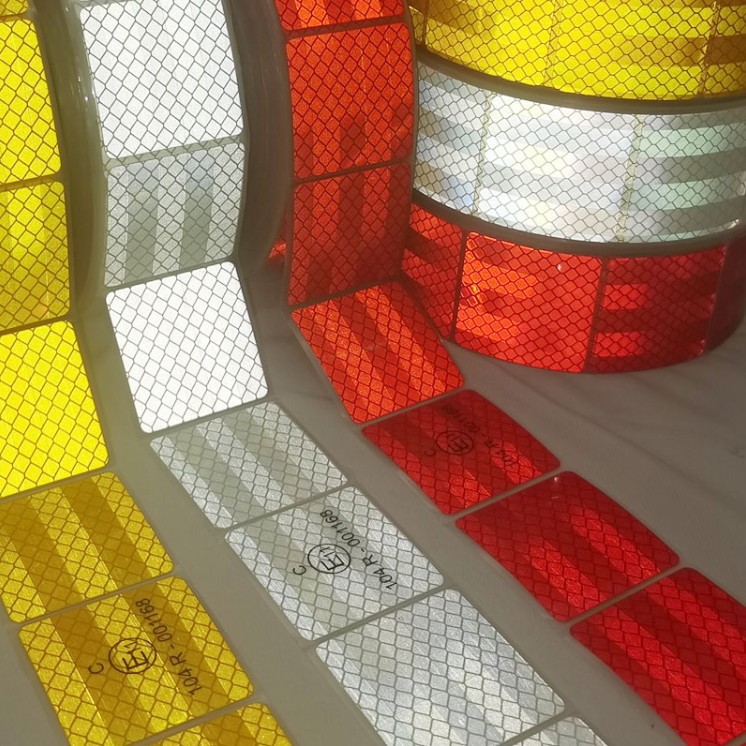
Reflective vehicle stickers are widely used on trucks, trailers, buses, emergency vehicles, motorcycles, construction vehicles and fleet equipment to improve nighttime visibility and road safety. However, some stickers fail much earlier than expected. They may peel from the edges, lift after rain, crack under heat, lose adhesion after washing, or detach from plastic and painted surfaces after only a short period of use.
In many cases, early failure is not caused by the reflective layer alone. A sticker can have strong reflective brightness but still fail if the adhesive system, surface preparation, application temperature, weather exposure or vehicle surface is not properly matched. For B2B buyers sourcing reflective tape for vehicle marking projects, understanding these failure points can help reduce complaints, improve field performance and select the right product before placing bulk orders.
This guide explains the most common reasons why reflective vehicle stickers fail early and what buyers should check when sourcing reflective decals, truck reflective tape, conspicuity tape and self adhesive reflective vinyl for outdoor vehicle applications.
Reflective vehicle stickers may peel early when adhesive, surface preparation, weather exposure or installation method is not properly controlled.
Early Failure Does Not Always Mean Poor Reflective Material
When reflective vehicle stickers peel or lift early, many buyers first assume that the reflective material itself is defective. In reality, reflective performance and adhesive performance are two different technical areas. The reflective layer controls nighttime visibility, retroreflective brightness and visual warning effect. The adhesive backing controls how well the sticker bonds to the vehicle surface under heat, rain, vibration, washing and road exposure.
A microprismatic or glass bead reflective film may still provide strong visibility, but if the adhesive is not suitable for the application surface, the sticker can fail. Painted metal, aluminum panels, plastic bumpers, fiberglass surfaces, powder-coated parts and slightly textured vehicle panels do not always bond in the same way. A material that works well on a smooth metal truck body may not perform the same on a low-surface-energy plastic component.
For procurement teams, the right question is not only "Is this sticker reflective enough?" but also "Is the adhesive system suitable for the vehicle surface, climate and application position?" This is especially important for fleet marking, trailer safety graphics, delivery trucks, traffic vehicles and export projects requiring long outdoor service life.
Adhesive Mistakes That Cause Reflective Vehicle Stickers to Peel
Wrong Adhesive for the Vehicle Surface
One of the most common causes of early failure is using the wrong adhesive for the target surface. Reflective vehicle stickers are often applied to painted metal, aluminum, plastic, glass fiber panels, powder-coated surfaces or coated commercial vehicle bodies. Each surface has different surface energy, texture and chemical behavior. If the adhesive does not flow properly into the surface, the bond strength may remain weak even when the sticker looks firmly attached at first.
For example, a standard permanent pressure sensitive adhesive may perform well on smooth painted steel but may not be the best choice for certain plastic surfaces or rough coated panels. Some vehicle parts may also contain wax, silicone polish, oil film or release agents that prevent direct adhesive contact. In such cases, the adhesive bonds to the contamination layer instead of the actual vehicle surface.
Before selecting a product, buyers should confirm whether the sticker requires permanent PSA adhesive, high tack adhesive, removable adhesive, acrylic adhesive or a more weather-resistant adhesive backing. For truck bodies, trailers and long-term commercial vehicle marking, products such as truck reflective tape for conspicuity marking are usually designed with stronger outdoor application requirements than ordinary decorative stickers.
Low-Cost Adhesive May Not Handle Outdoor Stress
Low-cost reflective stickers may have acceptable initial tack, but initial tack is not the same as long-term outdoor durability. A sticker may feel sticky during installation but still fail after exposure to rain, heat, washing, vibration, road dust or sunlight. The adhesive must remain stable under changing temperatures and continuous environmental stress.
Outdoor vehicle use is more demanding than indoor labeling. Commercial vehicles face wind pressure, high road speed, mud, rainwater, fuel residue, cleaning chemicals, pressure washing, UV exposure and temperature cycling. If the adhesive system is not designed for these conditions, the most common failure points are edge lifting, corner peeling, shrinking, bubbling or gradual loss of bond strength.
For buyers sourcing bulk vehicle safety decals, the adhesive specification should be checked together with the reflective film type. A good inquiry should mention the vehicle surface, application region, expected durability, sticker size, temperature exposure and whether the product will be used for trucks, trailers, buses, motorcycles or industrial vehicles.
Weather Exposure: Rain, UV, Heat and Road Salt
Rain and Moisture Attack Weak Edges First
Rain does not always destroy a properly applied reflective sticker. The real problem usually starts at weak edges. If the surface is not clean, if the edge is not firmly pressed, or if the sticker has sharp corners, rainwater and road moisture can enter tiny gaps. Once moisture reaches the adhesive layer, wind pressure and vehicle movement can make the lifting area larger over time.
This is why edge quality matters in outdoor vehicle marking. A large reflective sticker applied on a truck side panel may look smooth in the center but still fail from one corner. After repeated rain, washing and high-speed driving, the edge may start to curl. Once the adhesive edge is exposed to water, dust and air, the failure becomes difficult to stop.
For rainy markets, delivery fleets, trailers and municipal vehicles, buyers should consider weather resistant reflective stickers or conspicuity tape for trucks with suitable outdoor durability, stable adhesion and reflective performance for commercial vehicle marking.
UV and Heat Can Accelerate Film Aging
Vehicles parked outdoors can experience much higher surface temperatures than the surrounding air temperature. Long-term UV exposure and heat can accelerate the aging of some films, inks, laminates and adhesives. Lower-grade PVC films may become harder, shrink slightly, crack or pull against the adhesive layer. Printed stickers may also fade or lose surface protection if the ink and laminate are not suitable for outdoor use.
In hot climates, buyers should pay attention to the complete construction of the reflective sticker, not just the adhesive. Important details include film type, reflective structure, surface coating, printing method, laminate option, adhesive backing and intended outdoor service life. For high-visibility vehicle applications, diamond grade prismatic reflective tape or high intensity prismatic reflective materials may be considered when stronger visibility and more demanding vehicle marking performance are required.
Cold Weather Slows Adhesive Bonding
Low temperature is another common reason for early adhesive failure. Pressure sensitive adhesive needs proper temperature and pressure to flow into the surface and form a stable bond. When reflective vehicle stickers are applied in cold weather, the adhesive becomes less flexible and may not wet out the surface properly. The sticker may seem attached during installation, but the bond strength may remain weak.
If the vehicle is washed, exposed to rain, driven at high speed or parked outdoors soon after cold-weather installation, the risk of edge lifting increases. For winter applications, buyers and installers should confirm the recommended application temperature, keep the surface dry, avoid frozen or damp panels and allow enough bonding time before heavy use.
Surface Preparation Mistakes Before Application
Dust, Wax, Oil and Silicone Residue
A reflective sticker can only bond to the surface it touches. If it is applied over wax, dust, oil, silicone polish or road grime, the adhesive is not bonding to the vehicle body. It is bonding to the contamination layer. This is one of the simplest but most frequent reasons why reflective vehicle stickers peel early.
Commercial vehicles often carry invisible contamination on the surface. Diesel residue, cleaning agents, polishing wax, old adhesive, road salt, water spots and fine dust can all reduce adhesion. Even a new-looking vehicle panel may not be clean enough for sticker application. Proper surface cleaning is especially important for fleet projects where many stickers are applied at once.
Before applying reflective tape or decals, the surface should be clean, dry and free from wax, oil and loose particles. The installer should also avoid touching the adhesive side with fingers. Fingerprints can reduce bond strength, especially on narrow reflective strips and die-cut stickers.
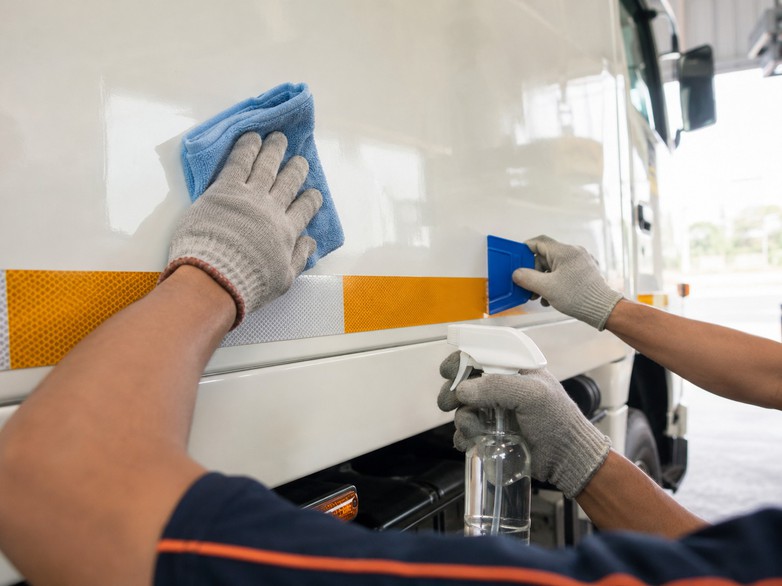
Proper surface preparation helps reflective tape and vehicle stickers achieve stronger adhesion and better outdoor durability.
Fresh Paint and Uneven Surfaces
Freshly painted surfaces may look dry but may not be fully cured. If reflective stickers are applied too soon, solvents or paint movement can affect adhesion. Uneven, textured, riveted or curved surfaces can also create stress points. These areas require more careful material selection and application pressure.
Large stickers on curved panels are more likely to fail if the film is too stiff or if the shape creates tension at the edges. For complex surfaces, buyers should ask whether the material has enough flexibility and conformability. For bulk orders, sample testing on the real vehicle surface is strongly recommended before mass application.
Wet Application Is Not Always Suitable
Some installers use water or soap solution to position stickers more easily. However, wet application is not suitable for every reflective sticker or adhesive system. Water trapped under the film may slow bonding or create long-term adhesion problems, especially near edges and corners. Unless the supplier specifically confirms that wet application is acceptable, dry application is usually safer for many reflective vehicle stickers and reflective tape products.
Application Temperature and Pressure Problems
Cold or Damp Application Conditions
Application conditions have a direct impact on adhesive performance. Reflective vehicle stickers should not be applied to wet, frozen, dusty or extremely cold surfaces. The vehicle panel, film and surrounding air should all be within a suitable temperature range. If the sticker is applied in a cold warehouse, outdoor winter environment or humid condition, the adhesive may not form a strong bond.
This is particularly important for export customers and distributors who sell to different climates. A sticker used in a warm indoor test may perform differently when installed outdoors in winter, in coastal rain, in desert heat or in regions with road salt. B2B buyers should ask suppliers for application guidance instead of relying only on general sticker installation habits.
Not Enough Squeegee Pressure
Pressure sensitive adhesive requires pressure. Simply placing a reflective sticker on a vehicle panel and smoothing it lightly by hand is not enough for reliable outdoor use. Proper squeegee pressure helps the adhesive make full contact with the surface and reduces air gaps. Edges, corners, narrow strips and cut letters require extra attention.
For long strips of reflective tape, installers should apply steady pressure from one side to the other to avoid trapped air. For die-cut warning decals or custom reflective stickers, all corners should be pressed firmly. If the sticker includes small details, thin lines or sharp shapes, these areas should be checked carefully after application.
No Bonding Time Before Washing or Road Use
Another common mistake is washing or using the vehicle immediately after application. Although a reflective sticker may appear attached right away, the adhesive may need time to build stronger bond strength. Immediate pressure washing, rain exposure, high-speed driving or heavy road use can increase the risk of lifting before the adhesive has fully stabilized.
For fleet projects, installers should plan application time carefully. When possible, apply stickers in a clean, dry and controlled environment, then allow enough time before washing or returning the vehicle to demanding road conditions.
Design and Cutting Mistakes That Increase Edge Lifting
Sharp Corners Are Easier to Lift
Sticker shape also affects durability. Sharp corners are more likely to lift than rounded corners because they concentrate stress at a small point. During washing, rain, wind pressure and wiping, sharp corners can catch more easily. Once the corner lifts, water and dust can enter the adhesive layer and enlarge the failure area.
For custom reflective vehicle decals, rounded corners are usually a better choice for outdoor durability. This is especially useful for warning labels, truck safety stickers, trailer markings and fleet logos that must remain attached for a longer period.
Oversized Stickers on Curved Panels
Large reflective stickers applied to curved or irregular panels may experience film tension. If the material does not conform well, the film may try to return to its original flat shape. This can lead to lifting, wrinkling or shrinking. Buyers should avoid assuming that every reflective vinyl or reflective sticker can be used on every curved vehicle surface.
For large-area graphics, printable decals or custom vehicle markings,reflective self adhesive vinyl may be considered when the project requires roll material, die cutting, printing or custom sticker production. The correct material should be selected according to surface shape, printing method, application position and outdoor durability requirements.
Poorly Pressed or Unprotected Edges
Edges are the most common failure point for reflective vehicle stickers. Even when the center area is firmly bonded, the edge can fail if it is not properly pressed. Dust, moisture and air usually enter from the edge first. For outdoor vehicle use, every edge should be firmly applied, especially around corners, seams, rivets, panel gaps and curved areas.
When designing stickers for long-term outdoor use, buyers should also avoid overly thin shapes, unnecessary sharp cuts and complex edges that are difficult to press. A simpler shape with clean edges often performs better in real vehicle environments.
How B2B Buyers Should Specify Reflective Vehicle Stickers
To reduce early failure, B2B buyers should provide more than size and color when requesting a quotation. The supplier needs to understand where and how the sticker will be used. A reflective decal for a motorcycle helmet, a truck side panel, a trailer rear plate and a plastic bumper may require different film and adhesive choices.
When sourcing reflective vehicle stickers, buyers should confirm the vehicle type, surface material, application position, climate, expected durability and compliance requirements. For regulated vehicle marking, products such as ECE 104 reflective rear marking plate or compliant conspicuity materials may be required depending on the market and vehicle type.
B2B buyers should specify vehicle type, surface material, adhesive requirement, climate exposure, size, color and compliance needs before placing bulk orders.
| Specification Item | What Buyers Should Confirm |
|---|---|
| Vehicle Type | Truck, trailer, bus, motorcycle, emergency vehicle, construction vehicle or fleet vehicle |
| Application Surface | Painted metal, aluminum, plastic, fiberglass, powder-coated surface, flat or curved panel |
| Film Type | PVC, PET, PMMA, microprismatic film, glass bead reflective film or printable reflective vinyl |
| Adhesive Type | Permanent PSA, high tack adhesive, removable adhesive or weather-resistant acrylic adhesive |
| Outdoor Exposure | Rain, UV, heat, cold weather, road salt, washing, mud and high-speed road use |
| Size and Shape | Roll, sheet, strip, die-cut sticker, warning decal, rear marking plate or custom shape |
| Compliance | ECE 104, DOT-C2, E-mark or market-specific reflective marking requirements if applicable |
| OEM Options | Custom logo, color, printing, die cutting, packaging, roll length and private label supply |
Recommended Reflective Vehicle Sticker Solutions
Different vehicle marking projects require different reflective solutions. For commercial trucks and trailers, buyers often choose conspicuity tape or microprismatic reflective tape. For custom warning signs and printed stickers, reflective self adhesive vinyl may be more suitable. For heavy vehicle rear warning applications, reflective rear marking plates may be required. For high-visibility vehicle safety graphics, stronger prismatic reflective materials may offer better nighttime visibility.
For general fleet marking, buyers can consider self adhesive reflective tape for vehicles when the application requires custom sizes, strong visibility and pressure sensitive adhesive backing. For truck bodies and trailers, microprismatic truck reflective tape is commonly used for side and rear marking. For regulated commercial vehicle visibility, ECE 104 reflective tape for vehicle marking can support projects that require more specific vehicle conspicuity performance.
For buyers who need printed decals, custom warning stickers, fleet logos or die-cut reflective graphics, printable reflective vinyl for truck stickers can be used as a flexible material option. When higher brightness and more demanding outdoor visibility are required, high intensity prismatic reflective tape may be considered for suitable vehicle safety marking projects.
Quick Checklist Before Applying Reflective Vehicle Stickers
Before installation, buyers and installers should check the following points to reduce early peeling, edge lifting and adhesive failure:
- Confirm that the reflective sticker is suitable for the vehicle surface.
- Clean the surface and remove dust, wax, oil, silicone residue and old adhesive.
- Make sure the surface is completely dry before application.
- Check the air temperature, film temperature and vehicle surface temperature.
- Avoid application during rain, frost, heavy humidity or extreme heat.
- Use proper squeegee pressure instead of only pressing by hand.
- Pay special attention to edges, corners, rivets and curved surfaces.
- Use rounded corners for custom die-cut reflective vehicle stickers.
- Allow enough bonding time before washing, pressure cleaning or heavy road use.
- Test samples on the real vehicle surface before placing a large bulk order.
FAQ: Reflective Vehicle Stickers and Adhesive Failure
Why do reflective vehicle stickers peel off after a few weeks?
Reflective vehicle stickers may peel after a few weeks because of poor surface preparation, wrong adhesive selection, low application temperature, moisture, wax or oil contamination, insufficient pressure or early exposure to washing and road conditions. The failure often starts from edges or corners where water, dust and wind pressure can enter the adhesive layer.
Can reflective stickers be applied to plastic vehicle parts?
Yes, reflective stickers can be applied to some plastic vehicle parts, but the plastic type matters. Some plastics have lower surface energy and may require stronger adhesive or surface testing before bulk application. Buyers should confirm the exact surface material and request sample testing when applying reflective stickers to plastic bumpers, motorcycle parts or molded vehicle components.
Are waterproof reflective stickers always suitable for outdoor vehicles?
Not always. Waterproof surface performance does not automatically mean long-term outdoor adhesion. A reflective sticker used on vehicles also needs suitable adhesive, UV resistance, temperature resistance, edge stability and proper installation. For commercial trucks, trailers and fleet use, buyers should select weather resistant materials designed for outdoor vehicle marking instead of ordinary decorative stickers.
What is the best reflective sticker for trucks and trailers?
The best option depends on the market, vehicle type and application position. Trucks and trailers often use microprismatic reflective tape, conspicuity tape, ECE 104 reflective tape, DOT-C2 vehicle marking tape or reflective rear marking plates. For customized branding or warning graphics, die-cut reflective decals or printable reflective vinyl may be more suitable.
How can B2B buyers reduce early failure in bulk reflective decal projects?
B2B buyers should confirm the adhesive type, film construction, application surface, installation temperature, outdoor exposure, compliance needs and expected service life before bulk production. It is also recommended to test samples on the real vehicle surface, especially for plastic parts, curved panels, powder-coated surfaces and demanding outdoor climates.
Final Thoughts
Reflective vehicle stickers fail early when the product, surface, weather and installation method are not properly matched. A bright reflective film alone does not guarantee long-term adhesion. Buyers should evaluate adhesive backing, vehicle surface compatibility, outdoor exposure, application temperature, edge design and installation method before ordering in bulk.
For fleet marking, truck safety decals and custom reflective vehicle sticker projects, Xiamen Topmatched can support reflective tape, conspicuity tape, reflective self adhesive vinyl and OEM die-cut reflective decals based on your target market, vehicle surface, size, color, adhesive requirement and compliance needs. Send us your application surface, quantity and required standard, and our team will help recommend a suitable reflective vehicle marking solution.
Previous: No Information