Reusable shopping bags are manufactured from different material systems, including polypropylene non-woven fabric, PP woven fabric, recycled polyester (RPET), cotton canvas, and coated synthetic textiles. The most suitable material depends on required load capacity, reuse frequency, printing method, sustainability targets, and production cost.
For product developers and sourcing managers, material selection should not be based only on appearance or fabric price. Fiber structure, fabric weight, tensile performance, reinforcement design, and manufacturing process directly influence service life and customer experience. A reusable shopping bag designed for supermarket applications may require different specifications from a promotional tote bag or a premium retail package.
How Reusable Shopping Bag Materials Are Classified Based on Fiber Structure and Manufacturing Process
Reusable shopping bag materials can generally be classified into natural fibers, synthetic fibers, recycled materials, and coated composite fabrics. Each material category has different fiber structures and manufacturing processes that affect strength, weight, print compatibility, and environmental performance.
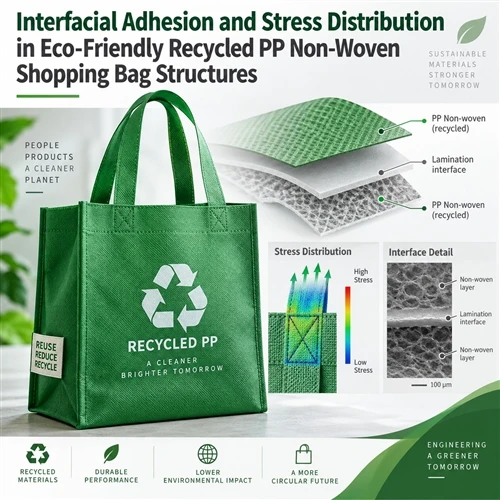
Polypropylene (PP) materials are widely used because polypropylene polymers provide low moisture absorption, chemical resistance, and a favorable strength-to-weight ratio. Non-woven PP bags are produced through spunbond processes, where continuous filaments are bonded by heat treatment. PP woven bags use woven yarn structures that provide higher mechanical strength for repeated heavy loads.
Recycled polyester (RPET) bags use polyester fibers produced from recycled PET materials. The polymer structure is similar to conventional polyester, but sourcing requirements may include recycled content verification such as GRS certification.
| Material | Performance Characteristics | Advantages | Suitable Applications |
|---|---|---|---|
| PP Non-Woven | Typical 60-120 GSM, lightweight structure, moderate tensile strength | Low cost, printable surface, suitable for high-volume production | Promotional bags, retail giveaways, reusable shopping bags |
| PP Woven | Higher yarn strength and tear resistance due to woven structure | Better load capacity and repeated-use performance | Grocery bags, heavy-duty shopping bags, industrial packaging |
| RPET Polyester | Synthetic fiber structure with recycled PET content | Sustainability-focused applications and good abrasion resistance | Eco retail bags, branded reusable bags |
| Cotton Canvas | Natural cellulose fiber with higher moisture absorption | Premium appearance and strong printability | Fashion tote bags, promotional premium bags |
When buyers evaluate different materials, they should consider the relationship between material structure and application requirements. A lightweight promotional bag may prioritize cost and printing quality, while a grocery shopping bag may require higher tensile strength and handle reinforcement.
For companies sourcing reusable retail solutions, reusable shopping bags should be evaluated according to fabric construction, expected usage cycles, and carrying conditions rather than material name alone.
How Polypropylene Non-Woven Fabric Performance Changes With Fiber Bonding Structure
Polypropylene non-woven fabric is one of the most common materials for reusable shopping bags because it provides a balance between production efficiency, lightweight structure, and customization flexibility.
Unlike woven fabrics where yarns cross over each other, non-woven PP fabrics are produced by bonding randomly arranged polypropylene filaments. The bonding density directly affects fabric strength, stiffness, and tear resistance.
Fabric weight is normally measured in GSM (grams per square meter). Increasing GSM generally increases material thickness and strength, but it also increases product weight and material cost.
60-80 GSM PP non-woven: commonly used for lightweight promotional bags.
80-120 GSM PP non-woven: suitable for reusable shopping applications requiring improved strength.
120 GSM+ PP non-woven: selected for applications requiring higher load resistance.
Typical PP non-woven bag performance evaluation includes tensile testing according to ASTM D5034 or ISO textile testing methods. Tensile strength testing measures the maximum force a fabric can withstand before breaking, usually expressed in Newtons (N).
Higher tensile strength values indicate better resistance against stretching and tearing during carrying conditions. However, final bag performance also depends on handle attachment, stitching reinforcement, and stress point design.
PP woven shopping bags use a different structural approach, where woven yarn orientation provides improved mechanical performance for heavier applications.
How RPET Fabric Structure Improves Sustainable Shopping Bag Performance
RPET (Recycled Polyethylene Terephthalate) fabric is produced from recycled PET materials, commonly collected from post-consumer plastic bottles. During manufacturing, PET materials are cleaned, processed into flakes, melted, and regenerated into polyester fibers. The resulting fiber structure provides performance characteristics similar to conventional polyester while supporting recycled material objectives.
For reusable shopping bags, RPET performance depends on fiber quality, recycled content ratio, yarn construction, and fabric finishing methods. Buyers should evaluate both environmental certification and physical performance because recycled content alone does not determine final bag durability.
Common RPET shopping bag fabrics are available in different constructions, including woven polyester, non-woven polyester blends, and laminated recycled fabrics. Fabric weight is commonly specified in GSM, while yarn strength may be evaluated through tensile and tear testing.
RPET polyester with 100% recycled content is commonly selected for sustainability-focused retail programs.
RPET blended with virgin polyester may be used when higher mechanical performance requirements exist.
Laminated RPET fabrics can improve moisture resistance and surface protection for specific applications.
| Performance Parameter | Testing Method | Typical Range | Application Meaning |
|---|---|---|---|
| Recycled Content | GRS certification verification | 30%-100% recycled polyester content | Indicates sustainability level and supply chain traceability |
| Fabric Weight | GSM measurement | 80-250 GSM depending on construction | Higher GSM generally provides stronger structure but increases weight |
| Tensile Strength | ASTM D5034 / ISO textile tensile testing | Measured in N force | Evaluates resistance against stretching and load stress |
| Abrasion Resistance | Martindale abrasion testing | Measured by abrasion cycles | Indicates suitability for repeated daily use |
A common failure pattern in recycled shopping bags is reduced mechanical strength caused by insufficient fiber quality control or unsuitable fabric selection. The cause may be lower fiber strength after recycling processes. The performance impact can include earlier tearing or seam stress. Prevention requires selecting qualified RPET materials, verifying testing data, and matching fabric specifications with intended usage conditions.
For buyers developing sustainable retail packaging programs, recycled shopping bags should be evaluated based on recycled content, fabric performance, printing requirements, and expected service life.
How Cotton Canvas and Natural Fiber Bags Compare With Synthetic Materials
Cotton canvas bags use natural cellulose fibers and are widely selected for premium retail packaging, promotional products, and reusable tote applications. Compared with polypropylene and polyester materials, cotton provides a different combination of appearance, hand feel, moisture absorption, and printing performance.
Cotton fibers have a natural twisted structure that provides softness and good surface compatibility for printing. However, cotton absorbs more moisture than synthetic fibers, which can affect drying speed and dimensional stability in wet environments.
Synthetic materials such as PP and polyester generally provide lower moisture absorption, faster drying characteristics, and more consistent industrial production performance.
| Material | Fiber Structure | Performance Characteristics | Suitable Applications |
|---|---|---|---|
| Cotton Canvas | Natural cellulose fiber | Soft touch, premium appearance, good printability | Fashion totes, promotional premium bags |
| Polypropylene | Synthetic polyolefin polymer | Lightweight, moisture resistant, cost efficient | Retail shopping bags, promotional bags |
| Polyester / RPET | Synthetic PET polymer fiber | Higher abrasion resistance and dimensional stability | Reusable bags, outdoor applications |
The selection between cotton and synthetic materials depends on application requirements. A premium retail brand may prioritize cotton appearance and printing quality, while supermarkets and large-volume retailers may prioritize lightweight structure, cost control, and repeated-use performance.
A common mistake is assuming natural materials always provide better sustainability performance. Lifecycle performance depends on material lifespan, production method, usage frequency, and end-of-life management.
How Fabric Weight and Construction Determine Shopping Bag Load Capacity
Fabric weight and construction directly influence how much load a reusable shopping bag can carry. However, fabric thickness alone does not determine strength. The complete structure includes fabric selection, handle design, stitching method, reinforcement areas, and stress distribution.
GSM is one of the most common specifications used for non-woven and textile bags. A higher GSM generally indicates more material per square meter, which can improve stiffness and resistance against deformation.
Lightweight reusable bags: approximately 60-90 GSM materials for promotional applications.
Standard retail reusable bags: approximately 90-150 GSM materials for repeated shopping use.
Heavy-duty shopping bags: 150 GSM+ fabrics or reinforced woven structures for higher carrying loads.
Handle performance is often evaluated through load testing. During testing, a bag handle is loaded with a defined weight and inspected for tearing, seam failure, or deformation. The result helps buyers evaluate whether the reinforcement structure matches the expected carrying condition.
A typical failure mechanism is handle separation. The cause is usually insufficient stitching area, weak reinforcement patches, or unsuitable fabric strength. The performance impact is sudden handle failure during use. Prevention methods include wider reinforcement zones, stronger webbing materials, and controlled stitching parameters.
For applications requiring higher carrying capacity, buyers should consider heavy duty shopping bags with reinforced construction and stronger fabric systems.
How Manufacturers Test Reusable Shopping Bag Durability and Service Life
Reusable shopping bag durability is determined by both material performance and construction quality. Professional buyers should evaluate not only fabric specifications but also how the complete bag structure performs under repeated loading, abrasion, and daily handling conditions.
Material testing usually begins with tensile strength evaluation. Tensile testing measures the maximum force a fabric can withstand before breaking. The result is normally recorded in Newtons (N) and helps determine whether the selected fabric can support expected carrying loads.
Tensile Testing: Evaluates fabric resistance against pulling force and stretching. Higher tensile strength generally indicates better resistance to load stress.,
Tear Resistance Testing: Measures the force required to continue a tear after initial damage. This is important for bags exposed to sharp objects or uneven loads.
Abrasion Testing: Evaluates surface wear resistance after repeated friction cycles. It helps predict performance during long-term use.
Handle Load Testing: Checks whether handles, stitching areas, and reinforcement structures can withstand repeated carrying conditions.
For shopping bags, structural testing is especially important because failure often occurs at stress points rather than the middle of the fabric. Common failure mechanisms include handle detachment, seam tearing, and bottom panel damage.
The cause is usually related to insufficient reinforcement, unsuitable stitch density, or incorrect material selection. The performance impact is reduced service life and customer dissatisfaction. Prevention requires testing the complete bag structure instead of evaluating fabric performance alone.
| Testing Item | Measurement Method | Typical Evaluation | Buyer Consideration |
|---|---|---|---|
| Fabric Tensile Strength | ASTM D5034 / ISO textile tensile testing | Maximum breaking force in N | Indicates load-bearing capability of the material |
| Tear Resistance | ASTM D5587 or equivalent textile methods | Tear force measurement | Important for heavy-use shopping applications |
| Abrasion Resistance | Martindale or equivalent abrasion testing | Abrasion cycles | Predicts surface durability during repeated use |
| Handle Load Testing | Static or repeated load testing | Load weight and deformation evaluation | Verifies handle attachment reliability |
For manufacturers developing bags for retail programs, promotional campaigns, or repeated-use applications, durability testing helps confirm whether the selected material and construction method match the expected service environment.
How Printing Methods and Surface Treatments Affect Shopping Bag Material Selection
Printing requirements directly influence material selection because different fabrics provide different surface structures, ink adhesion characteristics, and finishing compatibility.
Polypropylene non-woven bags are commonly used for screen printing because the surface provides a suitable balance between cost and printability. Cotton canvas is often selected for premium branding applications because its natural fiber structure provides good ink absorption and a textured appearance.
Synthetic polyester and RPET fabrics may require surface treatment or specific printing technologies to improve ink bonding. Surface energy, coating type, and fabric finishing can affect whether printed graphics maintain quality during repeated use.
Screen Printing: Commonly used for large-area logos and promotional graphics. Ink adhesion depends on fabric surface characteristics.
Heat Transfer Printing: Suitable for detailed patterns and smaller production quantities. Bonding performance depends on temperature and pressure control.
Sublimation Printing: Mainly used on polyester-based fabrics because dyes chemically bond with polyester fibers under heat.
A common printing failure is ink peeling. The cause is usually insufficient surface preparation or incompatible printing technology. The performance impact is reduced appearance quality after repeated handling. Prevention requires matching printing methods with fabric composition and surface treatment.
How Sustainable Shopping Bag Materials Are Evaluated Through Lifecycle Performance
Sustainable shopping bag evaluation should consider the complete product lifecycle rather than only recycled content percentage. Material sourcing, manufacturing energy, product lifespan, reuse frequency, and end-of-life options all influence environmental performance.
RPET materials are often selected because they can incorporate recycled PET content verified through certification systems such as Global Recycled Standard (GRS). However, a sustainable material must also provide sufficient durability to achieve repeated usage cycles.
A reusable bag that fails after several uses may require replacement more frequently, reducing the practical environmental benefit. Therefore, buyers should evaluate the relationship between recycled content and service life.
Recycled Content: Measures the percentage of recycled raw material used in the product.
Service Life: Evaluates how many repeated usage cycles the bag can withstand.
Material Efficiency: Considers the balance between product weight, durability, and resource consumption.
GRS certification evaluates recycled material traceability and production control, while REACH and RoHS requirements help control chemical safety aspects. For food-related applications, FDA food contact requirements or LFGB standards may be required depending on market regulations.
Sustainable material selection should therefore combine environmental targets with technical performance requirements.
How Buyers Select Reusable Shopping Bag Materials Based on Application Requirements
The most suitable reusable shopping bag material depends on application conditions, expected usage frequency, load requirements, and branding objectives. There is no single material that performs best for every application.
Retail buyers, importers, and product developers should evaluate material selection through a combination of performance requirements and commercial factors.
Supermarket and Grocery Applications: PP woven or reinforced PP non-woven materials are commonly selected because they provide better load capacity and repeated-use performance.
Promotional Campaigns: Lightweight PP non-woven materials are suitable when cost efficiency and large-volume production are priorities.
Premium Retail Applications: Cotton canvas and RPET polyester are often selected for higher perceived value and sustainability positioning.
Outdoor Shopping or Travel Use: Coated polyester, TPU laminated fabrics, or waterproof constructions may be considered where moisture protection is required.
When selecting materials, buyers should evaluate fabric weight, reinforcement structure, printing requirements, expected lifespan, and target cost level. A thicker fabric is not always the optimal choice because increased material weight can affect transportation cost and user convenience.
The final product performance depends on more than fabric specifications. Sewing quality, handle attachment, zipper selection, lining structure, and reinforcement design all influence the finished bag's durability.
For companies developing branded retail solutions, custom shopping bags should be evaluated through material selection, construction design, customization requirements, and bulk production capability.
Frequently Asked Questions
Which material is suitable for heavy-use reusable shopping bags?
PP woven fabric and reinforced synthetic materials are commonly selected for heavy-use shopping bags because their woven structure provides higher tensile strength and load resistance. Buyers should evaluate fabric GSM, handle reinforcement, seam strength, and load testing results rather than selecting materials based only on thickness.
How should buyers compare PP non-woven and RPET shopping bag materials?
PP non-woven materials are often selected for cost-effective high-volume production, while RPET fabrics are preferred when recycled content and sustainability requirements are important. Buyers should compare GSM, tensile performance, abrasion resistance, recycled content percentage, and expected usage cycles before making a decision.
What durability tests should suppliers provide for reusable shopping bags?
Professional suppliers should provide information from tensile testing, tear resistance testing, abrasion testing, and handle load evaluation. These tests help buyers understand whether the bag structure can withstand repeated carrying conditions and whether the selected material matches the intended application environment.
Does a higher GSM fabric always mean a better shopping bag?
A higher GSM value generally indicates a heavier fabric structure, but it does not automatically guarantee better performance. Bag durability also depends on fiber quality, stitching methods, reinforcement design, and handle construction. Buyers should evaluate the complete product structure rather than one specification.
What information should buyers request before ordering custom reusable bags?
Buyers should request material composition, fabric weight, testing results, printing method details, production samples, and quality inspection standards. These specifications help confirm whether the supplier can deliver consistent performance during bulk production and meet application requirements.
Technical Material Evaluation and OEM Development Support
Topmatched provides OEM development support for reusable shopping bags by helping buyers evaluate suitable materials, construction methods, customization options, and production requirements. Material selection can be reviewed according to load capacity, sustainability targets, printing needs, application conditions, and bulk production plans.
Buyers can submit product specifications, review material options, and evaluate manufacturing solutions for different reusable bag applications.