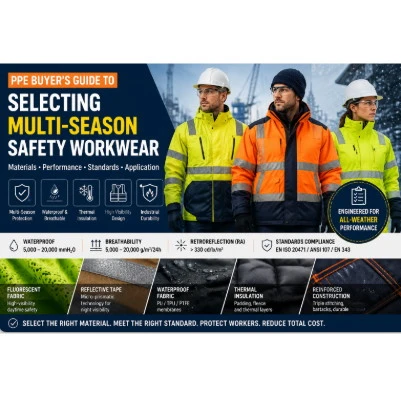
Multi-season safety workwear is engineered through material layering, fabric performance control, and compliance testing to provide protection across changing temperatures and workplace conditions. For industrial buyers, the correct selection depends on measurable factors including fabric composition, GSM weight, abrasion resistance, waterproof performance, visibility requirements, and lifecycle durability.
A suitable multi-season PPE system does not rely on a single fabric. Engineers combine outer shells, insulation layers, moisture management fabrics, and protective components according to climate exposure, workplace hazards, and expected service life.
How Multi-Season Safety Workwear Is Engineered Through Layering Systems and Material Selection
Multi-season safety workwear uses a layered construction approach to balance protection, comfort, and adaptability. Instead of selecting one heavy fabric for all conditions, PPE engineers normally evaluate each layer according to its specific function.
| Layer Structure | Typical Material | Primary Function | Typical Specification |
|---|---|---|---|
| Outer Shell | Polyester Oxford, Nylon, PU coated fabric | Weather resistance, abrasion protection | 150D-600D, 150-300 GSM |
| Mid Layer | Fleece, polyester padding | Thermal insulation | 80-200 GSM insulation |
| Base Layer | Polyester, cotton blend, moisture management fabric | Sweat control and comfort | 120-220 GSM |
The engineering objective is to create a system where each material performs a specific task. For example, a waterproof outer layer may prevent rain penetration, while an inner moisture management layer reduces sweat accumulation during physical work.
Material Structure Determines Seasonal Performance
The same fabric specification can perform differently depending on fiber structure, coating technology, and garment construction. A 300D polyester fabric with PU coating may provide water resistance, but final garment performance also depends on seam sealing, zipper protection, and manufacturing quality.
For industrial buyers, evaluating only fabric composition is insufficient. The complete garment system should be reviewed through:
- Fabric composition and GSM weight
- Coating or membrane technology
- Seam construction
- Reflective component performance
- Testing results after repeated use
How Fabric Composition Determines Protection, Comfort and Service Life in Safety Workwear
Fabric composition directly affects mechanical strength, comfort, moisture management, and garment lifespan. PPE engineers select fibers based on workplace requirements rather than using one material for every application.
| Material | Composition | Fiber Structure | Performance Characteristics | Limitations | Recommended Applications |
|---|---|---|---|---|---|
| Polyester | 100% polyester | Synthetic filament or staple fiber structure | High abrasion resistance, low moisture absorption, dimensional stability | Lower natural comfort compared with cotton | Outdoor work jackets, high visibility clothing |
| Cotton | 100% cotton | Natural cellulose staple fibers | Soft hand feel, moisture absorption, wearer comfort | Higher moisture retention and slower drying | General workwear, indoor applications |
| Polyester/Cotton Blend | Typically 65% polyester / 35% cotton | Mixed synthetic and natural fiber structure | Balanced durability, comfort, and maintenance performance | Not suitable for high flame risk without additional treatment | Industrial uniforms, maintenance workwear |
| Nylon | 100% nylon | High-strength polyamide fiber | Excellent tensile strength and abrasion resistance | Higher cost and lower UV resistance without treatment | Outdoor protective equipment |
How GSM Weight Influences Workwear Performance
Fabric weight, measured in grams per square meter (GSM), affects durability, comfort, and seasonal suitability. Heavier fabrics generally provide higher abrasion resistance but increase garment weight and heat retention.
| Fabric Weight | Performance Range | Typical Application |
|---|---|---|
| 120-180 GSM | Lightweight and breathable | Summer work shirts and warm climate applications |
| 180-280 GSM | Balanced durability and comfort | Year-round industrial workwear |
| 280-400 GSM | Higher protection and insulation | Cold weather jackets and heavy-duty workwear |
Buyers evaluating Safety Workwear Material Performance should review fiber composition together with GSM, strength testing, and intended operating conditions rather than selecting materials based only on thickness.
How High Visibility Materials and Reflective Structures Maintain Worker Visibility Across Seasons
High visibility performance is a critical requirement for safety workwear used in construction, transportation, mining, road maintenance, and industrial operations. Engineers evaluate both fluorescent background materials and retroreflective components because each provides visibility through different mechanisms.
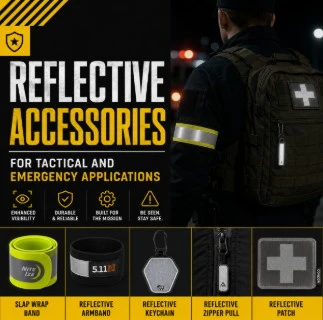
Fluorescent fabrics improve daytime visibility by converting ultraviolet radiation into visible light, while retroreflective materials return artificial light from sources such as vehicle headlights back toward the observer during low-light conditions.
| Visibility Component | Material Structure | Typical Specification | Performance Function |
|---|---|---|---|
| Fluorescent Background Fabric | Polyester fabric with fluorescent dye pigments | 120-300 GSM, fluorescent yellow/orange/red | Improves daytime detection |
| Glass Bead Reflective Tape | Glass microspheres embedded in reflective coating | RA commonly 100-330 cd/lux/m² | Returns incident light toward the source |
| Micro-Prismatic Reflective Tape | Engineered prism optical structure | RA can exceed 330 cd/lux/m² depending on grade | Higher nighttime visibility performance |
Reflective Tape Construction and Durability Factors
Reflective tape performance depends on optical structure, adhesive system, carrier fabric, and protective surface layer. For industrial workwear, buyers should evaluate both initial reflectivity and retained performance after washing and abrasion testing.
Typical evaluation parameters include:
- Retroreflection coefficient (RA): measured in cd/lux/m²
- Wash durability: commonly evaluated after 25-50 washing cycles
- Adhesion strength between reflective layer and garment fabric
- Flexibility after repeated bending
For products requiring certified visibility performance, buyers should review applicable standards such as EN ISO 20471 and ANSI/ISEA 107. These standards evaluate visibility materials, reflective performance, and garment configuration requirements.
For detailed reflective component selection, buyers can review reflective fabric solutions based on required visibility class, garment construction, and expected service environment.
How Waterproof Breathable Technologies Improve All-Weather Workwear Performance
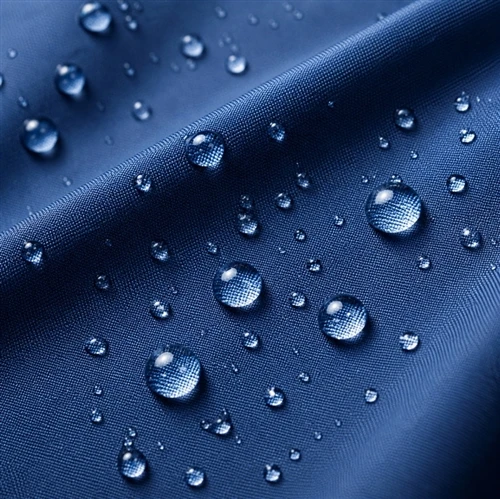
Multi-season safety workwear used in outdoor environments requires protection against rain, wind, and moisture accumulation. Waterproof breathable materials are engineered to block external water while allowing internal moisture vapor to escape.
The performance balance depends on membrane structure, coating technology, fabric construction, and garment sealing methods.
| Technology | Material Structure | Typical Waterproof Rating | Breathability Range | Limitation |
|---|---|---|---|---|
| PU Coating | Polyurethane layer applied onto textile surface | 3,000-10,000 mmH₂O | 3,000-8,000 g/m²/24h | Breathability depends on coating formulation |
| TPU Membrane | Thermoplastic polyurethane waterproof film | 5,000-20,000 mmH₂O | 5,000-15,000 g/m²/24h | Higher cost than standard coating systems |
| PTFE Membrane | Microporous fluoropolymer membrane | 10,000-30,000 mmH₂O+ | 10,000-20,000 g/m²/24h+ | Requires careful lamination and protection |
Hydrostatic Pressure and Moisture Vapor Testing
Waterproof performance is commonly measured through hydrostatic pressure testing. The result represents the height of a water column that a fabric can resist before leakage occurs.
| Waterproof Rating | Protection Level | Suitable Application |
|---|---|---|
| 1,500-5,000 mmH₂O | Basic rain protection | Light outdoor work and short exposure |
| 5,000-10,000 mmH₂O | Moderate waterproof protection | General outdoor workwear and rain jackets |
| 10,000-20,000 mmH₂O+ | High waterproof performance | Extended outdoor exposure and harsh weather |
Breathability is usually evaluated through moisture vapor transmission rate (MVTR), expressed as g/m²/24h. Higher MVTR values indicate greater moisture transfer capability under test conditions.
| Breathability Rating | Performance Level | Recommended Usage |
|---|---|---|
| 3,000-5,000 g/m²/24h | Basic moisture management | Low activity work environments |
| 5,000-10,000 g/m²/24h | Balanced comfort | General outdoor industrial work |
| 10,000-20,000+ g/m²/24h | High moisture vapor performance | High physical activity and long exposure |
Waterproof fabric performance alone does not determine finished garment protection. Seam sealing, zipper protection, hood design, and garment construction directly influence real-world waterproof performance.
For buyers requiring weather protection solutions, waterproof rainwear selection should consider waterproof rating, breathability requirements, and workplace exposure conditions.
How Thermal Insulation Structures Are Designed for Cold Weather Safety Workwear
Cold weather safety workwear uses insulation structures to reduce heat loss while maintaining worker mobility. Engineers select insulation materials based on temperature range, activity level, garment weight, and required protection duration.
| Insulation Material | Structure | Typical Specification | Application |
|---|---|---|---|
| Polyester Padding | Nonwoven synthetic fiber insulation | 80-200 GSM | Winter jackets and outdoor workwear |
| Fleece Lining | Raised polyester fiber surface | 150-300 GSM | Mid-layer thermal comfort |
| Reflective Thermal Layer | Metalized film reflecting radiant heat | Lightweight barrier layer | Cold environments requiring heat retention |
Insulation performance depends on fiber structure, trapped air volume, garment fit, and outer shell protection. Excessive insulation may increase weight and reduce mobility, while insufficient insulation may increase worker fatigue in cold environments.
How Workwear Durability Testing Evaluates Long-Term Industrial Performance
Industrial safety workwear is exposed to repeated mechanical stress, washing cycles, environmental conditions, and daily movement. Durability testing helps buyers evaluate whether a garment can maintain protection performance throughout its expected service life.
For PPE procurement, the lowest initial purchase price does not always represent the lowest total cost. A garment with higher abrasion resistance, stronger seams, and better dimensional stability may reduce replacement frequency and lifecycle cost.
Fabric Mechanical Performance Testing
| Test Parameter | Test Method | Typical Evaluation Range | Meaning for Buyers |
|---|---|---|---|
| Tensile Strength | ISO 13934-1 / ASTM D5034 | 300-1000 N depending on fabric structure | Measures resistance against pulling force |
| Tear Strength | ISO 13937 / ASTM D5587 | 20-150 N depending on material | Indicates resistance against fabric damage propagation |
| Abrasion Resistance | Martindale or Taber abrasion testing | Thousands of abrasion cycles | Evaluates surface wear resistance |
| Color Fastness | ISO 105 series | Grade 3-5 commonly evaluated | Measures resistance to fading after washing and exposure |
Washing Durability and Performance Retention
Safety garments containing reflective components, waterproof coatings, or protective finishes must maintain performance after repeated laundering. Buyers should review test results after washing rather than only evaluating new garment samples.
- Reflective tape retention after 25-50 washing cycles
- Fabric shrinkage control after laundering
- Water repellency retention after cleaning
- Seam integrity after repeated use
For industrial applications such as construction, logistics, and manufacturing, durability testing provides evidence of long-term reliability under real working conditions.
How Sewing Construction and Reinforcement Design Affect Safety Workwear Reliability
Fabric specifications alone cannot determine finished garment performance. Sewing construction, reinforcement design, and stress point engineering directly affect whether safety workwear can withstand industrial use.
Seam Construction and Stress Point Reinforcement
Industrial garments experience concentrated loads around pockets, shoulders, elbows, knees, zipper areas, and attachment points. These locations require additional reinforcement to prevent premature failure.
| Construction Method | Technical Function | Typical Application |
|---|---|---|
| Double Needle Stitching | Improves seam strength and durability | Work jackets, trousers, coveralls |
| Bartack Reinforcement | Strengthens high-stress points | Pockets, loops, zipper ends |
| Seam Sealing Tape | Improves waterproof protection | Rain jackets and waterproof PPE |
| Reinforced Knee Panels | Reduces abrasion damage | Construction and maintenance workwear |
Hardware Selection and Functional Reliability
Zippers, buttons, snaps, and fasteners must match the working environment. Outdoor and industrial garments often require corrosion-resistant hardware, protective zipper flaps, and secure attachment systems.
- Metal zipper corrosion resistance evaluation
- Zipper cycle testing for repeated opening and closing
- Button and snap pull strength testing
- Pocket reinforcement testing
A well-designed PPE garment integrates material selection and construction engineering. Fabric strength without proper reinforcement may still result in product failure during field use.
How Safety Workwear Standards Define Performance Requirements for Different Industries
International PPE standards define minimum performance requirements for different workplace hazards. Buyers should select standards according to application risks rather than choosing certifications only as marketing references.
| Standard | Protection Area | Performance Evaluation | Typical Application |
|---|---|---|---|
| EN ISO 20471 | High visibility clothing | Fluorescent material area and retroreflective performance | Road construction, logistics, transportation |
| ANSI/ISEA 107 | High visibility apparel | Visibility class, garment design, reflective material performance | North American industrial environments |
| EN 343 | Rain protection | Water penetration resistance and breathability | Outdoor work in wet conditions |
| EN ISO 11612 | Heat and flame protection | Resistance against heat and flame exposure | Welding, metal processing, industrial hazards |
| IEC 61482 | Arc flash protection | Thermal protection against electrical arc hazards | Electrical maintenance operations |
Compliance Evaluation for PPE Buyers
Professional buyers should request technical documentation including:
- Material test reports
- Certification documents
- Washing durability results
- Fabric composition records
- Quality inspection procedures
Standards provide a technical reference, but correct application matching remains essential. A garment certified for visibility may not provide sufficient protection against rain, heat, or mechanical hazards unless additional requirements are considered.
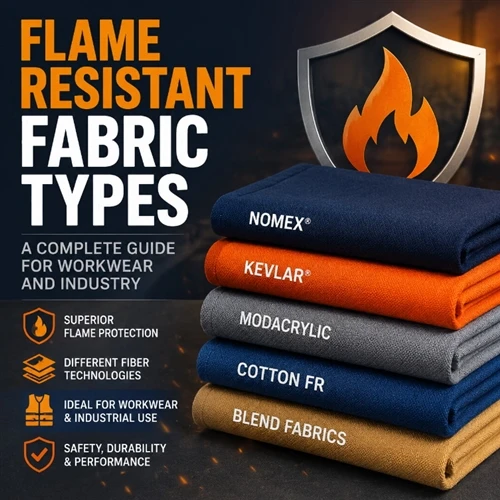
For applications requiring specialized protection, buyers can evaluate flame resistant workwear according to workplace hazard level, required standards, and expected exposure conditions.
How PPE Buyers Select Multi-Season Workwear Based on Climate and Workplace Conditions
Selecting multi-season safety workwear requires matching garment specifications with climate conditions, worker activity level, exposure time, and workplace hazards. Engineers normally evaluate environmental requirements first, then determine suitable material combinations.
| Working Environment | Recommended Material Focus | Key Specifications |
|---|---|---|
| Hot Climate | Lightweight polyester mesh, breathable blends | 120-180 GSM, moisture management |
| Cold Climate | Insulated outer shell system | 80-200 GSM insulation, wind resistance |
| Rain Environment | PU/TPU waterproof fabrics | 5,000-20,000 mmH₂O waterproof rating |
| High Visibility Workplace | Fluorescent fabric and reflective tape | EN ISO 20471 / ANSI visibility requirements |
| High Hazard Industry | FR or specialized protective materials | Heat, flame, arc protection standards |
Lifecycle Cost Evaluation
PPE buyers should evaluate total ownership cost rather than only unit price. Important factors include:
- Expected service life
- Replacement frequency
- Maintenance requirements
- Compliance stability
- Worker comfort and acceptance
The most suitable multi-season workwear solution is the one that balances protection level, durability, comfort, and operational cost for the intended working environment.
For complete product category selection, buyers can review safety workwear solutions based on workplace requirements, material specifications, and customization needs.
OEM Safety Workwear Development Support
Topmatched supports PPE buyers with material selection, garment development, specification review, and OEM production for high visibility and industrial safety workwear. Our team can assist with fabric selection, reflective component matching, protective standards, and production requirements.
Request bulk pricing and technical recommendations based on your target market, compliance requirements, and application environment.
Frequently Asked Questions
Can polyester cotton blend fabrics meet industrial safety workwear durability requirements?
Yes, polyester cotton blends such as 65/35 compositions are widely used for industrial uniforms because they balance abrasion resistance, comfort, and dimensional stability. Buyers should review GSM, tensile strength, washing durability, and workplace hazards before confirming specifications.
What waterproof rating should buyers request for all-weather safety workwear?
For regular outdoor work, 5,000-10,000 mmH₂O waterproof ratings are commonly selected. Applications involving prolonged rain exposure may require 10,000-20,000 mmH₂O or higher. Buyers should also evaluate seam sealing, zipper protection, and breathability performance.
How should PPE buyers verify reflective workwear quality before bulk production?
Buyers should review reflective material test reports, RA values, washing durability data, and compliance with EN ISO 20471 or ANSI/ISEA 107 where applicable. Sample approval should include checking reflective placement, stitching quality, and performance after simulated use conditions.