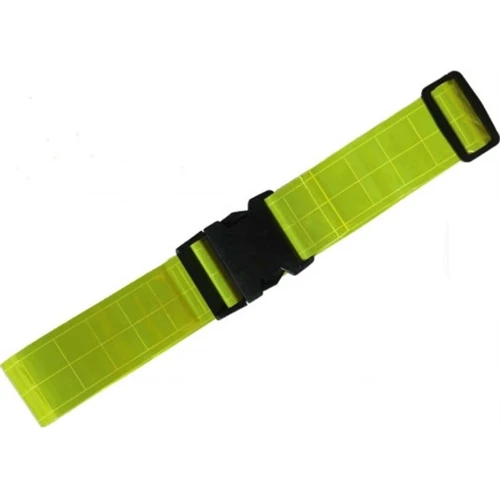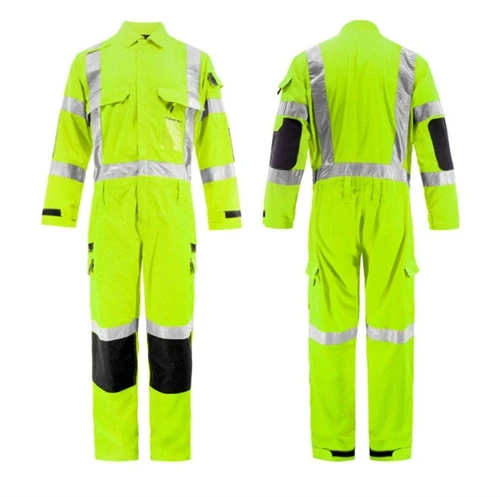
Reflective belts and safety sashes are wearable visibility accessories used for military physical training, law enforcement traffic control, base patrol, and emergency response. For procurement programs, the key specifications are not only reflective brightness, but also elastic recovery, breakaway load, buckle release behavior, webbing width, wash durability, and batch consistency.
For military PT reflective belts and law enforcement safety sashes, a reliable OEM specification should define the retroreflective material type, elastic webbing performance, quick-release buckle strength, color control, logo method, and inspection standard before mass production.

Military Reflective Belts vs. Law Enforcement Safety Sashes: Procurement Use Cases
Military reflective belts are commonly used during physical training, base movement, night jogging, formation drills, and low-light outdoor activities. Law enforcement safety sashes are more often used for traffic direction, emergency roadside control, checkpoint duty, crowd management, and temporary visibility marking.
|
Product Type |
Typical User |
Main Application |
Common Structure |
Key Procurement Focus |
|
Military reflective belts |
Army, air force, navy, training units |
PT running, base walking, night formation |
Elastic webbing + reflective strip + side-release buckle |
Stretch recovery, buckle strength, color consistency |
|
Law enforcement safety sashes |
Police, traffic officers, emergency teams |
Roadside visibility, checkpoint duty, temporary control |
Reflective webbing sash or belt with adjustable buckle |
High visibility, quick release, body fit over uniform |
|
PT reflective belts |
Military training departments, academies |
Running, marching, outdoor fitness |
High-elastic belt with reflective tape |
Lightweight structure, sweat resistance, repeated stretching |
|
Reflective cross sashes |
Patrol teams, event security, traffic volunteers |
Upper-body visibility |
Shoulder-to-waist sash with reflective material |
Adjustable length, anti-snag release, visibility angle |
For buyers sourcing from China, the correct purchasing term is usually not only "reflective belt." Military and police tender documents often use more specific wording such as "PT reflective belts," "law enforcement safety sashes," "reflective PT belt with breakaway buckle," or "military reflective belt with elastic webbing."
For related product structures, buyers can compare specifications under Reflective Belt before confirming OEM sampling.
Military-Grade Elastic Webbing: Stretch Ratio and Memory Recovery
Elastic webbing is the load-bearing base of a military reflective belt. It determines comfort, body fit, long-term recovery, and whether the belt becomes loose after repeated PT use.
A common military PT belt uses 38 mm, 40 mm, or 50 mm elastic webbing. The reflective strip can be sewn onto the center line or laminated as a high-visibility surface layer, depending on the buyer's durability requirement.
Elastic Webbing Parameters for PT Reflective Belts
|
Test Item |
Common OEM Range |
Higher-Spec Tender Requirement |
Inspection Method |
|
Webbing width |
38–50 mm |
±1 mm tolerance |
Steel ruler / caliper |
|
Stretch ratio |
120–160% |
140–180% |
Manual elongation or tensile tester |
|
Recovery after 1,000 cycles |
≥85% |
≥90% |
Cyclic stretch test |
|
Thickness |
1.2–2.0 mm |
Buyer-defined |
Thickness gauge |
|
Breaking strength |
300–700 N |
500 N+ |
Tensile strength test |
|
Edge fraying |
No obvious yarn breakage |
Heat-cut edge or woven edge |
Visual inspection |
|
Sweat resistance |
No heavy dye transfer |
ISO 105-E04 reference method |
Colorfastness testing |
The most common procurement failure is not low initial reflectivity. It is elastic fatigue. A belt can look acceptable at delivery but lose recovery after repeated stretching, especially when low-density elastic yarn or weak stitching is used.
Recommended Engineering Specification
For military PT reflective belts, a practical bulk order specification can be written as:
"Elastic webbing width 50 mm, stretch ratio 140–160%, recovery rate ≥90% after 1,000 cycles, reflective center strip 15–25 mm, side-release breakaway buckle, adjustable length 70–120 cm, color according to buyer-approved sample."
This specification is clear enough for sampling, quotation, and production inspection. It also reduces supplier interpretation during tender preparation.
Reflective Material Selection: Micro-Prismatic Tape vs. Glass Bead Tape
Reflective belts and sashes can use glass bead reflective tape or micro-prismatic reflective material. The correct choice depends on visibility distance, flexibility, wash exposure, and unit price.
|
Reflective Material |
Structure |
Visibility Performance |
Flexibility |
Typical Use |
Procurement Note |
|
Glass bead reflective tape |
Glass microspheres bonded to fabric or film |
Commonly 100–330 cd/lx/m² depending on grade |
Soft and flexible |
PT belts, running belts, budget safety sashes |
Good comfort, suitable for elastic webbing |
|
Micro-prismatic reflective tape |
Prism array film structure |
Often higher angular brightness |
Less soft than fabric-backed tape |
Law enforcement, traffic control, high-visibility belts |
Better long-distance visibility, but needs correct backing |
|
Reflective heat transfer film |
Reflective layer transferred by heat press |
Depends on film grade |
Smooth surface |
Logo zones, lightweight belts |
Requires controlled temperature and pressure |
|
Reflective PVC or TPU strip |
Reflective surface with polymer backing |
Medium to high |
Moderate |
Rain-resistant belts and outdoor sashes |
Better wipe-clean surface |
For PT reflective belts, glass bead fabric-backed tape is usually easier to sew and more flexible during body movement. For law enforcement roadside sashes, micro-prismatic material may be preferred when visibility distance is more important than soft hand feel.
Reflectivity Test Points Buyers Should Define
Procurement teams should not only ask whether the belt is "reflective." The RFQ should define:
Reflective tape width, such as 15 mm, 20 mm, or 25 mm
Reflective material type: glass bead or micro-prismatic
Initial retroreflection coefficient target, such as >100, >250, or >330 cd/lx/m²
Washing or rubbing requirement, if the belt will be reused frequently
Reflective strip placement: center sewn, double-line sewn, or full-surface reflective
Request Bulk Pricing for Military Reflective Belts
Specify your required elastic webbing width, reflective tape grade, buckle type, belt color, logo method, and packing quantity. Our team can support OEM sampling and bulk quotation for military PT reflective belts and law enforcement safety sashes.
Breakaway Quick-Release Buckles: Load Testing for Anti-Snag Safety
For military and law enforcement users, a reflective belt must stay closed during running, walking, and duty movement. At the same time, it should release under abnormal snagging force to reduce entanglement risk.
This is where breakaway load testing matters.
Breakaway Load Test Requirements
|
Buckle Type |
Common Material |
Typical Breakaway Load |
Suitable Application |
Risk if Wrongly Specified |
|
Standard side-release buckle |
POM / PP / ABS |
80–150 N |
Basic PT belts, promotional belts |
May not release fast enough under snagging |
|
Breakaway safety buckle |
POM with controlled release structure |
40–100 N |
Military PT, law enforcement, roadside use |
Too low: accidental opening; too high: snagging hazard |
|
Heavy-duty tactical buckle |
POM / nylon |
150–300 N |
Utility belt, load-bearing use |
Not ideal for anti-snag PT belt |
|
Hook-and-loop closure |
Nylon hook and loop |
Variable |
Lightweight sash, temporary event use |
Lower durability after dirt exposure |
A breakaway buckle should not be selected only by appearance. Two buckles with the same shape can have different release loads because of mold tolerance, resin type, tooth angle, and locking depth.
Practical Test Method for OEM Orders
A buyer can request the following test during pre-shipment inspection:
Lock the buckle on a finished reflective belt.
Fix both ends on a tensile tester.
Pull at a controlled speed until buckle separation.
Record the peak load in Newtons.
Test at least 5 pieces per color and size.
For military PT belts, a practical target range is often 50–100 N, depending on the end user's safety requirement. For law enforcement safety sashes worn over uniforms, buyers may request a slightly higher holding force if the sash must remain stable during traffic control movements.
Stitching, Edge Finish, and Hardware Control
A reflective belt is a small product, but mass production quality depends on several low-cost details that are often missed during quotation.
Stitching Specification
|
Item |
Recommended Specification |
Reason |
|
Stitch density |
8–12 stitches per inch |
Reduces seam failure under repeated stretching |
|
Thread type |
High-tenacity polyester thread |
Better resistance to sweat and outdoor exposure |
|
Reflective strip attachment |
Double-line lockstitch |
Prevents edge lifting |
|
End folding |
20–30 mm folded and reinforced |
Increases buckle holding strength |
|
Edge cutting |
Heat cutting or ultrasonic cutting |
Reduces yarn fraying |
Color and Logo Control
Military and police buyers often need department color coding, unit identification, or training group separation. Common colors include neon yellow, fluorescent orange, lime green, royal blue, black, and white reflective combinations.
|
Custom Item |
Recommended Control Method |
Notes |
|
Belt color |
Pantone reference or approved physical sample |
Fabric shade may vary by dye lot |
|
Reflective strip color |
Silver, yellow, orange, or buyer-defined |
Silver usually gives higher brightness |
|
Logo printing |
Silk screen or heat transfer |
Must be tested for stretch cracking |
|
Woven label |
Sewn label or heat transfer label |
Better for unit code or size marking |
|
Packaging |
1 pc/polybag, 50–200 pcs/carton |
Depends on belt width and buckle size |
Logo printing on elastic belts should be tested after stretching. A print that looks correct on a flat belt may crack after repeated elongation if the ink system is not elastic enough.
Quality Verification Checklist for Military Tender and Large-Scale Procurement
Military and law enforcement tenders require more than a product photo and unit price. A proper supplier file should include specifications, sample approval records, production inspection points, packing method, and traceable batch control.
Bulk Procurement Quality Checklist
|
Verification Item |
What to Check |
Acceptable Evidence |
|
Product dimension |
Width, length, adjustable range |
Pre-production sample report |
|
Reflective material |
Type, width, brightness grade |
Material data sheet or test report |
|
Elastic recovery |
Stretch ratio and recovery after cycles |
Internal test report or third-party test |
|
Buckle breakaway load |
Peak separation force |
Tensile test data |
|
Stitching strength |
Seam stability after pulling |
QC inspection photos and pull test |
|
Color consistency |
Belt color and reflective strip color |
Approved sample vs. bulk comparison |
|
Logo durability |
Stretching, rubbing, washing |
Logo test before mass production |
|
Carton packing |
Quantity, carton size, gross weight |
Packing list and carton mark sample |
|
Batch traceability |
Production lot and QC record |
Inspection report with order number |
Sampling Before Mass Production
For military reflective belts, buyers should request:
2–3 size options if the belt will be worn over different uniforms
At least 2 buckle options if breakaway load is not finalized
Reflective strip comparison sample: glass bead vs. micro-prismatic
Logo test sample if printing is required
Packaging mockup for barcode, carton mark, or tender labeling
This avoids changing the specification after purchase order confirmation.
OEM Production Notes for China Manufacturer, Supplier, and Factory Orders
When sourcing military reflective belts or law enforcement safety sashes from a China manufacturer, supplier, or factory partner, the RFQ should be written in engineering terms rather than general product names.
Recommended RFQ Format
|
RFQ Field |
Example Specification |
|
Product name |
Military PT reflective belt with breakaway buckle |
|
Webbing width |
50 mm elastic webbing |
|
Reflective strip |
20 mm silver reflective tape, sewn center line |
|
Length |
Adjustable 70–120 cm |
|
Buckle |
POM breakaway quick-release buckle |
|
Color |
Fluorescent yellow, Pantone or approved sample |
|
Logo |
1-color silk screen logo, stretch-tested |
|
Packing |
1 pc/polybag, 100 pcs/carton |
|
Inspection |
Dimension, reflectivity, buckle load, stitching, packing |
|
Documents |
PI, packing list, QC report, material information |
A clear RFQ helps reduce repeated sampling, inaccurate quotation, and bulk production disputes. It also allows the supplier to quote by material grade rather than by guesswork.
Confirm Your Reflective Belt Specification Before Bulk Production
For military, police, HSE, and traffic-control procurement programs, reflective belts should not be specified by product photo only. Key confirmation points include elastic recovery, reflective grade, buckle breakaway load, stitching strength, logo durability, and packing method.
|
What to Confirm |
Required Details |
|
Belt structure |
Elastic webbing width, adjustable length, reflective strip width |
|
Reflective grade |
Glass bead or micro-prismatic material, target brightness level |
|
Buckle type |
Standard side-release buckle or breakaway quick-release buckle |
|
Customization |
Belt color, logo method, label, barcode, carton mark |
|
Bulk order details |
Target quantity, packing method, inspection requirement |
FAQ
Q: What is the recommended MOQ for custom military reflective belts?
A: For custom color, logo, or buckle configuration, MOQ is usually 1,000 pieces per model/color. Lower quantities may be possible for standard colors without logo customization, depending on current material stock.
Q: Can logos be printed on elastic PT reflective belts without cracking?
A: Yes. Use elastic-compatible silk screen ink or heat transfer film, then test the logo after repeated stretching. For PT belts, logo durability should be checked under elongation, rubbing, and basic wash conditions.
Q: What documents should buyers request before placing a law enforcement safety sash order?
A: Buyers should request a specification sheet, approved sample photos, reflective material information, buckle load test data, packing details, and pre-shipment QC report. For tenders, carton marks and batch traceability should also be confirmed.