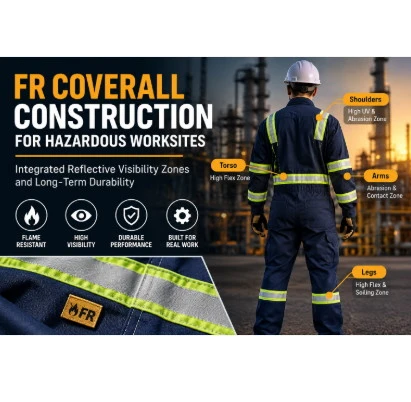

For oil and gas work, FR clothing should be specified by hazard type first, not by garment style. Flash fire exposure points to NFPA 2112-certified garments, while tasks with electrical exposure require arc-rated clothing selected to ASTM F1506 and supported by an ASTM F1959 arc rating value that meets or exceeds incident energy at the task.
A purchasing specification that only says "FR coverall" is incomplete. A usable engineering specification needs the applicable standard, minimum arc rating where relevant, base fabric system, closure construction, seam design, labeling, laundering method, and replacement criteria.
Flash Fire and Arc Flash Hazards in Oil and Gas Operations
Flash fire remains a recognized oil and gas hazard once active gas or hydrocarbon zones are reached, and OSHA states that appropriate flame-resistant clothing should be worn by exposed employees before those zones are entered. OSHA also states that flash fire hazards are inherent in upstream and downstream oil operations, which is why garment specification cannot be delayed until after an event history develops.
Arc flash is a separate hazard mechanism. OSHA's utility and electrical guidance distinguishes flame-resistant clothing used for short-duration fire exposure from arc-rated clothing selected against estimated incident heat energy. In procurement terms, that means oil and gas buyers should not assume a flash-fire garment automatically closes an arc-flash specification gap for electrically exposed maintenance, MCC, switchgear, or temporary power work.
Hazard-to-specification mapping
| Exposure condition | Primary garment specification | Key data point to request from supplier | Why it matters |
|---|---|---|---|
| Hydrocarbon flash fire | NFPA 2112-certified garment | Certification status, fabric system, garment design details | NFPA 2112 sets performance requirements and test methods for flash-fire protective clothing. |
| Electrical maintenance with possible arc exposure | ASTM F1506 garment with declared arc rating | Arc rating in cal/cm², labeling, fabric test basis | ASTM F1506 covers FR and electric arc-rated protective clothing for workers exposed to flames and electric arcs. |
| Mixed oil-and-gas site with both thermal and electrical tasks | Dual review: NFPA 2112 plus ASTM F1506 where electrical exposure exists | Certification plus minimum arc rating by task | One label does not replace a task-based hazard assessment. |
Minimum engineering data buyers should request
Applicable standard: NFPA 2112:2023 for flash fire; ASTM F1506-22 for FR and arc-rated electrical workwear.
Arc rating method: test basis aligned with ASTM F1959/F1959M when an arc value is declared.
Garment care and maintenance plan: OSHA states employers must ensure FR and arc-rated clothing is maintained in a reliable condition; care cannot be left to a label alone.
Closure, seam, vent, and label construction details: finished-garment design affects field performance and compliance review.
Mid-project procurement is where many sites lose control: they buy replacement stock by size and color, but not by certified construction package. For long-cycle supply agreements, the master specification should lock fabric platform, sewing thread class, reflective trim approval status if used, closure type, labeling format, and laundering route before the first PO is released.
NFPA 2112 and ASTM F1506: What Each Standard Actually Controls
NFPA 2112 is the flash-fire garment standard for industrial personnel exposed to short-duration thermal exposures from fire. NFPA states that the standard protects workers by specifying performance requirements and test methods for flame-resistant fabric and garments. For oil and gas procurement, that makes NFPA 2112 the flash-fire gatekeeper standard rather than a general marketing claim.
ASTM F1506 is different in scope. ASTM describes F1506-22 as the standard performance specification for flame-resistant and electric arc-rated protective clothing worn by workers exposed to flames and electric arcs. In practice, that means a garment selected for energized electrical tasks needs an arc-rated basis and should not be specified only by "FR cotton" or "oilfield coverall" language.
NFPA 2112 vs ASTM F1506 procurement comparison
| Item | NFPA 2112 | ASTM F1506 |
|---|---|---|
| Hazard focus | Short-duration thermal exposure from fire / flash fire | Flames and electric arcs |
| Typical oil & gas use case | Drilling, production, servicing, refinery zones with flash-fire potential | Electrical maintenance, power distribution, MCC, switchgear, generators |
| Buyer document needed | Certification proof and garment construction package | Arc rating, labeling, fabric test basis, finished garment conformance |
| Key supporting test reference | Flash-fire garment performance framework under NFPA 2112 | Arc rating measured under ASTM F1959/F1959M |
Where buyers make specification errors
1. Writing "FR only" into the purchase order
That phrase does not identify hazard class, standard edition, or minimum arc rating. It is adequate neither for supplier comparison nor for incident investigation.
2. Treating arc rating as optional labeling
ASTM F1959 exists specifically to measure arc rating of materials intended for FR clothing, and OSHA's arc guidance relies on estimated incident heat exposure. If your job hazard analysis produces incident energy, your garment bid package should state the minimum cal/cm² value required.
3. Ignoring maintenance control
OSHA states employers must ensure FR and arc-rated garments are adequately maintained in reliable condition. That directly affects whether home laundering, industrial laundering, contamination handling, and replacement criteria appear in the contract.
Practical specification line buyers can use
A field-ready line item typically looks like this:
"Coverall, oil and gas flash-fire service, certified to NFPA 2112:2023; additionally ASTM F1506 where electrical exposure exists; minimum arc rating ___ cal/cm² when required by task assessment; approved closure system; documented laundering instructions; full labeling and traceability by production lot." This structure follows the hazard split recognized by NFPA, ASTM, and OSHA.
Manufacturing Process and Service-Life Comparison: Treated FR vs Inherent FR Fabrics
Inherent and treated FR describe how the flame-resistant property is achieved, not a complete safety ranking by themselves. Westex explains that inherent fabrics generally build FR performance into the fiber, while treated fabrics typically start with a flammable base fiber such as cotton or cotton blends and add durable FR chemistry. Westex also notes that the older assumption that treated FR automatically "washes out" is no longer a sound purchasing rule by itself.
That distinction matters in oil and gas because buyers are balancing three separate cost drivers: certification scope, wearer acceptance, and replacement interval. The right question is not "inherent or treated?" The right question is whether the exact fabric platform, after laundering and contamination exposure, will still meet the site specification for the useful life of the garment.
Process and life-cycle comparison
| Factor | Treated FR fabrics | Inherent FR fabrics |
|---|---|---|
| How FR is achieved | FR chemistry applied to otherwise flammable fiber/fabric system | FR characteristic engineered into the fiber itself |
| Common base systems | Cotton or cotton-rich blends are common in this category | Aramid and other inherently FR fiber systems are common |
| Procurement advantage | Often favorable initial acquisition cost and familiar wearer hand in cotton-rich systems | Often chosen where long wear life, low shrink perception, or high-heat program stability are prioritized |
| Procurement risk if mismanaged | Incorrect laundering or contamination control can compromise program reliability | Higher entry cost can distort bid evaluation if total wear life is not modeled |
| What to verify | Durable performance for useful garment life, wash method, contamination rules | Arc rating or flash-fire certification on the actual offered fabric/garment, not on fiber family alone |
Manufacturing controls that matter more than the treated-vs-inherent label
1. Fabric test package
If arc protection is part of the scope, ask for the fabric's ASTM F1959 result and the declared arc rating in cal/cm². If flash-fire protection is part of the scope, ask for the garment certification basis to NFPA 2112.
2. Component compatibility
Finished-garment construction affects field performance. ASTM and NFPA references around labels, seams, closures, and finished-product evaluation exist for a reason: fabric data alone does not describe the whole garment system.
3. Laundering route
OSHA's position is direct: protective garments must be maintained in reliable condition. That means buyers should specify whether garments will be home laundered, industrially laundered, or managed through a rental program, then qualify the offered garment against that route.
4. Contamination management
Oil, grease, flammable residues, and site chemicals can change garment performance in service. OSHA specifically notes contaminated FR clothing must be thoroughly cleaned, if possible, or replaced. This belongs in the garment program specification, not just in EHS training slides.
Procurement Checklist for Oil and Gas FR Clothing Programs
Technical specification checklist
Standard edition listed in full: NFPA 2112:2023 and/or ASTM F1506-22 as applicable.
Arc rating stated numerically in cal/cm² for electrical tasks, with test basis to ASTM F1959/F1959M.
Fabric composition identified by trade platform, weight, and FR technology route.
Garment construction package defined: seams, closures, pockets, reflective components if any, labels, trim.
Care route written into contract: home, industrial, or managed service.
Replacement triggers written into SOP: contamination, irreparable damage, failed inspection, lost traceability label.
Supplier qualification checklist
| Supplier question | Why procurement should ask it |
|---|---|
| Can you provide certification and test support for the exact garment offered? | Avoids quoting on one fabric and shipping another. |
| What is the declared arc rating, and which ASTM method supports it? | Prevents non-comparable bids on electrical workwear. |
| What laundering route is the garment approved for? | OSHA requires reliable maintained condition. |
| Which components are controlled in production changes? | Trim, closures, labels, and sewing thread can affect conformance. |
| What lot traceability is available? | Needed for incident review and program control. |
Request bulk pricing and OEM capability data for your FR clothing program. Buyers that issue a complete hazard-based specification early get more comparable quotations, fewer size-run substitutions, and fewer corrective actions after field deployment.
Final Procurement Position
For oil and gas safety apparel, the correct buying sequence is: identify the hazard, assign the governing standard, set the minimum thermal performance value where required, and then control garment maintenance for the life of the program. NFPA 2112 answers the flash-fire side. ASTM F1506, supported by ASTM F1959 arc-rating data, answers the electrical arc side. OSHA closes the loop by requiring the clothing to be worn where the hazard exists and maintained in reliable condition.
For OEM and private-label sourcing, the winning supplier is rarely the one with the lowest FOB unit price alone. It is the supplier that can hold certification consistency, lot traceability, component control, and repeatable laundering performance across the full contract period.
Submit your specification sheet, target standard, fabric preference, and annual usage forecast to receive an OEM feasibility review, bulk quotation, and recommended test-document package for oil and gas FR clothing supply.
FAQ
Q: What Is The Minimum Standard I Should Write Into An Oil And Gas FR Garment RFQ?
A: For flash-fire exposure, specify NFPA 2112. If workers also face electrical arc exposure, add ASTM F1506 and require an arc rating supported by ASTM F1959 test data. One generic "FR" statement is not enough.
Q: Can Treated FR Garments Be Used In Industrial Laundering Programs Without Losing Protection?
A: They can, but only if the offered fabric system is qualified for the intended care route and maintained correctly. OSHA requires FR clothing to remain in reliable condition, and laundering control must be part of the program specification.
Q: How Should Buyers Handle MOQ When Trialing A New FR Garment Platform?
A: Start with a wear trial lot tied to one approved specification, one laundering route, and one inspection method. Do not split the trial across multiple uncontrolled fabric platforms, or the field-life data will not be comparable.