
Introduction: Why Compliance with High-Visibility Standards Matters
Workplace safety is built on visibility. Whether it's highway maintenance, construction, utility work, or emergency response, workers often operate in environments where low visibility poses significant hazards. That's why ANSI/ISEA 107 standards exist-to provide a framework for high visibility safety standards that ensure reflective clothing compliance, reducing accidents and saving lives. For businesses, adhering to these guidelines is not just about meeting regulations; it's about protecting teams and demonstrating a commitment to safety.
What Is ANSI/ISEA 107?
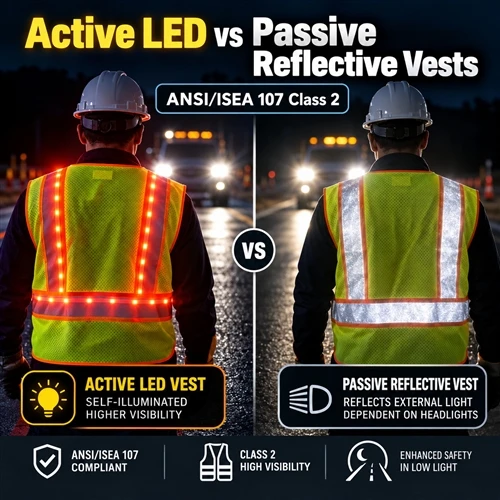
The ANSI/ISEA 107 standard (American National Standards Institute / International Safety Equipment Association) sets the performance criteria for high-visibility safety apparel. These garments are designed with fluorescent background materials and retroreflective tape that enhance worker visibility during both day and night.
The standard is widely recognized in the U.S. and internationally, and many organizations mandate it as part of their safety protocols. Compliance demonstrates that your reflective clothing is tested for visibility in varying light and work conditions.
Classes and Types of ANSI/ISEA 107 Garments
The standard divides high-visibility safety apparel into classes and types depending on the level of risk and work environment:
Class 1: Minimal exposure to traffic, speeds below 25 mph (e.g., warehouse workers, parking attendants).
Class 2: Greater risk environments with higher traffic speeds (e.g., road construction, utility workers).
Class 3: Highest visibility required for high-risk jobs, such as highway maintenance, emergency response, and night work.
In addition, garments are categorized into Type O (Off-road), Type R (Roadway), and Type P (Public Safety). These distinctions help employers choose the right reflective clothing for each job role.
Industry-Specific Requirements
Different industries have varying visibility risks, and ANSI ISEA 107 accounts for that:
Construction & Roadwork: Class 2 or Class 3 apparel is often mandatory.
Warehouse & Logistics: Class 1 garments may be sufficient for forklift or loading areas.
Emergency Services: Type P garments are specifically designed for police, fire, and EMS.
Mining & Utilities: Class 3 is strongly recommended for maximum visibility in dark or dusty conditions.
By aligning apparel selection with industry requirements, businesses ensure compliance while enhancing operational safety.
How to Verify Compliance
When purchasing or sourcing high-visibility garments, businesses should verify compliance with ANSI/ISEA 107 by checking:
Certification Labels: Legitimate products display the ANSI/ISEA 107 compliance label.
Reflective Material Specifications: Check retroreflective tape width and placement.
Third-Party Testing: Confirm garments have been independently tested for compliance.
Supplier Transparency: Reliable suppliers provide compliance documentation upon request.
This verification process protects companies from liability and ensures workers have apparel that truly meets safety standards.
Benefits for Corporate Safety Management
Investing in ANSI/ISEA 107-compliant garments brings multiple advantages:
Reduced Accident Risk: Improved visibility prevents collisions and workplace injuries.
Regulatory Compliance: Avoid fines or penalties for non-compliance.
Enhanced Reputation: Demonstrates a company's dedication to worker safety.
Employee Confidence: Workers feel safer and more valued, boosting morale and productivity.
For B2B procurement managers, selecting compliant apparel is not just a purchase-it's a strategic decision that strengthens overall safety management.
To explore a full range of ANSI/ISEA 107 compliant reflective clothing, visit our Reflective Safety Apparel Product Page.