Nylon webbing performance is determined long before the final strap is woven. The polymer structure of nylon, fiber formation process, yarn specification, weaving parameters, and finishing treatments all influence strength, flexibility, abrasion resistance, and service life. For buyers sourcing industrial webbing products, understanding these manufacturing factors helps evaluate whether a material specification can meet actual application requirements.
Nylon webbing is produced from polyamide synthetic fibers, commonly Nylon 6 or Nylon 6,6, which are converted into filament yarns and processed through narrow fabric weaving equipment. Parameters such as yarn denier, filament arrangement, weave density, thickness tolerance, and surface treatment directly affect mechanical performance. This article explains the relationship between nylon chemistry, yarn engineering, webbing construction, testing methods, and quality evaluation before bulk production.
Explore Nylon Webbing Solutions
Nylon Fiber Properties and Yarn Selection for High Performance Webbing Production
Nylon webbing begins with the selection of suitable polyamide fiber materials. Nylon is a synthetic polymer fiber belonging to the polyamide family. The two commonly used grades for textile applications are Nylon 6 and Nylon 6,6. Both materials contain amide groups within their molecular chains, which contribute to strong intermolecular bonding and provide high mechanical strength and abrasion resistance.
Nylon 6 is typically produced from caprolactam, while Nylon 6,6 is produced through polymerization of hexamethylene diamine and adipic acid. Differences in molecular structure influence crystallinity, thermal behavior, moisture absorption, and mechanical performance.
| Material Type | Yarn Specification | Construction Method | Performance Characteristics |
|---|---|---|---|
| Nylon 6 | 100D-2100D filament yarn | Multi-filament woven structure | Good flexibility, high toughness, suitable for general webbing applications |
| Nylon 6,6 | 500D-2000D high tenacity filament yarn | Dense woven construction | Higher thermal stability and mechanical strength for demanding applications |
| Recycled Nylon | Variable according to recycling process | Similar filament construction to virgin fiber | Supports circular material sourcing with performance depending on recycled content quality |
Yarn selection is one of the most important factors controlling final webbing performance. Yarn denier describes the linear density of the filament bundle, measured as grams per 9,000 meters of yarn. Higher denier generally means a thicker yarn structure with greater potential load capacity, although final strength also depends on weave construction.
For example, a 1000D nylon yarn contains significantly more polymer mass per length compared with a 210D yarn. This difference affects tensile strength, thickness, hand feel, and abrasion resistance. Industrial buyers should evaluate yarn specification together with width, thickness, and required breaking strength rather than selecting denier alone.
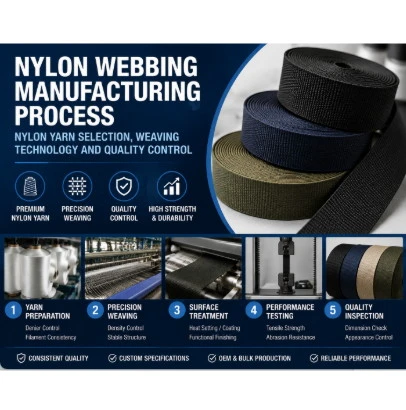
How Nylon Webbing Is Manufactured: From Yarn Preparation to Precision Weaving Process
Nylon webbing production converts high-performance filament yarn into a narrow textile structure through controlled weaving processes. Unlike ordinary fabrics, webbing products require precise width control, consistent thickness, and high tensile performance because they are often used for load-bearing applications.
Stage 1: Fiber and Yarn Preparation
The production process starts with nylon filament yarn preparation. Manufacturers evaluate yarn characteristics including denier, filament count, tensile strength, elongation, and surface condition. Consistent yarn quality is necessary because variations in filament distribution can create uneven strength across the finished webbing.
Stage 2: Yarn Preparation and Production Control
Before weaving, yarns may undergo preparation processes to improve handling during production. Yarn tension control is important because excessive tension can influence elongation and cause width instability during weaving.
For narrow textile production, stable yarn feeding helps maintain dimensional accuracy. Typical webbing width tolerances are commonly controlled within approximately ±1-2 mm depending on product specifications and application requirements.
Stage 3: Warp and Weft Weaving Process
Nylon webbing is produced using narrow fabric looms where warp yarns provide longitudinal strength and weft yarns lock the structure together. Weaving density, yarn arrangement, and tension settings determine the final mechanical properties.
A tighter weave structure usually improves abrasion resistance and dimensional stability, while a more open construction may provide greater flexibility and softness.
| Test Item | Testing Method | Typical Value | Engineering Meaning |
|---|---|---|---|
| Tensile Strength | ISO 13934-1 or ASTM D5035 | 300-3000 kgf depending on construction | Indicates maximum load resistance before failure |
| Elongation | Tensile testing | 15-40% | Shows flexibility and deformation behavior under load |
| Width Tolerance | Dimensional measurement | ±1-2 mm typical | Controls compatibility with buckles and hardware |
Stage 4: Heat Setting and Surface Treatment
After weaving, nylon webbing may undergo heat setting to stabilize dimensions and reduce unwanted shrinkage. Surface treatments can also be applied depending on application requirements.
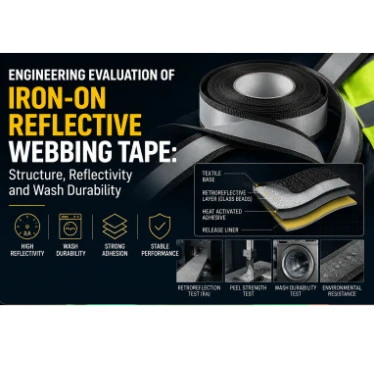
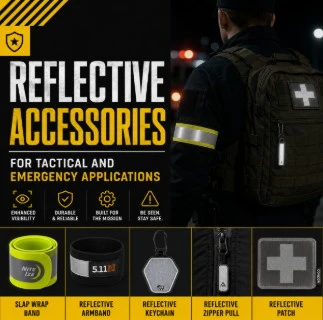
Functional finishing options may include coating, printing, waterproof treatment, or reflective integration. For applications requiring enhanced visibility, reflective elements can be incorporated into webbing structures through specialized manufacturing methods.
Stage 5: Inspection and Quality Verification
Before shipment, manufacturers evaluate webbing dimensions, appearance, tensile performance, and color consistency. Batch testing helps verify that production output remains within the required specification range.
For applications requiring customized straps, buyers often evaluate webbing specifications including material type, width, thickness, strength requirement, and finishing options before bulk production.
Webbing Structure and Surface Treatment Technologies for Enhanced Performance
Nylon webbing performance depends not only on fiber material but also on textile construction. The relationship between fiber structure, yarn arrangement, and weaving density determines how the strap performs under mechanical stress.
A high-strength webbing structure normally combines high-tenacity filament yarn with controlled weaving density. The warp direction provides the primary tensile resistance, while the weft structure maintains stability and prevents yarn displacement.
Surface treatments modify the external characteristics of webbing. Depending on the application, coatings may improve abrasion resistance, moisture resistance, surface protection, or visual performance.
For example, reflective applications may require integration of reflective elements into the textile structure. Products such as reflective webbing combine structural strength with visibility enhancement requirements for outdoor and safety-related applications.
Influence of Surface Treatment on Performance
- Coating thickness affects surface protection and flexibility.
- Heat treatment influences dimensional stability.
- Printing methods affect appearance durability.
- Reflective integration affects nighttime visibility performance.
How Nylon Webbing Structure Influences Tensile Strength, Durability and Application Performance
The mechanical performance of nylon webbing is determined by the interaction between polymer properties, yarn structure, and textile construction. A high-performance webbing product is not created by fiber selection alone. The final strength and durability depend on how molecular characteristics are transferred through fiber formation, yarn engineering, and weaving parameters.
The relationship can be summarized as:
- Polymer structure influences fiber strength and flexibility.
- Filament arrangement affects yarn stability and load distribution.
- Weaving density determines structural integrity.
- Surface treatment influences environmental resistance.
Influence of Nylon Molecular Structure
Nylon contains amide groups within its polymer chain. These chemical bonds create strong intermolecular attraction, which contributes to high tensile performance and abrasion resistance. Compared with many common textile fibers, nylon provides a favorable balance between strength, toughness, and flexibility.
Nylon density is typically around 1.14 g/cm³, with a melting point range of approximately 215-260°C depending on polymer grade. These characteristics allow nylon webbing to maintain mechanical performance under demanding industrial conditions while still providing flexibility for repeated bending.
Influence of Yarn Denier and Filament Structure
Yarn denier directly affects the amount of polymer material contained in the filament bundle. Higher denier yarns generally provide increased load capacity because more filaments share mechanical stress.
However, a higher denier does not automatically guarantee better performance. The final result depends on:
- filament quality
- polymer molecular weight consistency
- twist level
- weaving density
- finishing process
For heavy-duty applications, products such as heavy duty nylon tubular webbing are typically evaluated based on load requirements, abrasion exposure, and expected service life rather than material name alone.
Mechanical Performance Factors
| Performance Factor | Typical Evaluation Method | Engineering Impact | Application Influence |
|---|---|---|---|
| Breaking Strength | Tensile testing under controlled loading | Determines maximum load before failure | Important for straps, industrial equipment and safety applications |
| Abrasion Resistance | ASTM D3884 or equivalent abrasion testing | Measures resistance against surface wear | Important for outdoor and repeated-use products |
| Elongation | Tensile extension measurement | Shows deformation behavior under stress | Affects flexibility and load absorption |
| Dimensional Stability | Heat or environmental exposure testing | Measures resistance to shrinkage or deformation | Important for products requiring precise fitting |
Nylon Webbing Testing Methods and Quality Control Requirements Before Bulk Production
Before bulk production, professional buyers evaluate nylon webbing through measurable testing procedures rather than appearance inspection alone. Testing verifies whether the material can achieve the required performance under actual operating conditions.
Tensile Strength and Breaking Load Testing
Tensile testing is one of the most important evaluations for nylon webbing. The test measures the maximum force a strap can withstand before breaking.
Typical evaluation parameters include:
- breaking strength measured in Newtons (N), kilograms-force (kgf), or pounds-force (lbf)
- elongation percentage at maximum load
- failure location and failure mode
For example, industrial webbing may range from several hundred kilograms-force for lightweight applications to several thousand kilograms-force for heavy-duty load-bearing products. The required value depends on application safety factors and working conditions.
Abrasion Resistance Evaluation
Abrasion resistance testing evaluates how quickly webbing loses structural performance when exposed to repeated friction. This is especially important for outdoor equipment, industrial straps, and products exposed to mechanical contact.
Testing methods may include rotary abrasion tests such as ASTM D3884. Evaluation focuses on:
- surface wear appearance
- strength retention after abrasion cycles
- fiber exposure or damage
Color Fastness and Environmental Testing
For colored nylon webbing, buyers may evaluate resistance to washing, rubbing, UV exposure, and environmental aging. Color fastness testing helps determine whether appearance remains stable throughout product use.
Typical evaluations include:
- color change after washing
- color transfer during rubbing
- UV exposure resistance
- humidity and temperature aging performance
Quality Control Before Bulk Production
Production verification normally includes:
- raw yarn inspection
- webbing width measurement
- thickness verification
- strength testing
- appearance inspection
- color consistency evaluation
These controls help buyers confirm that production batches maintain consistent performance instead of relying only on a sample approval.
Nylon vs Polyester Webbing: Material Selection Based on Performance Requirements
Nylon and polyester are two widely used synthetic fibers for webbing production. Both materials provide reliable durability, but their molecular structures create different performance characteristics.
| Parameter | Nylon Webbing | Polyester Webbing | Engineering Impact |
|---|---|---|---|
| Polymer Family | Polyamide | Polyester | Different molecular structures influence moisture behavior and mechanical properties |
| Density | Approximately 1.14 g/cm³ | Approximately 1.38 g/cm³ | Affects weight and material handling |
| Moisture Absorption | Higher moisture absorption | Lower moisture absorption | Influences dimensional stability in wet environments |
| Abrasion Resistance | Very good | Good to very good | Determines suitability for repeated friction applications |
| Flexibility | Higher flexibility | Higher dimensional stability | Application requirements determine selection |
Nylon webbing is often selected where flexibility, toughness, and abrasion resistance are important. Polyester webbing is frequently considered where low moisture absorption, UV stability, and dimensional control are priorities.
The correct material selection depends on application requirements rather than choosing one material universally. Buyers should evaluate load conditions, environmental exposure, expected service life, and required mechanical properties.
Industrial Applications of Nylon Webbing and Material Selection Considerations
Nylon webbing is used across multiple industries because its combination of strength, flexibility, and abrasion resistance supports demanding applications.
Common application areas include:
- bag straps and luggage systems
- outdoor equipment
- industrial fastening systems
- protective equipment accessories
- automotive and transportation components
- functional textile products
Application-Based Material Selection
| Application Requirement | Recommended Evaluation Factor | Material Consideration |
|---|---|---|
| Heavy load applications | Breaking strength and fatigue resistance | High denier nylon yarn with dense weaving structure |
| Outdoor exposure | UV resistance and abrasion durability | Nylon or polyester depending on environmental conditions |
| Safety-related applications | Strength consistency and inspection records | Controlled production parameters and testing verification |
| Custom branded products | Color stability and finishing compatibility | Material selection based on printing and surface requirements |
For buyers developing customized textile products, selecting the correct webbing specification is only one part of product development. Material compatibility, hardware selection, stitching method, and production testing all influence final product performance.
Professional sourcing teams often evaluate factors including:
- required webbing width
- target breaking strength
- material composition
- surface treatment requirements
- production consistency
- bulk order quality verification
Frequently Asked Questions
How does nylon yarn specification affect webbing performance?
Nylon yarn specification affects webbing strength, flexibility, and durability through factors such as denier, filament count, and polymer quality. Higher denier yarns generally provide greater load capacity, while filament structure influences surface performance and abrasion resistance. Buyers should evaluate yarn data together with finished webbing test results.
What testing data should buyers request before bulk nylon webbing production?
Before bulk production, buyers should review tensile strength, elongation, width tolerance, thickness consistency, abrasion resistance, and color fastness data. These measurements verify whether the production process can maintain stable performance across batches rather than relying only on sample appearance.
How should buyers choose between nylon and polyester webbing?
The selection depends on application requirements including moisture exposure, flexibility needs, UV conditions, and load requirements. Nylon generally provides higher flexibility and toughness, while polyester offers lower moisture absorption and strong dimensional stability. Testing conditions and final product requirements should determine the suitable material.
Need help evaluating the right nylon webbing specification for your project?
Share your target application, webbing size, performance requirements, and customization needs. Our team can support material evaluation, OEM development, and bulk production verification based on your technical requirements.
Submit Your Webbing Requirements