Technical Guide to Glow in the Dark Materials, Afterglow Testing, and Safety Evacuation Applications

Glow in the dark materials used in safety applications are photoluminescent compounds that absorb ambient light and release visible afterglow during power failure, smoke events, or low-light evacuation. In B2B procurement, the key specification is not "how bright it looks," but measured luminance in mcd/m² after 10, 30, 60, and 120 minutes of darkness.
For PPE distributors, mining contractors, industrial facility managers, and OEM safety product buyers, photoluminescent safety products should be evaluated by pigment type, carrier material, charging condition, afterglow curve, wash or abrasion resistance, adhesive system, and compliance reference such as DIN 67510, ISO 17398, ASTM E2072, or local fire safety requirements.
Photoluminescent Glow Mechanism and Decay Curve Testing
Photoluminescent materials work through an excitation-and-release process. The material absorbs energy from daylight, fluorescent lamps, LED lights, or UV-rich light sources. After the light source is removed, stored energy is released as visible green-yellow or blue-green emission.
Most industrial glow in the dark materials use strontium aluminate-based phosphor rather than older zinc sulfide pigment. Strontium aluminate generally provides higher initial luminance, longer afterglow, and better durability when properly sealed inside PVC, PET, PU, acrylic, or silicone carrier systems.
Photoluminescent Material Structure by Safety Product Type
| Product Type | Typical Carrier | Glow Layer | Backing / Adhesive | Common Safety Use |
|---|---|---|---|---|
| Long-lasting glow tape | PVC, PET, acrylic film | Strontium aluminate pigment layer | Pressure-sensitive acrylic adhesive | Stair edges, door frames, handrails, equipment marking |
| Photoluminescent vinyl film | PVC or PET printable film | Pigment-loaded coating | Permanent or removable PSA | Printed evacuation signs, warning labels |
| Glow heat transfer film | PU or PET transfer film | Phosphor compound in transfer layer | Hot-melt adhesive | Safety vests, workwear logos, helmet labels |
| Rigid glow sign board | PVC, aluminum composite, acrylic | Printed or laminated glow layer | Mechanical fixing or adhesive | Exit route signs, wall-mounted escape guidance |
| Glow injection or molded parts | PP, ABS, TPU, silicone | Pigment mixed into resin | No adhesive | Safety buckles, helmet accessories, zipper pulls |
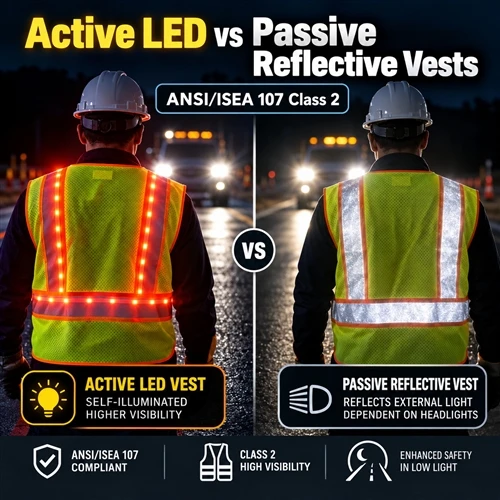
Photoluminescent safety products are different from reflective materials. Reflective tape returns light back to its source when hit by vehicle headlights or lamps. Glow in the dark tape emits stored light without an external beam after charging. In emergency exits, stair edges, tunnel guidance, and equipment labels, glow in the dark safety products provide passive visibility when electrical lighting fails.
Typical Decay Pattern After Light Removal
Photoluminescent brightness is highest immediately after the light source is removed. The luminance then drops quickly during the first 10–30 minutes and slows during the later decay phase.
| Dark Time After Charging | Typical Buyer Checkpoint | Engineering Meaning |
| 2 minutes | Initial glow intensity | Indicates pigment loading and charging response |
| 10 minutes | Early evacuation visibility | Relevant for fast exit routes and stair marking |
| 30 minutes | Industrial backup guidance | Useful for plant shutdown or equipment isolation |
| 60 minutes | Extended emergency marking | Relevant for tunnels, mines, warehouses |
| 120 minutes | Long afterglow performance | Used for higher-grade safety systems |
A high-quality long-lasting glow tape should not be evaluated only by claimed glow time such as "6 hours" or "8 hours." A proper procurement sheet should request actual luminance data, usually expressed as mcd/m², under defined charging conditions.
Practical Decay Curve Example for OEM Evaluation
| Test Point | Grade A Glow Film | Grade B Glow Film | Low-Cost Decorative Film |
| 10 min | ≥ 140 mcd/m² | ≥ 80 mcd/m² | 20–50 mcd/m² |
| 30 min | ≥ 45 mcd/m² | ≥ 25 mcd/m² | 5–15 mcd/m² |
| 60 min | ≥ 18 mcd/m² | ≥ 10 mcd/m² | 2–6 mcd/m² |
| 120 min | ≥ 7 mcd/m² | ≥ 3 mcd/m² | Often below useful visibility |
For industrial safety procurement, the buyer should ask whether the test was performed after D65 daylight simulation, fluorescent lamp exposure, LED exposure, or UV charging. Different charging sources can produce different luminance values.
Initial Luminance and Afterglow Time Standards in mcd/m²
The industrial value of glow in the dark materials is measured by luminance, not by the broad statement "long glow." The most useful unit is millicandela per square meter, written as mcd/m².
Key Photoluminescent Test Parameters
| Parameter | Common Unit | Why It Matters in Procurement |
| Initial luminance | mcd/m² | Shows immediate brightness after charging |
| 10-minute luminance | mcd/m² | Indicates early evacuation support |
| 60-minute luminance | mcd/m² | Indicates long afterglow grade |
| Decay time to threshold | minutes | Shows how long the material remains above a defined visibility level |
| Excitation light source | lux / lamp type | Determines whether the test condition is realistic |
| Pigment loading | % or g/m² | Affects brightness, coating thickness, and cost |
| Film thickness | mm or μm | Affects durability, flexibility, and cutting performance |
| Adhesion strength | N/25 mm | Affects tape stability on metal, PVC, painted panels, or concrete |
| Operating temperature | °C | Relevant for outdoor work zones, tunnels, and cold storage |
Reference Standards Often Used by Industrial Buyers
| Standard / Method | Main Relevance | Common Buyer Use |
| DIN 67510 | Photoluminescent pigment and product performance | Glow decay and luminance grading |
| ISO 17398 | Safety colors and safety signs classification | Safety signage and evacuation marking |
| ISO 16069 | Safety way guidance systems | Escape route planning and low-location systems |
| ASTM E2072 | Photoluminescent safety markings | Building and evacuation applications |
| UL 1994 | Luminous egress path marking systems | North American building safety projects |
| IMO Resolution A.752(18) | Low-location lighting on ships | Marine evacuation guidance |
For PPE and workwear buyers, glow materials may also need to pass garment-related tests such as washing, flexing, abrasion, and heat-transfer bonding stability. A glow logo on a vest and a glow stair-edge tape are not tested in the same way.
Recommended Technical Requirements for Long-Lasting Glow Tape
| Specification Item | Recommended Procurement Requirement |
| Base film | PVC, PET, acrylic, or PU, selected by application surface |
| Glow pigment | Strontium aluminate phosphor |
| Film thickness | 0.20–0.50 mm for flexible tape; thicker options for rigid labels |
| Adhesive | Solvent acrylic PSA for metal, painted steel, aluminum, or PVC |
| Initial color | Yellow-green or green-white under daylight |
| Emission color | Yellow-green, blue-green, or custom tone by pigment formula |
| Indoor durability | 3–5 years depending on light exposure and abrasion |
| Outdoor use | Requires UV-resistant top film and sealed edge design |
| Printing | Screen printing, UV printing, or digital printing with clear protective layer |
| Packaging | Roll, sheet, die-cut label, kiss-cut sticker, or finished sign |
OEM Procurement Check:
For bulk orders of glow in the dark materials, request the luminance decay sheet, adhesive test data, roll width, film thickness, and packaging method before price comparison. A qualified glow in the dark materials manufacturer should be able to provide mcd/m² decay data, adhesive options, custom roll width, die-cutting, and private-label packaging for OEM safety programs.
Photoluminescent Materials vs Reflective Materials in Safety Systems
Photoluminescent and reflective materials solve different visibility problems. A correct safety design may use both.
Glow in the Dark vs Reflective Material
| Comparison Item | Photoluminescent Material | Reflective Material |
| Visibility source | Stored light released in darkness | External light reflected back to source |
| Works without headlights | Yes, after charging | No |
| Works under vehicle headlights | Limited | Yes |
| Typical product | Glow tape, glow sign, glow label | Reflective tape, reflective fabric, reflective vinyl |
| Common structure | Pigment-loaded coating or molded resin | Glass bead or micro-prismatic reflective layer |
| Best application | Egress path, blackout guidance, underground marking | Road workwear, vehicle marking, traffic safety |
| Test focus | mcd/m² after dark time | cd/lx/m² retroreflection coefficient |
| PPE use | Secondary marking, logo, accessory label | Main visibility system on safety vests and jackets |
When to Use Both Materials on the Same Safety Product
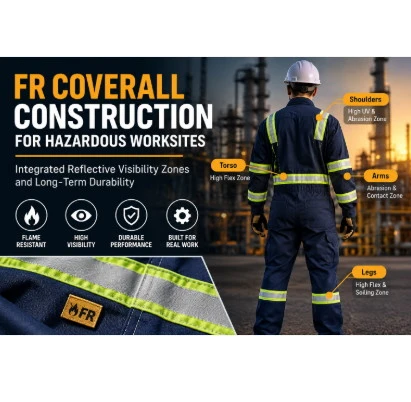
In high-risk work zones, glow and reflective components can be combined. A high visibility safety vest may use 5 cm reflective tape for vehicle-headlight visibility, while reflective material for PPE and traffic safety can also be specified for jackets, rainwear, bags, helmets, traffic cones, warning signs, and vehicle marking tapes. For blackout recognition, the same product line can add a glow logo, glow zipper pull, or photoluminescent label.
Common mixed-material applications include:
ANSI/ISEA 107 Workwear With 5 cm Reflective Tape and Glow Accessories
Reflective tape remains the main compliance component for high visibility garments. Glow material can be added as non-primary marking, such as logo patches, pull tabs, emergency labels, or helmet stickers.
H3: ECE 104 Vehicle Marking With Photoluminescent Loading Zone Labels
Reflective conspicuity tape is used for vehicle outline marking. Glow labels may support warehouse dock identification after lights are switched off.
ISO 16069 Escape Route Systems With Glow Tape and Directional Signage
Photoluminescent tape can be placed at low-location height, stair edges, door handles, switch panels, and floor-level paths. Reflective signs can support visibility during flashlight or vehicle-light inspection.
Underground Mining and Industrial Facility Evacuation Cases
Photoluminescent safety products are often used where electrical failure, smoke, dust, or low lighting can reduce normal visual guidance. The material is passive and does not need wiring, batteries, or charging ports.
Case 1: Underground Mine Escape Routes With 60-Minute Afterglow Target
In underground mining, emergency lighting may be affected by power interruption, equipment impact, water exposure, or dust. Long-lasting glow tape can be applied to refuge chamber entrances, low-position escape path markers, ladder edges, and emergency equipment cabinets.
| Mine Area | Recommended Glow Product | Key Specification |
| Refuge chamber entrance | Rigid glow sign board | ≥ 60-minute luminance data required |
| Ladder and stair edge | Abrasion-resistant glow tape | Strong acrylic adhesive; anti-slip top film optional |
| Equipment cabinet | Die-cut glow label | Oil-resistant printed surface |
| Tunnel direction marker | Arrow-shaped glow sign | Low-location placement; clear directional printing |
| Helmet or tool marking | Glow sticker or molded glow tag | Flexible film or resin-based design |
For dusty or humid mines, surface cleaning and edge sealing are as important as pigment grade. If the adhesive fails, the highest-grade glow film still fails as a safety product.
Case 2: Industrial Plant Evacuation During Power Failure
Factories with chemical storage, press lines, stamping equipment, welding cells, or automated production lines often need passive visual guidance. Glow in the dark safety tape can mark isolation switches, exit doors, fire extinguisher boxes, and hazardous step-down points.
| Facility Zone | Safety Risk | Glow Material Placement |
| Electrical room | Sudden blackout | Switch panel labels and exit arrows |
| Chemical storage | Smoke or vapor obstruction | Low-position escape route tape |
| Warehouse aisle | Forklift and rack collision risk | Floor arrows and rack-end warning labels |
| Stairwell | Trip and fall risk | Stair edge glow tape and handrail strips |
| Emergency equipment station | Delayed identification | Fire extinguisher and first-aid cabinet markers |
Case 3: Marine, Tunnel, and Confined-Space Projects
Photoluminescent materials are suitable for passive safety marking in locations where electrical retrofitting is difficult or costly. Marine corridors, underground pedestrian tunnels, subway service rooms, and utility corridors often require signs and tapes that remain visible after the light source is lost.
For these projects, buyers should define:
Charging light source and exposure time
Required luminance at 10, 30, 60, and 120 minutes
Indoor or outdoor exposure
Fire resistance or smoke toxicity requirement
Adhesive surface: painted steel, aluminum, concrete, plastic, or powder-coated panel
Roll width, die-cut shape, printing color, and packaging unit
Manufacturing and Quality Control Points for China OEM Buyers
For buyers sourcing glow in the dark materials from a China manufacturer, supplier, or factory, the purchase order should not rely only on product photos. The technical file should include material construction, test method, application surface, packaging, and inspection criteria.
OEM Production Control Table
| Production Stage | QC Checkpoint | Typical Inspection Method |
| Pigment selection | Phosphor type and particle size | Supplier COA and incoming inspection |
| Coating | Pigment distribution and film thickness | Micrometer and visual uniformity check |
| Lamination | Surface film clarity and bonding | Peel test and bending test |
| Adhesive coating | Adhesion to target surface | 180° peel strength test |
| Printing | Ink opacity and registration | Color check and cross-cut test |
| Die cutting | Shape tolerance and edge quality | Dimensional inspection |
| Packaging | Roll tension and label accuracy | Carton inspection and batch coding |
| Final testing | Glow decay curve | Luminance meter in darkroom condition |
Common Procurement Mistakes
Accepting "8 Hours Glow" Without mcd/m² Decay Data
Glow duration claims can be based on visibility to the human eye under very dark conditions. Industrial buyers should request luminance data at fixed time points instead of accepting a broad hour-based claim.
Using Indoor Decorative Film for Outdoor Safety Labels
Low-cost decorative film may crack, yellow, or lose adhesion outdoors. Outdoor safety labels need UV-resistant top film, stronger adhesive, and sealed edges.
Ignoring Surface Preparation on Concrete, Powder Coating, or Oily Metal
Pressure-sensitive adhesive needs a clean, dry, stable surface. Rough concrete, dusty walls, low-energy plastics, and oily painted panels may require primer, mechanical fixing, or a different adhesive system.
Mixing Reflective and Glow Requirements in One Specification Sheet
Retroreflection and photoluminescence use different test units. Reflective materials are measured in cd/lx/m². Glow materials are measured in mcd/m² after charging and dark decay.
Buyer Specification Template for Photoluminescent Safety Products
| Specification Field | Buyer Should Confirm |
| Product form | Tape, film, sheet, sticker, sign board, heat transfer film, molded part |
| Application | PPE, stair edge, emergency exit, tunnel, mine, warehouse, marine |
| Charging condition | Light source type, lux level, exposure time |
| Required luminance | 10 min, 30 min, 60 min, 120 min mcd/m² values |
| Base material | PVC, PET, PU, acrylic, aluminum, ABS, PP, silicone |
| Adhesive type | Permanent acrylic, removable adhesive, high-tack adhesive |
| Surface | Metal, painted steel, concrete, plastic, glass, fabric |
| Size | Roll width, sheet size, die-cut dimension, label tolerance |
| Printing | Screen print, UV print, digital print, warning symbols |
| Durability | Indoor, outdoor, wash, abrasion, chemical exposure |
| Packaging | Roll, sheet, polybag, carton, private label packaging |
| Compliance file | DIN 67510, ISO 17398, ASTM E2072, project-specific report |
Bulk OEM Sourcing:
For glow in the dark tape, photoluminescent signs, glow labels, or reflective material programs, send us your target application, mcd/m² requirement, surface type, and annual volume. Our team can support bulk sourcing for glow in the dark safety materials and reflective materials for PPE and traffic safety with OEM sizing, printing, die-cutting, and private-label packaging.
FAQ
Q: What MOQ is typical for custom glow in the dark safety products?
A: MOQ depends on product form. Glow stickers and labels often start from 1,000–3,000 pcs. Roll glow tape may start from 500–1,000 rolls. Custom printed signs or heat transfer glow logos require separate tooling and printing setup.
Q: How long can custom printed glow tape remain visible after charging?
A: Industrial long-lasting glow tape is usually checked by luminance at 10, 30, 60, and 120 minutes. A reliable supplier should provide mcd/m² decay data rather than only claiming 6-hour or 8-hour glow time.
Q: What factory documents should PPE distributors request before bulk orders?
A: Request material construction, luminance decay test report, adhesive test data, MSDS or chemical safety file, artwork proof, packing specification, and pre-shipment inspection photos. For regulated projects, ask for DIN 67510, ISO 17398, ASTM E2072, or local compliance references.