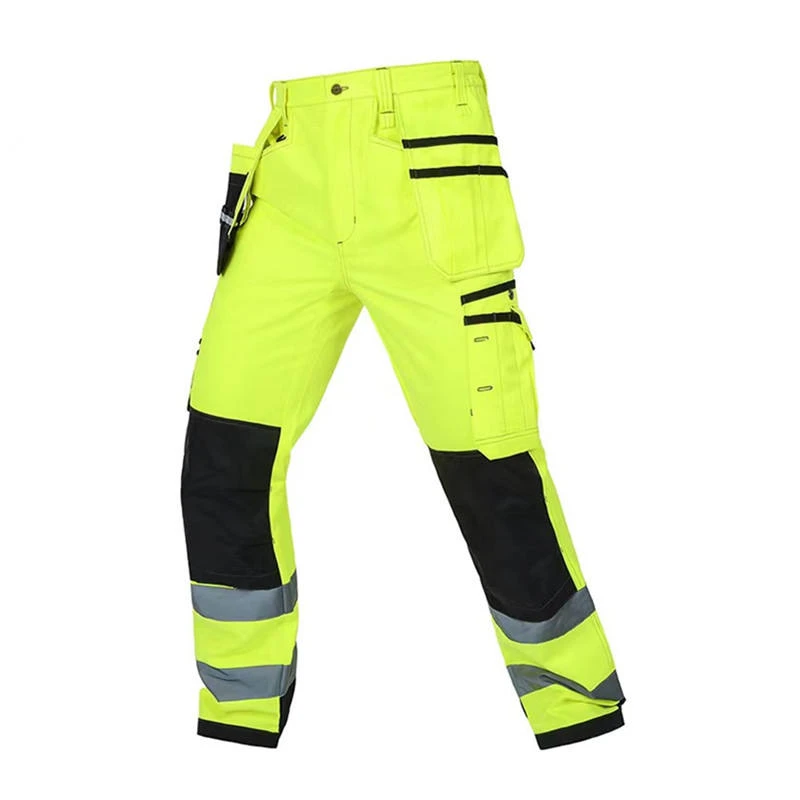
High visibility work pants are lower-body PPE garments designed to improve worker conspicuity, abrasion resistance, and garment service life in road maintenance, sanitation, utilities, landscaping, and municipal construction. For city procurement teams, the correct specification should define fluorescent fabric area, retroreflective tape placement, knee reinforcement, wash durability, pocket layout, and stain-management color blocking before bulk ordering.
Municipal safety clothing fails early when trousers are purchased only by color and price. A durable reflective safety trouser must survive repeated kneeling, asphalt contact, roadside dust, hydraulic oil, rainwater, and industrial laundering while keeping reflective bands visible at vehicle headlamp height.
1. Why Municipal Buyers Specify Hi Vis Work Pants Separately from Jackets
High visibility jackets protect the torso, but municipal crews often work in bent, kneeling, or side-facing positions. In those positions, lower-leg reflective bands and contrast panels provide motion cues that drivers can detect from a distance.
Municipal departments usually need hi vis work pants for:
· Road maintenance crews working near live traffic
· Sanitation workers loading bins at dawn or night
· Utility teams working around service vehicles
· Public works crews handling asphalt, gravel, and drainage repairs
· Landscaping and park maintenance teams near moving equipment
· Emergency repair teams operating in rain, fog, and low light
For procurement, trousers should be evaluated as a separate PPE item because knees, cuffs, and seat panels experience higher abrasion and contamination than jackets.
Request Bulk Pricing for Hi Vis Work Pants
Source hi vis work pants with reinforced knee panels, 50 mm reflective leg tape, municipal color blocking, OEM size grading, and private label packing for public works and utility crews.
Get Bulk Pricing
2. Knee Abrasion Reinforcement: Cordura-Type Yarn, Oxford Panels, and Martindale Wear Testing
Knee zones are the main wear points on municipal work pants. Workers kneel on asphalt, concrete edges, metal grates, paving stones, grass soil, and gravel. Standard polyester fabric can polish, fuzz, or rupture faster than reinforced knee panels when exposed to repeated friction.
A procurement-grade hi vis work pant should define the knee reinforcement material, panel size, stitch pattern, abrasion test method, and expected service environment.
| Knee Reinforcement Option | Typical Material Structure | Strength Point | Procurement Note |
| 300D Oxford polyester | Woven polyester with PU or PVC coating | Good balance of abrasion and cost | Suitable for municipal road and utility crews |
| 600D Oxford polyester | Heavier woven polyester | Higher tear and scuff resistance | Better for kneeling and tool contact |
| Cordura-type nylon panel | High-tenacity nylon yarn structure | Higher abrasion resistance than common polyester | Suitable for road repair and heavy maintenance |
| Double-layer knee fabric | Same shell fabric layered at knee | Lower cost reinforcement | Works for light municipal duty |
| Knee pad pocket structure | Outer or inner pocket for foam pad | Supports kneeling comfort | Must check pocket opening and pad retention |
2.1 ISO 12947 Martindale Abrasion Test for Knee Panels
Martindale abrasion testing is commonly used to compare fabric wear resistance under repeated rubbing. For hi vis work pants, the test is useful when comparing base fabric and reinforced knee panels before mass production.
| Test Item | Suggested Procurement Requirement | Why It Matters |
| Abrasion method | ISO 12947 Martindale method or buyer-specified equivalent | Provides repeatable fabric comparison |
| Test zone | Knee reinforcement and base fabric | Confirms reinforcement adds measurable value |
| End point | Fabric breakdown, yarn rupture, coating failure, or visual grading | Prevents vague "durable fabric" claims |
| Sample comparison | Approved sample vs bulk production fabric | Controls material substitution |
| After-wash review | Abrasion check after industrial wash cycles if required | Reflects real municipal service conditions |
2.2 Reinforced Knee Design for 8-Hour Municipal Shifts
Knee reinforcement should not be a small decorative patch. For municipal use, the panel should cover the kneeling contact zone from above the kneecap to below the lower patella area. A vertical panel length of 220–300 mm is common for adult work trousers, depending on size range and ergonomic cut.
Procurement checks should include:
· Panel position tolerance within ±10 mm across S–5XL size grading
· Bar-tack reinforcement at pocket and panel stress points
· Double-needle stitching for knee patch perimeter
· Knee pad pocket opening secured by hook-and-loop or flap
· No thick seam directly across the kneeling pressure point
· Abrasion review after 25–50 wash cycles for reusable workwear programs
3. Reflective Leg Tape Height and Biomotion Recognition
Reflective safety trousers improve visibility because moving legs create biomotion cues. Drivers can identify a human figure faster when reflective bands move at ankle, calf, or thigh level compared with a static reflective mark.
For municipal crews, reflective tape should be positioned to remain visible when workers walk, kneel, climb in and out of trucks, or stand beside machinery.
| Reflective Tape Position | Common Placement | Visibility Function | Procurement Risk |
| Lower leg band | Around calf or lower shin | Strong biomotion cue during walking | Too low may be covered by boots or mud |
| Upper leg band | Around thigh area | Helps visibility when worker is partly blocked | May be hidden by long jacket hem |
| Dual leg bands | One lower and one upper band | Better outline of leg movement | Higher cost and more sewing control needed |
| Vertical reflective trim | Side seam or pocket area | Adds side visibility | Must not replace full horizontal bands where required |
| Segmented reflective tape | Heat-applied or stitched segmented tape | Better flexibility and comfort | Requires wash durability control |
3.1 Reflective Tape Width: 50 mm as a Common Procurement Baseline
A 50 mm reflective tape width is widely used for safety pants because it provides visible reflective area without excessive stiffness. For municipal safety clothing, buyers should specify tape width, tape type, stitch method, band spacing, and distance from hem.
Specification Item
| Recommended Buying Detail
|
Reflective tape width
| 50 mm common baseline
|
Tape type
| Glass bead reflective tape or micro-prismatic reflective tape
|
Placement
| Lower leg, upper leg, or dual-band layout
|
Stitching
| Double-needle lockstitch or heat-applied segmented tape
|
Wash requirement
| 25–50 wash cycles depending on tender requirement
|
Visibility direction
| 360° leg visibility preferred for roadside work
|
Hem clearance
| Keep reflective band above boot abrasion zone
|
3.2 Micro-Prismatic vs Glass Bead Tape for Reflective Safety Trousers
Reflective tape selection affects flexibility, wash life, brightness, and cost. Glass bead tape is common for washable garments. Micro-prismatic tape can provide higher optical return in some applications but may feel stiffer depending on construction.
Reflective Tape Type
| Optical Structure
| Garment Benefit
| Buying Consideration
|
Glass bead reflective tape
| Embedded glass bead retroreflection
| Flexible and widely used on washable PPE
| Confirm wash cycles and tape cracking
|
Micro-prismatic reflective tape
| Cube-corner prism structure
| High brightness and strong headlamp return
| Confirm flexibility on knee and lower leg areas
|
Segmented reflective tape
| Broken pattern heat transfer structure
| Better movement comfort and lower stiffness
| Confirm heat-transfer adhesion after washing
|
FR reflective tape
| Flame-resistant backing and reflective layer
| Required for FR work pants
| Confirm ATPV / arc flash compatibility if needed
|
4. Color Blocking and Stain-Hiding Economics for Municipal Safety Clothing
Municipal work pants are exposed to asphalt dust, soil, oil stains, road salt, grass marks, vehicle grease, and drainage sludge. Solid fluorescent yellow trousers can look dirty quickly, which shortens perceived service life even when the garment remains structurally usable.
Contrast color blocking can hide high-stain zones while preserving visible fluorescent panels and reflective tape placement. This reduces early replacement caused by appearance rather than fabric failure.
Trouser Zone
| Common Contamination
| Recommended Design Response
|
Knee panels
| Asphalt, concrete dust, soil
| Dark reinforced knee fabric
|
Lower hem
| Mud, road salt, boot scuffing
| Dark lower leg contrast panel
|
Seat area
| Vehicle seats, oil transfer, dust
| Dark seat reinforcement or darker rear panel
|
Thigh front
| Tool contact, dust, grass
| Fluorescent base with controlled dark contrast
|
Pocket openings
| Glove dirt, metal tools
| Reinforced pocket edge and bar-tacks
|
4.1 Fluorescent Area Must Not Be Sacrificed for Dark Panels
Color blocking is useful, but it must not reduce the required high-visibility background area below the target compliance class. For international procurement, buyers should define whether the product is intended for ANSI/ISEA 107, EN ISO 20471, CSA Z96, or a local municipal tender specification.
Design Target
| Fluorescent Fabric
| Dark Contrast Panels
| Reflective Tape
|
Maximum visibility
| High fluorescent coverage
| Minimal dark panels
| Dual leg bands
|
Balanced maintenance cost
| Fluorescent upper leg and side zones
| Dark knee, hem, seat, and pocket zones
| 50 mm reflective bands
|
Heavy-duty municipal work
| Fluorescent base where required
| Reinforced dark knee and lower hem
| Glass bead or micro-prismatic tape
|
Rainwear trouser version
| Fluorescent coated fabric
| Dark waterproof panels
| Heat-applied or stitched tape with sealed seams
|
4.2 Maintenance Cost Model for Municipal PPE Programs
A city department may replace trousers for three reasons: structural damage, reflective tape failure, or unacceptable appearance. Color blocking targets the third reason.
Replacement Driver
| Typical Cause
| Design Control
|
Fabric rupture
| Knee abrasion, tool snagging, seat wear
| 300D / 600D reinforcement or Cordura-type panel
|
Tape failure
| Cracking, peeling, low reflectivity after washing
| Certified reflective tape and wash test
|
Dirty appearance
| Asphalt dust, grease, mud, grass stains
| Dark knee, hem, seat, and pocket zones
|
Fit rejection
| Poor size grading or restricted movement
| Size set approval and ergonomic pattern review
|
Seam failure
| Weak stitching at crotch, pocket, or knee patch
| Bar-tack and double-needle stitching
|
5. Fabric, Fit, and Workmanship Specifications for OEM Hi Vis Work Pants
Municipal safety clothing must balance visibility, movement, and durability. A trouser that is too stiff reduces worker acceptance. A trouser that is too light fails early at knees and cuffs.
A practical OEM specification should include:
Specification Area
| Recommended Procurement Detail
|
Shell fabric
| 150–300 gsm polyester, polyester-cotton blend, softshell, or waterproof Oxford depending on use
|
Reinforcement
| 300D / 600D Oxford or Cordura-type knee panels
|
Reflective tape
| 50 mm stitched or segmented reflective tape
|
Compliance target
| ANSI/ISEA 107, EN ISO 20471, CSA Z96, or local tender standard
|
Pocket system
| Cargo pockets, ruler pocket, phone pocket, knee pad pocket
|
Waist system
| Elastic side waist, belt loops, or adjustable tabs
|
Size range
| XS–5XL or buyer-specific grading
|
Wash durability
| 25–50 wash cycles depending on fabric and tape
|
Branding
| Woven label, heat transfer logo, screen print, private label packing
|
Packing
| 1 pc/polybag, carton packing, barcode label, size sticker
|
5.1 Municipal Fit Requirements for Climbing, Kneeling, and Truck Entry
Hi vis work pants should be tested in movement positions before bulk production. City workers frequently step into vehicles, squat near drains, kneel beside road plates, and climb onto service trucks.
Fit checks should include:
· Squat test at full knee bend without rear rise failure
· Step-up test using 300–400 mm platform height
· Knee pad alignment check in kneeling position
· Reflective band visibility check with boots and jacket
· Pocket access check while wearing gloves
· Crotch seam stress review after repeated movement
6. Quality Control Plan for Reflective Safety Trousers
A pre-shipment inspection for reflective safety trousers should include more than visual checking. The QC file should compare the bulk lot against the approved sample in fabric weight, tape width, tape position, stitching density, reinforcement alignment, size tolerance, and packing accuracy.
QC Item
| Inspection Method
| Acceptance Focus
|
Fabric GSM
| Random fabric weight check
| Matches approved material specification
|
Reflective tape width
| Tape measurement
| 50 mm or buyer-approved width
|
Tape position
| Measure from hem and side seam
| Consistent left-right placement
|
Knee panel alignment
| Visual and measurement check
| Same height and angle across sizes
|
Stitch density
| Stitch count per inch
| Stable seam strength
|
Bar-tack inspection
| Pocket, crotch, knee, belt loops
| No skipped tack or loose thread
|
Size tolerance
| Finished garment measurement
| Waist, inseam, outseam, thigh, hip
|
Wash sample review
| Post-wash garment check if required
| Tape, color, shrinkage, seam stability
|
Packing check
| Carton, polybag, barcode, size sticker
| Correct SKU and municipal order allocation
|
7. Sourcing Notes for Municipal Safety Clothing from China
A China manufacturer or supplier for hi vis work pants should be evaluated by fabric sourcing, reflective tape control, pattern grading, reinforcement workmanship, and repeat-order consistency. Municipal buyers should avoid vague descriptions such as "heavy duty" unless supported by fabric weight, reinforcement material, and test method.
For repeat municipal programs, keep one sealed approved sample, one fabric swatch card, one reflective tape sample, one size chart, one packing specification, and one inspection checklist. These records reduce disputes when the same reflective safety trousers are reordered after 6–12 months.
Natural internal link placement: municipal crews that need matching trousers, bib pants, or rain pants can review Safety Pants for related high-visibility lower-body PPE options.
Need Hi Vis Work Pants for a Municipal Safety Program?
Share your tender standard, size range, reflective tape layout, knee reinforcement requirement, logo artwork, and annual forecast to receive an OEM quotation for bulk hi vis work pants.
Send RFQ
FAQ
Q: What MOQ is typical for OEM hi vis work pants for municipal programs?
A: For custom hi vis work pants, MOQ usually depends on fabric color, reflective tape, size range, and logo method. A practical municipal order normally starts from several hundred pieces per style, with higher MOQ for custom-dyed fabric or private label packing.
Q: How long should reflective tape last on municipal safety trousers?
A: Wash life depends on tape type, stitching, detergent, drying temperature, and garment construction. For reusable municipal safety clothing, buyers should specify 25–50 wash cycles and approve post-wash samples before bulk production.
Q: Can knee reinforcement be added without changing the compliance class?
A: Yes, if the dark reinforcement panels do not reduce required fluorescent and reflective areas below the target standard. The final garment layout should be checked against ANSI/ISEA 107, EN ISO 20471, CSA Z96, or the buyer's local tender rule.