


Reflective Clothing Material (R>380) – Waterproof, Washable & Printable | OEM Bulk Supplier
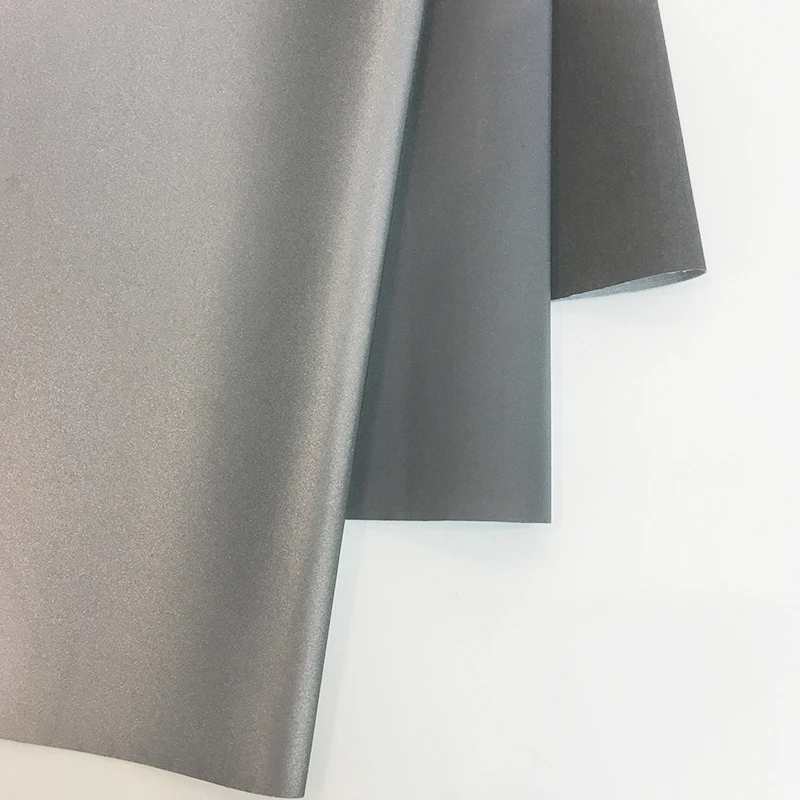
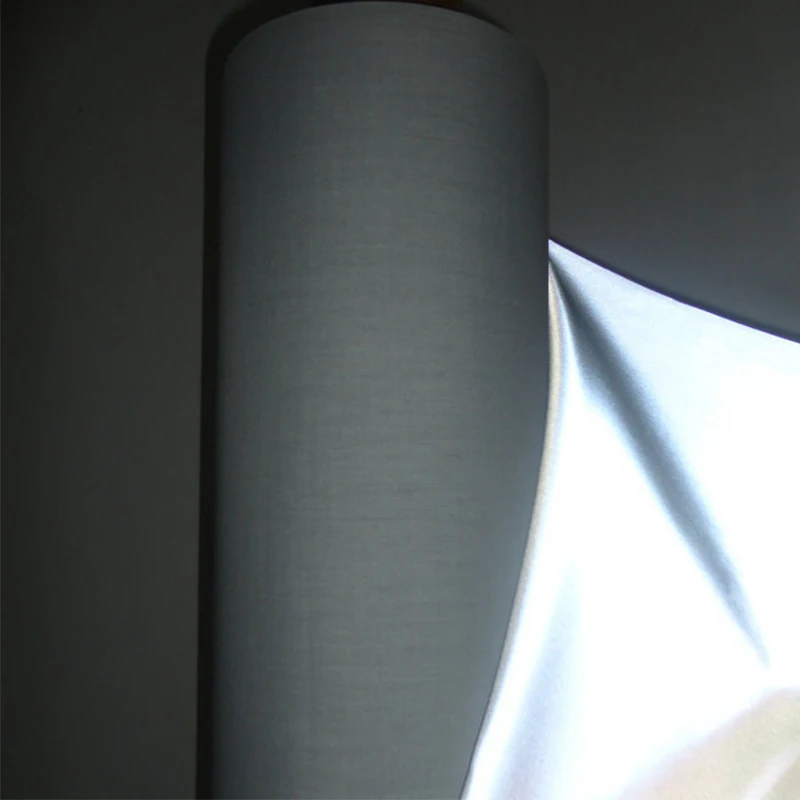
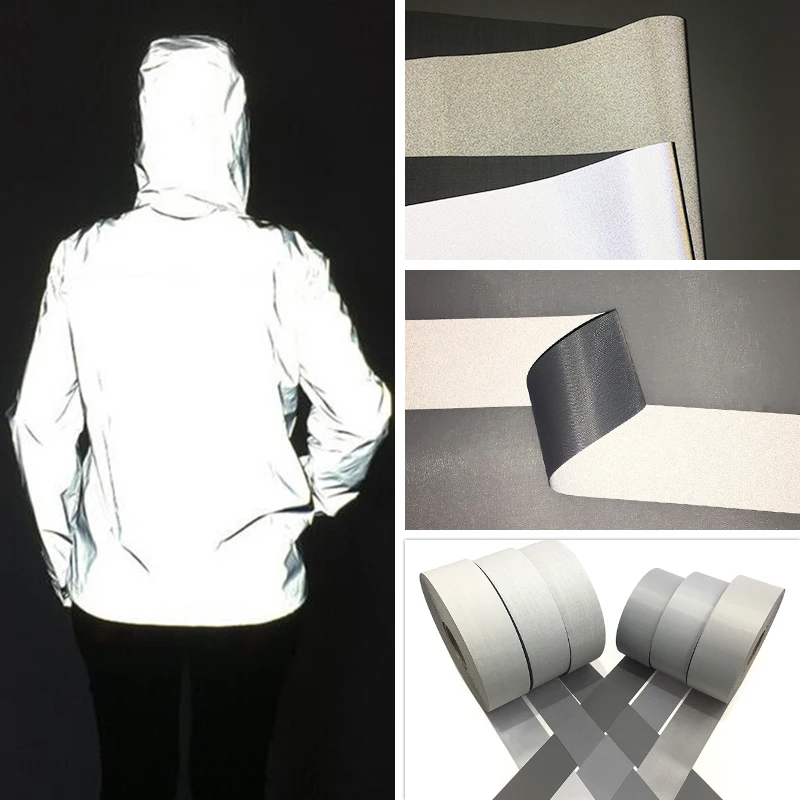
Reflective Clothing Material is a high-performance retroreflective fabric for apparel and accessories, designed for buyers who need strong night-time visibility, reliable wash durability, and flexible OEM customization. This material is suitable for sew-on applications across workwear, uniforms, caps, bags, gloves, umbrellas, and branded safety accessories-especially when you need consistent performance at scale.
If you're sourcing for hi-vis garment programs, PPE distributors, uniform factories, or brand OEM projects, this product delivers a balanced solution: high reflectivity (R>380 cd/lx·m²), waterproof structure, silkscreen printability, and custom slitting from 0.3–155 cm to match your production workflow.
Quick Specs
Product Name: Reflective Clothing Material / Retroreflective Fabric
Base Material: Polyester or TC (poly-cotton)
Backing Material: Polyester or TC
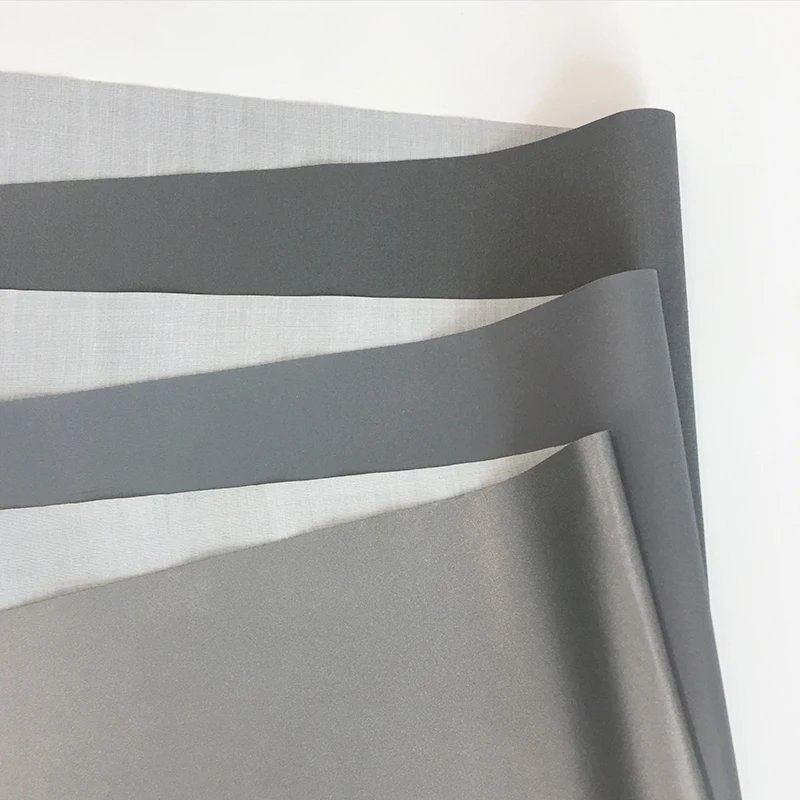
Color: Grey (standard) or custom colors available
Feature: High light reflective / Waterproof / Washable
Width Range: 0.3–155 cm (customized cutting & slitting)
Retroreflective Coefficient: R > 380 cd/lx·m²
Wash Durability: Domestic wash 25 cycles
Printing: Silkscreen printable
Certification/Compliance References: EN 20471, ANSI/ISEA 107-2010 Level 2, AS/NZS 1906.4-2010, CSA Z96-02
Application: Sew on clothes, caps, bags, gloves, umbrella, etc.
OEM: YES (color, width, printing, packaging, branding)
Fast RFQ Tip: Tell us your target market (EU/US/AU/CA), required standard, width/slitting sizes, printing needs, and quantity. We will recommend the best construction and quote quickly.
What This Material Is (And Why Buyers Use It)
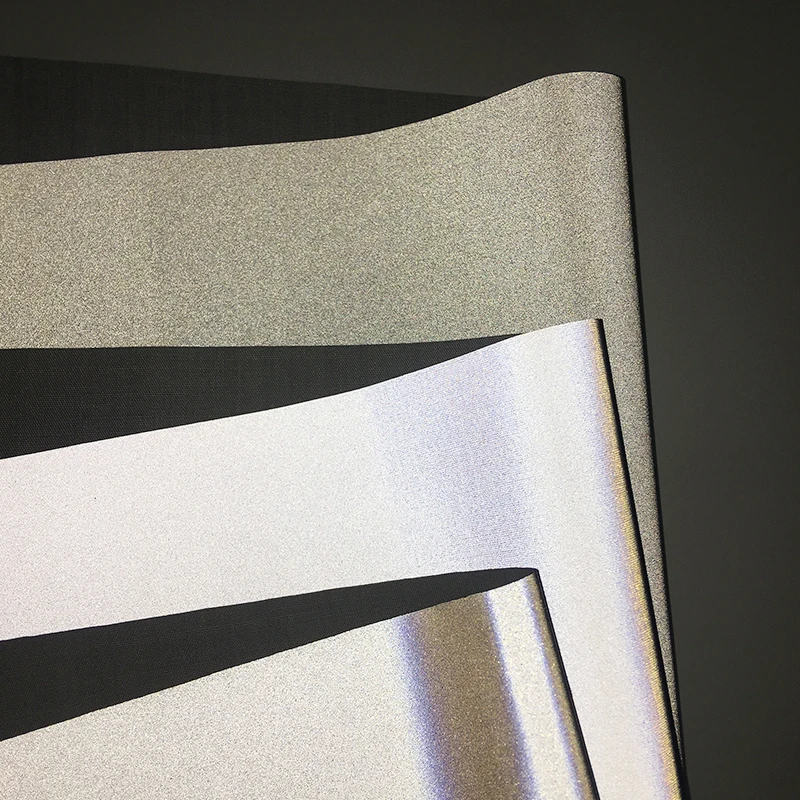
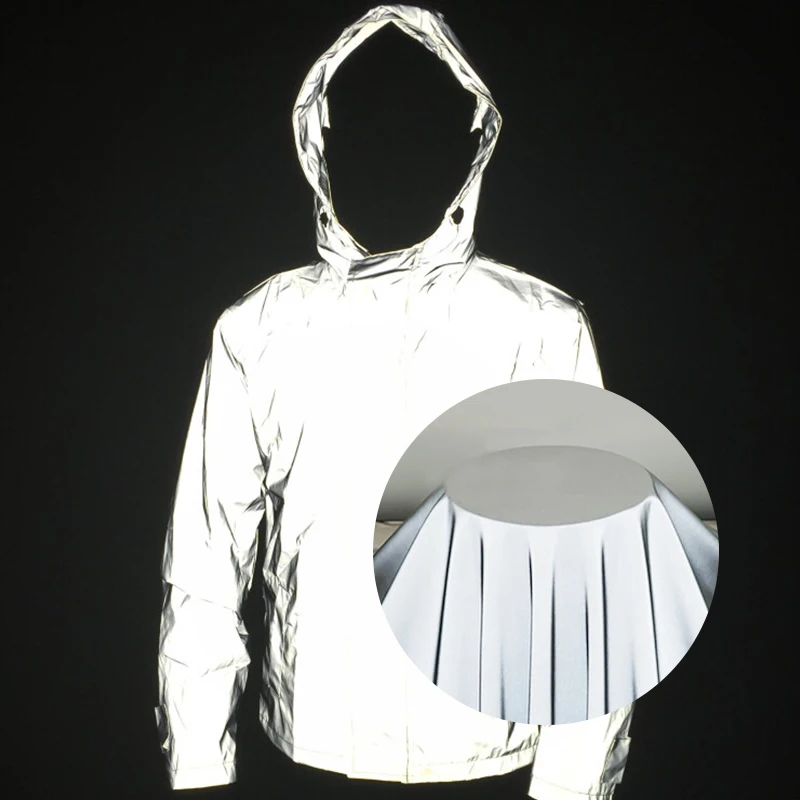
This reflective clothing material is a retroreflective textile engineered to return light back toward its source (for example, vehicle headlights). In practical terms, it helps wearers stay more visible at night or in low-light working environments-without requiring powered lighting.
Buyers choose this type of material when they need:
Higher reflectivity (R>380) to improve visibility at distance
Waterproof performance for outdoor apparel and accessories
Washability for uniforms and repeat-use programs
Printable surface for logos, safety messages, or identification
Wide-width supply for efficient cutting, panel production, or custom slitting
Who This Is Best For (B2B Applications)
1) Hi-Vis Workwear & Uniform Manufacturers
Use it as reflective panels or garment components for uniforms, jackets, vests, trousers, and accessories where strong reflectivity and durability are key. The ability to specify width up to 155 cm supports bulk cutting and reduces material waste.
2) PPE Distributors & Safety Program Buyers
Ideal for distributors who need consistent performance and documentation references aligned with common hi-vis standards. OEM packaging and labeling can support resale programs and catalog listing.
3) Bags, Gloves & Umbrella OEM Factories
When buyers want functional safety + branding, this material is a strong fit. Waterproof construction and silkscreen printability enable accessory production with clear visual identity.
4) Promotional Safety Campaigns
For public-safety campaigns or corporate giveaways that must be wearable and useful, reflective material is often selected over rigid reflective sheets due to comfort and sewing compatibility.
Buyer Decision Guide: How to Specify the Right Reflective Material
Purchasing reflective fabric is not just "choose the brightest." For consistent results and fewer disputes, buyers should specify in this order:
Step 1: Confirm Your Target Market & Standard Requirement
Different markets and programs reference different standards. If you are sourcing for projects requiring EN 20471, ANSI/ISEA 107 Level 2, AS/NZS 1906.4, or CSA Z96, state your target market and compliance requirement clearly in the RFQ.
Important note: Final garment compliance depends on the complete garment design and reflective layout. Materials support compliance programs, but the finished product must be evaluated as a whole.
Step 2: Choose the Reflectivity Level (R Value)
This material provides R > 380 cd/lx·m², which buyers select for stronger visibility needs and premium programs. If you are comparing suppliers, always compare on the same test conditions and tape/fabric construction.
Step 3: Define Waterproof + Wash Durability Expectations
This product is waterproof and supports 25 domestic wash cycles. If your program has internal wash standards or commercial laundry requirements, specify them before sampling.
Step 4: Lock Down Width, Slitting Sizes & Printing Needs
Your production efficiency depends on ordering the right width:
Wide-width (up to 155 cm): best for panel cutting and garment components
Narrow slitting (down to 0.3 cm): best for trims, piping-style usage, or accessory straps
If you plan to add a logo or safety message, specify silkscreen printing and the artwork format (AI/PDF).
Performance Review (What Matters in Real Production)
1) High Retroreflectivity (R>380) for Strong Night Visibility
For many procurement teams, the fastest way to judge a reflective material is brightness in real conditions. A higher retroreflective coefficient helps improve visibility when illuminated by headlights or focused light sources-especially useful for outdoor workwear and accessories.
2) Waterproof Construction for Outdoor Programs
Outdoor apparel and accessories often fail because moisture reduces comfort and durability. Waterproof performance helps maintain usability for rain, damp environments, and everyday exposure.
3) Wash Durability for Uniform Programs
When uniforms are washed repeatedly, performance consistency matters. This material is designed for 25 domestic wash cycles, supporting staff rotation programs and reducing replacement frequency.
4) Silkscreen Printability for Branding & Identification
B2B buyers often require logos, team identification, or warnings. Silkscreen print compatibility is valuable for:
Brand programs (logo panels)
Safety text (department labels, site zones)
Distributor resale (private label SKUs)
Best practice: Approve a printed sample before mass production to confirm adhesion, appearance, and reflectivity performance after printing.
Comparison Guide: How This Material Compares to Common Alternatives
Option A: Reflective Clothing Material (This Product)
Best for: garment panels, accessories, branded safety components
Strengths: high reflectivity (R>380), waterproof, washable (25 cycles), printable, wide-width supply
Considerations: printing coverage and sewing design may affect hand-feel and reflectivity-confirm via sample
Option B: Standard Reflective Fabric (Lower Spec)
Best for: budget programs with moderate visibility needs
Strengths: lower cost, basic reflective function
Considerations: reflectivity and wash durability may vary widely-often fewer customization options
Option C: Narrow Reflective Tape/Trim
Best for: stripes, edging, and garment outline visibility
Strengths: easy garment integration, consistent stripe layouts
Considerations: limited area coverage vs fabric panels; printing is often limited
Option D: Reflective Sheeting (Vinyl/Film)
Best for: signage, decals, hard surfaces
Strengths: rigid, high reflectivity on signs
Considerations: not a textile; not suitable for sewing on clothing
How to Use (Information Intent): Cutting, Sewing & Printing
Cutting & Slitting
Width options from 0.3 to 155 cm support both large panels and narrow trims.
For production stability, define width tolerance requirements in your RFQ (especially for narrow slitting).
Sewing Recommendations (General Guidance)
Use clean edges and consistent seam allowance to prevent fraying and keep alignment.
When sewing on garments or accessories, ensure reflective areas are positioned to remain visible during movement (bending, sitting, arm motion).
Silkscreen Printing
Provide artwork in AI/PDF format for best accuracy.
For best results, confirm ink compatibility and printing coverage ratio during sampling.
If the print area is large, run a sample to confirm that reflectivity and hand-feel still meet expectations.
Care & Washing
If wash durability is a key requirement, confirm the domestic wash conditions used for "25 cycles" and match them to your internal care program.
For uniform programs, perform a small wash test on sample pieces before approving bulk production.
Quality & Testing
To reduce returns and disputes, add these checkpoints to your incoming inspection and approval process:
Incoming Inspection Checklist
Width verification: confirm ordered width and slitting sizes
Surface uniformity: check coating consistency and visible defects
Edge quality: ensure slitted edges are clean with minimal fraying
Color consistency: confirm grey or custom color meets your standard
Print readiness: confirm surface is suitable for the chosen printing method
Performance Verification (Sampling Stage)
Reflectivity check: confirm R-value performance consistency (spot check)
Wash test: confirm performance after wash cycles (per your internal procedure)
Waterproof evaluation: confirm water resistance performance for your use case
Print adhesion test: evaluate logo durability, cracking, rubbing, and wash impact
Suggested Sampling Approval Workflow
Base material sample (no printing)
Printed sample (logo/text)
Pre-production sample (final width + packaging)
Bulk production confirmation
OEM Customization Options
Custom colors (including matched shades upon request)
Width & slitting sizes (0.3–155 cm)
Silkscreen printing (logo, text, patterns)
Backing selection (Polyester or TC)
Packaging & labeling (private label, barcode labels, roll labels)
Bulk program support for distributors and uniform suppliers
Copy/Paste RFQ Template
RFQ – Reflective Clothing Material (Waterproof, Washable, Printable, R>380)
Target market: EU / US / AU / CA
Required standard reference: EN 20471 / ANSI Level 2 / AS/NZS 1906.4 / CSA Z96
Material: Polyester or TC; backing Polyester/TC
Reflectivity requirement: R > 380 cd/lx·m² (state test method if required)
Waterproof requirement: Yes (state test method if required)
Wash durability: domestic wash 25 cycles (state washing conditions if needed)
Width: ___ cm (up to 155 cm) + slitting sizes: ___ / ___ / ___ cm
Printing: silkscreen yes/no; artwork file: AI/PDF
Color: grey / custom (Pantone if available)
Quantity: ___ meters / ___ rolls
Packaging: roll length ___; core ID ___; carton requirement ___
Delivery terms: FOB/CIF/DDP; destination port/city: ___
FAQ
What is reflective clothing material used for?
It is used for sewing onto garments and accessories to improve visibility in low light, including workwear, uniforms, caps, bags, gloves, and umbrellas.
What does R>380 cd/lx·m² mean?
It indicates a high level of retroreflective performance. Higher R values generally mean stronger brightness when illuminated, which is preferred for premium visibility programs.
Is this material waterproof and washable?
Yes. It is designed to be waterproof and supports 25 domestic wash cycles. If you have specific laundry standards, confirm them in the RFQ and test samples accordingly.
Can you print logos or warning text on this reflective material?
Yes. The surface supports silkscreen printing. We recommend approving a printed sample to confirm adhesion and appearance after washing.
What widths can you supply?
We support customized cutting from 0.3 to 155 cm, including wide fabric for garment panels and narrow slitting for trims and accessory components.
Which backing should I choose: Polyester or TC?
Polyester is widely used for durability and performance. TC (poly-cotton) can be chosen based on your preferred hand-feel and garment compatibility. We can recommend based on application.
Can you support OEM programs and private label packaging?
Yes. OEM customization is available for color, width, printing, labels, and packaging-ideal for distributors and brand programs.
Can you provide compliance documents or test references?
We can provide relevant documentation references upon request and support sampling verification for your program requirements.
Get a Quote / Request Samples
Send your required standard, width/slitting sizes, printing needs, target color, and quantity. We will recommend the best construction for your application and provide a competitive bulk quotation with sampling support.
Hot Tags: reflective clothing material, China, manufacturers, suppliers, factory, buy


